
 Marco Williams

Introduction
Two of the most recognized dog food brands in the U.S., Purina Pro Plan and Blue Buffalo serve very different types of pet owners. Both are widely available, backed by strong reputations, and formulated to meet everyday nutritional needs — but they take distinctly different approaches to ingredients, research, and pricing.
This article compares Purina Pro Plan or Blue Buffalo across protein levels, ingredient quality, sensitive stomach formulas, cost per day, and overall value. Whether you’re switching brands or choosing for the first time, this breakdown covers what actually matters.
Choose Purina Pro Plan if:
- Your dog has a sensitive stomach or skin condition
- You prioritize clinical research and veterinary backing
- You want consistent quality at a moderate price point
- Your dog is active or high-energy and needs performance-oriented nutrition
Choose Blue Buffalo if:
- You prefer whole meat as the first ingredient with no by-products
- Your dog does better on grain-free or limited ingredient diets
- You’re drawn to natural ingredient sourcing and LifeSource Bits
- You’re willing to pay a premium for a natural-positioning brand
Purina Pro Plan is the stronger pick for science-backed nutrition and digestive support. Blue Buffalo suits owners who prioritize natural ingredient philosophy and whole-food sourcing.
What Is the Difference Between Purina Pro Plan and Blue Buffalo?
Purina Pro Plan is developed with input from veterinarians and nutritional scientists, positioning itself as a performance and health-focused brand. It emphasizes digestibility, clinical backing, and consistency across life stages.
Blue Buffalo markets itself around natural ingredients, whole meats, and the absence of poultry by-product meals. Its LifeSource Bits — a blend of antioxidants, vitamins, and minerals — are a distinguishing feature across most of its product lines.
On price, Purina Pro Plan typically sits in the mid-premium range, while Blue Buffalo generally costs more per pound. The difference reflects brand philosophy as much as ingredient cost.
Key Differences Between Purina Pro Plan and Blue Buffalo
| Factor | Purina Pro Plan | Blue Buffalo |
|---|---|---|
| Protein Range | 26–30% (adult formulas) | 24–28% (adult formulas) |
| Calories | Around 370–400 kcal/cup | Around 350–390 kcal/cup |
| Ingredient Style | By-products allowed, research-driven | Whole meats, no by-product meal |
| Price Level | Mid-premium | Premium |
Protein, Fat and Calorie Comparison

- Protein: 26%
- Fat: 16%
- Fiber: 3%
- kcal per cup: ~400
- Top 5 ingredients: Chicken, Brewer’s Rice, Corn Gluten Meal, Whole Grain Corn, Poultry By-Product Meal

- Protein: 24%
- Fat: 14%
- Fiber: 4%
- kcal per cup: ~353
- Top 5 ingredients: Deboned Chicken, Brown Rice, Barley, Oatmeal, Pea Protein
Quick Insight: Purina Pro Plan delivers slightly higher protein and more calories per cup, while Blue Buffalo offers a modest fiber advantage.
Purina Pro Plan’s higher calorie density means slightly smaller portions are needed per feeding. This makes it easier to manage daily intake for dogs focused on muscle maintenance without overfeeding.
Blue Buffalo’s lower calorie count per cup may benefit dogs prone to weight gain, as owners can feed a fuller-looking bowl with fewer calories. Both formulas are adequate for adult maintenance.
For muscle maintenance specifically, the protein difference of about 2% may matter more for working or athletic dogs than for typical household pets.
Which Is Better for Sensitive Stomach?

- Protein: 26%
- Fat: 16%
- Fiber: 3%
- kcal per cup: ~404
- Top 5 ingredients: Salmon, Rice, Oat Meal, Canola Meal, Fish Meal

- Protein: 22%
- Fat: 14%
- Fiber: 3.5%
- kcal per cup: ~327
- Top 5 ingredients: Deboned Salmon, Potato, Pea Starch, Peas, Potato Starch
Quick Insight: Purina Pro Plan includes probiotics for digestive support, while Blue Buffalo Basics focuses on a shorter ingredient list for allergen reduction.
Purina Pro Plan’s sensitive formula uses live probiotic cultures to support gut health alongside a simple salmon and rice base. It is a strong option for dogs with general digestive sensitivity rather than specific food allergies.
Blue Buffalo Basics takes a limited ingredient approach, removing common allergens like chicken, beef, corn, wheat, and soy. It suits dogs with identified ingredient sensitivities better than those with general stomach issues.
Ingredient Differences Between Purina Pro Plan and Blue Buffalo
- Protein: 26%
- Fat: 16%
- Fiber: 3%
- kcal per cup: ~400
- Top 5 ingredients: Chicken, Brewer’s Rice, Corn Gluten Meal, Whole Grain Corn, Poultry By-Product Meal
- Protein: 24%
- Fat: 14%
- Fiber: 4%
- kcal per cup: ~353
- Top 5 ingredients: Deboned Chicken, Brown Rice, Barley, Oatmeal, Pea Protein

- Protein: 30%
- Fat: 20%
- Fiber: 3%
- kcal per cup: ~444
- Top 5 ingredients: Chicken, Brewer’s Rice, Whole Grain Corn, Poultry By-Product Meal, Corn Gluten Meal

- Protein: 28%
- Fat: 17%
- Fiber: 4%
- kcal per cup: ~389
- Top 5 ingredients: Deboned Chicken, Chicken Meal, Brown Rice, Oatmeal, Barley
Quick Insight: Purina uses by-product meal as a protein source; Blue Buffalo relies on deboned whole meats and named meals across both life stages.
Poultry by-product meal is a concentrated protein source considered nutritionally adequate by AAFCO standards. Some owners avoid it on principle, while others find it a non-issue given the research backing behind Purina’s formulas.
Blue Buffalo uses whole deboned meats and named chicken meal, which many owners prefer from a transparency standpoint. The carbohydrate sources also differ — Purina leans on corn-based ingredients while Blue Buffalo favors whole grains like brown rice and oatmeal.
For puppies, both brands deliver higher protein and fat than adult formulas. Calcium levels in Blue Buffalo puppy formulas are worth monitoring for large breed puppies, as excess calcium can affect bone development.
Cost Comparison Per Day
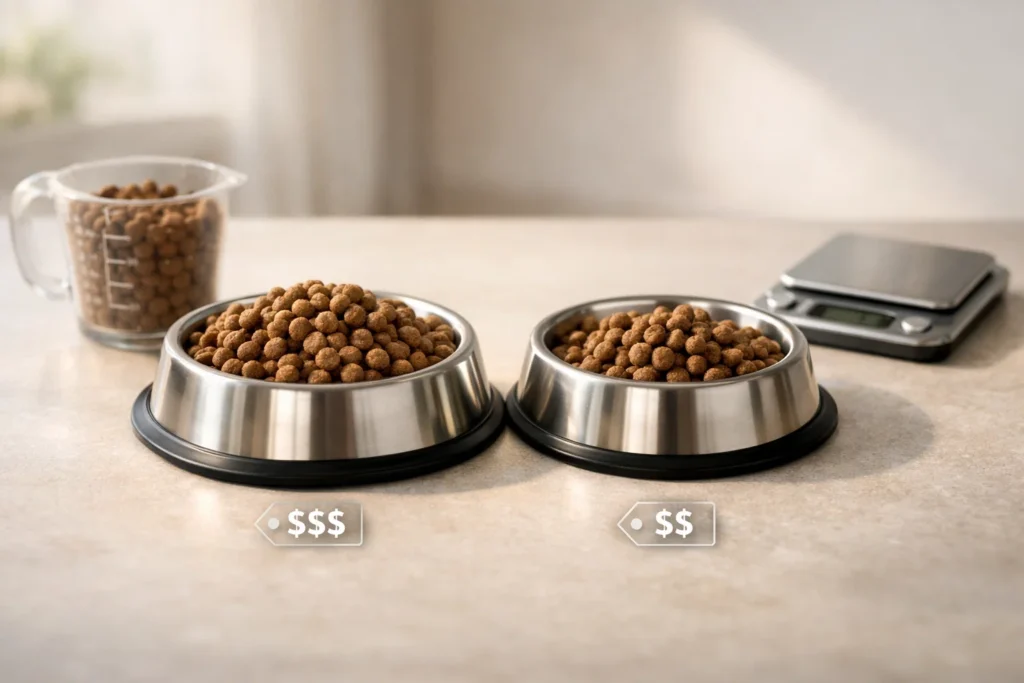
Purina Pro Plan Adult Chicken & Rice typically runs around $2.00–$2.50 per pound, depending on the retailer and bag size. For a medium-sized dog eating about 2.5 cups daily, the daily cost comes to roughly $1.00–$1.20.
Blue Buffalo Life Protection Formula costs around $2.80–$3.20 per pound on average. The same medium dog would cost approximately $1.30–$1.60 per day to feed, translating to a difference of $100–$200 annually compared to Purina Pro Plan.
Both brands offer savings through subscription models and larger bag sizes. The annual cost gap is meaningful for multi-dog households or owners on a tighter monthly budget.
Which Is Better for Active Dogs?

Using the adult formula comparison, Purina Pro Plan delivers around 400 kcal per cup versus Blue Buffalo’s approximately 353 kcal. For active or working dogs, higher energy density means better fuel with less volume.
A dog requiring about 1,200 kcal per day would need around 3 cups of Purina Pro Plan versus closer to 3.5 cups of Blue Buffalo. Over time, this affects how far a bag goes and how much you spend per active day.
Purina also offers a Performance 30/20 formula specifically developed for working and sporting dogs, which Blue Buffalo does not closely match in its standard lineup.
Who Should Avoid These Options?
Dogs who may need to avoid both Purina Pro Plan and Blue Buffalo standard lines:
- Dogs with severe food allergies requiring a hydrolyzed protein or prescription diet (neither brand replaces veterinary therapeutic foods)
- Dogs diagnosed with conditions like kidney disease, heart disease, or pancreatitis that require clinically managed nutrition
- Dogs that have previously reacted to chicken, as it is the primary protein in most flagship formulas from both brands
- Puppies of giant breeds who need carefully controlled calcium-to-phosphorus ratios best managed through breed-specific formulas
- Dogs requiring calorie-restricted diets under veterinary supervision, where over-the-counter options may not provide sufficient control
FAQs
Is Purina Pro Plan better than Blue Buffalo?
Neither brand is universally better — it depends on your dog’s specific needs. Purina Pro Plan is backed by extensive veterinary research and is often recommended for dogs with digestive sensitivities or performance needs. Blue Buffalo suits owners who prefer whole meat sourcing and a natural ingredient philosophy. For dogs with no specific health concerns, both meet AAFCO nutritional standards. Consulting your vet is the most reliable way to determine which is a better fit for your individual dog.
Which has more protein?
Purina Pro Plan generally delivers slightly more protein than Blue Buffalo across comparable formulas. The adult chicken formulas show about a 2% difference, with Purina at around 26% and Blue Buffalo at around 24%. The puppy formulas follow the same pattern. For most household dogs, this difference has limited practical impact. For working dogs or those needing muscle support, Purina’s slightly higher protein content may be the more relevant choice.
Which is better for sensitive stomach?
Purina Pro Plan’s Sensitive Skin & Stomach formula is a strong option for general digestive sensitivity, as it includes live probiotics and a simple salmon and rice base. Blue Buffalo Basics works better for dogs with identified ingredient allergies, thanks to its limited ingredient approach and shorter allergen list. If the cause of your dog’s stomach issues is unknown, a vet visit before switching brands is recommended to rule out underlying conditions.
Why is Blue Buffalo more expensive?
Blue Buffalo positions itself as a premium natural brand, which is reflected in its pricing. The use of deboned whole meats, no poultry by-product meal, and added ingredients like LifeSource Bits contribute to higher production costs. Marketing and brand positioning around natural sourcing also play a role. The price difference compared to Purina Pro Plan is roughly $0.40–$0.70 per pound, which adds up to around $100–$200 per year for a medium-sized dog.
Can I switch between them?
Yes, but any transition between dog food brands should be done gradually over about 7 to 10 days. Start by mixing around 25% of the new food with 75% of the old food, then slowly shift the ratio. Sudden changes can cause digestive upset, loose stools, or vomiting in sensitive dogs. If your dog has a history of stomach issues, a slower transition over 2 weeks is advisable. Monitor stool consistency and appetite throughout the switch.
Are both AAFCO compliant?
Yes. Both Purina Pro Plan and Blue Buffalo Life Protection Formula meet the nutritional standards established by the Association of American Feed Control Officials (AAFCO) for their respective life stages. This means both are considered complete and balanced diets. AAFCO compliance is a baseline standard, not a quality differentiator between brands. Purina Pro Plan additionally participates in feeding trials, which represent a higher level of nutritional validation than formulation alone.