 Marco Williams

Introduction
The anal glands are two small secretory pouches at the 4 and 8 o’clock positions beside the rectum. Under normal conditions, they empty passively during defecation — firm stool exerts enough pressure against the sac walls as it passes through to express them naturally. When stool is chronically soft, that pressure is absent. Secretions accumulate, the sacs become impacted, and the dog scoots, licks excessively, or shows rectal discomfort. Left untreated, impaction can progress to infection and, in severe cases, an abscess requiring surgical drainage.
The most common owner mistake is switching protein sources — chicken to salmon, beef to lamb — assuming a food sensitivity is the cause. Allergen-driven loose stool is real, but for most dogs the actual driver is simply inadequate dietary fiber producing insufficiently firm stool. Fixing the fiber fixes the problem.
Our evaluation method prioritizes fiber functionality and digestibility profiling over marketing claims, cross-referenced against recurring owner feedback patterns across verified retail platforms.
- Best Overall → Purina Pro Plan Sensitive Skin & Stomach Salmon & Rice — ~$1.80–$2.20/day
- Best Budget → Nature’s Recipe Grain-Free Chicken, Sweet Potato & Pumpkin — ~$1.20–$1.50/day
- Best Limited Ingredient → Earthborn Holistic Venture Alaska Pollock & Pumpkin — ~$2.00–$2.40/day
- Best Grain-Free → Earthborn Holistic Venture Alaska Pollock & Pumpkin — ~$2.00–$2.40/day
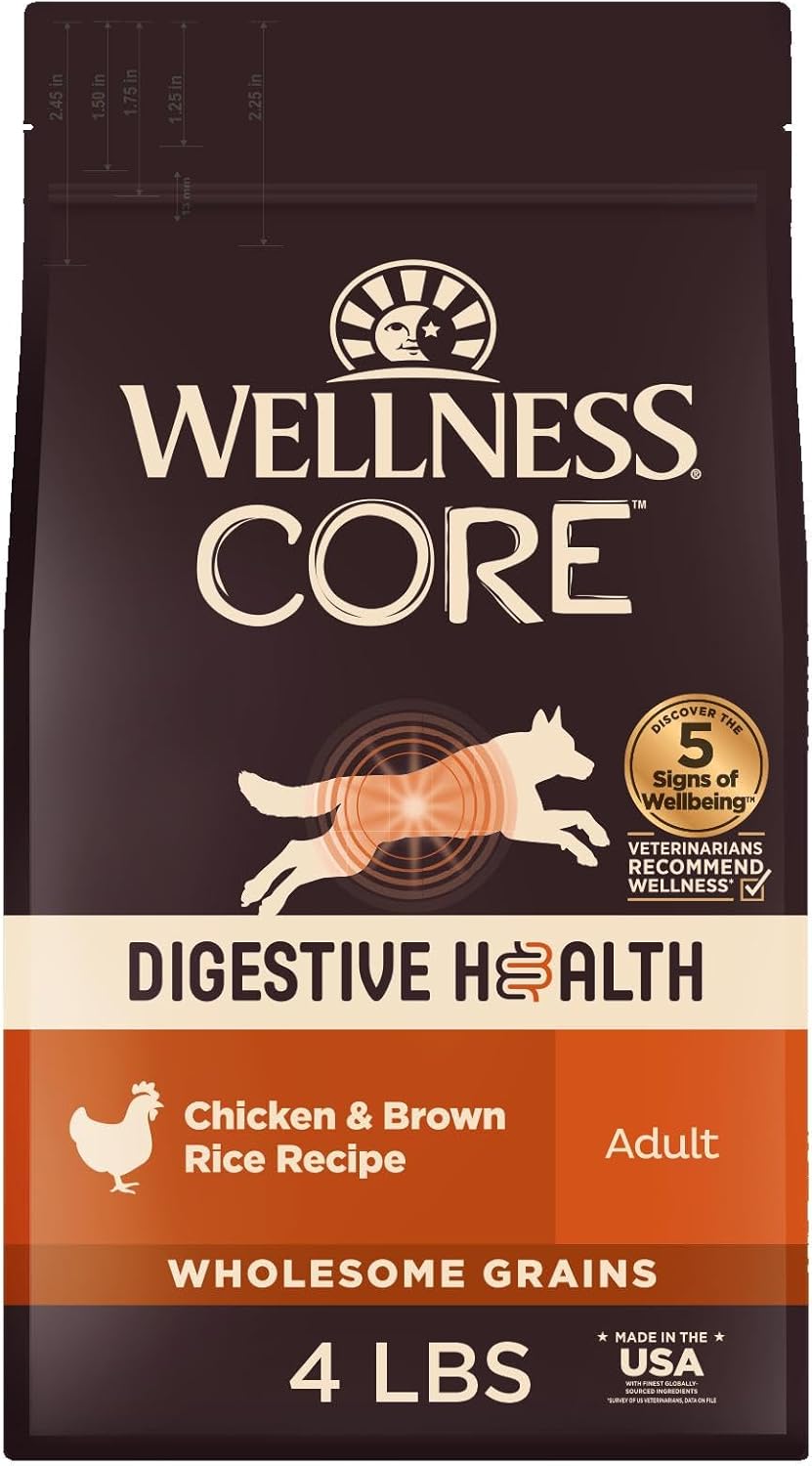
- Best Premium → Wellness CORE Digestive Health Chicken & Brown Rice — ~$2.00–$2.50/day
- Best for Immediate Relief → Vetnique Glandex Anal Gland Soft Chews — ~$0.60–$1.20/day
- Best Food Topper → Native Pet Organic Pumpkin Powder — ~$0.30–$0.50/day
Daily cost estimates assume a ~30 lb adult dog at standard feeding guidelines.
How We Selected These Foods
Identifying the best dog food for anal gland issues requires a more targeted framework than standard pet food reviews. Six criteria guided selection:
- Amazon US availability — actively sold and fulfilled in the US without specialty retail or prescription access.
- Ingredient review — fiber-relevant ingredients (pumpkin, sweet potato, psyllium husk, beet pulp, apple pectin) screened alongside protein digestibility and fat content.
- Fiber functionality — ratio of soluble fiber (firms stool) to insoluble fiber (adds bulk and rectal pressure); both are needed for passive gland expression.
- Digestibility profile — ultra-high digestibility can paradoxically reduce fecal volume, so moderate digestibility with meaningful fiber was prioritized over near-zero-residue formulas.
- Owner feedback patterns — verified-purchase reviews analyzed for recurring stool-firmness and scooting-reduction themes, not isolated reports.
- Trade-offs — allergen risk, fat content, price, and grain-free considerations assessed so recommendations match specific situations rather than offering one generic list.
Top 6 Product Reviews

Important Product Information
- Primary Protein Source: Salmon
- Grain-Free or Grain-Inclusive: Grain-Inclusive (Rice)
- Limited Ingredient: No
- Life Stage: Adult
- Protein %: ~26%
- Fat %: ~16%
- Key Functional Additions: Prebiotic fiber (chicory root, beet pulp), omega-3 fatty acids
- AAFCO Statement: Complete & balanced for adult maintenance
Why It Made the List
This formula addresses anal gland dysfunction through two parallel mechanisms. Prebiotic fiber from chicory root and beet pulp selectively feeds beneficial gut bacteria, stabilizing the fermentation consistency that governs stool form. Omega-3 fatty acids from salmon reduce intestinal inflammation, which secondarily improves motility and reduces transit-driven loose stool.
Best For — Dogs needing the strongest dual-mechanism approach: gut microbiome support plus anti-inflammatory protein.
Ingredient Snapshot — Salmon leads, followed by rice for predictable, moderate fermentation rather than high-FODMAP carbohydrate sources.
Owner Pattern Insights — Stool firmness improves within 2–3 weeks of transitioning from lower-fiber kibble; many owners report extended intervals between professional gland expressions after 4–6 weeks. This is the most consistently reported pattern of any product reviewed here.
Watch-Out / Trade-Off — Not appropriate for confirmed fish protein sensitivity. Contains grains.

Important Product Information
- Primary Protein Source: Chicken
- Grain-Free or Grain-Inclusive: Grain-Free
- Limited Ingredient: No
- Life Stage: Adult
- Protein %: ~25%
- Fat %: ~14%
- Key Functional Additions: Sweet potato (insoluble fiber), pumpkin (soluble fiber)
- AAFCO Statement: Complete & balanced for adult maintenance
Why It Made the List
At an accessible price point, Nature’s Recipe delivers a clinically relevant dual-fiber profile. Sweet potato adds physical bulk; pumpkin — a well-established stool-firming ingredient — moderates water absorption in the colon. Sweet potato as the primary carbohydrate also produces more predictable fermentation than legume-heavy grain-free alternatives.
Best For — Owners wanting a real dual-fiber formula without premium pricing.
Ingredient Snapshot — Chicken first, with sweet potato and pumpkin as the primary carbohydrate and fiber sources.
Owner Pattern Insights — Noticeably firmer stools within 10–14 days of transition; owners with prior chronic soft stool specifically credit the pumpkin and sweet potato combination.
Watch-Out / Trade-Off — Not limited ingredient. Monitor the ~14% fat in dogs with a pancreatitis history; grain-free formulations warrant awareness of the ongoing FDA inquiry into grain-free diets and DCM, though no causal link is established.

Important Product Information
- Primary Protein Source: Alaska Pollock
- Grain-Free or Grain-Inclusive: Grain-Free
- Limited Ingredient: Yes
- Life Stage: Adult
- Protein %: ~32%
- Fat %: ~16%
- Key Functional Additions: Pumpkin (functional fiber), sweet potato starch
- AAFCO Statement: Complete & balanced for adult maintenance
Why It Made the List
When soft stool persists despite adequate fiber, a food sensitivity becomes a relevant differential. Earthborn Holistic Venture uses Alaska pollock — a novel protein for most dogs — alongside pumpkin as the primary functional fiber source, isolating dietary variables to determine whether a specific ingredient is contributing to inconsistency.
Best For — Dogs with suspected concurrent food sensitivity, or owners running an elimination trial.
Ingredient Snapshot — Pollock and pumpkin lead a short, deliberate ingredient list; sweet potato starch replaces grain.
Owner Pattern Insights — Owners managing concurrent anal gland and skin sensitivity issues report improvement across both — firmer stool and reduced reactivity — within 4–6 weeks.
Watch-Out / Trade-Off — Higher protein (~32%) and LID formulation mean premium pricing. Best reserved for cases where food sensitivity is identified or reasonably suspected, not as a universal first pick.
Important Product Information
- Primary Protein Source: Chicken
- Grain-Free or Grain-Inclusive: Grain-Inclusive (Brown Rice)
- Limited Ingredient: No
- Life Stage: Adult
- Protein %: ~26%
- Fat %: ~15%
- Key Functional Additions: Prebiotic fiber, live probiotic blend
- AAFCO Statement: Complete & balanced for adult maintenance
Why It Made the List
Purpose-formulated for GI stability, this combines prebiotic fiber to nourish beneficial gut bacteria with a live probiotic blend to directly populate the microbiome — addressing both stool consistency and the gut flora driving it. Brown rice ferments predictably, without the high-FODMAP byproducts that contribute to gas and loose stool in legume-heavy grain-free formulas.
Best For — Dogs with chronically sensitive digestion who need ongoing microbiome support, not just a one-time fiber fix.
Ingredient Snapshot — Chicken and brown rice form the base, fortified with prebiotic fiber and live probiotic cultures.
Owner Pattern Insights — Owners who previously needed monthly professional expression report reduced frequency after sustained use, some moving to 2–3 month intervals — the most prominent long-term pattern observed.
Watch-Out / Trade-Off — Premium price point. Chicken is among the most common dietary allergens, making this inappropriate for confirmed or suspected chicken sensitivity.

Important Product Information
- Type: Supplement
- Key Ingredients: Pumpkin seed, psyllium husk, apple pectin
- AAFCO Statement: Not applicable (supplement)
Why It Made the List
A targeted supplement rather than a complete diet, Glandex is the right call when a dog’s current food is nutritionally adequate but underpowered on fiber. Psyllium husk is among the most clinically documented stool-bulking fibers, forming a viscous gel that slows transit and binds water; pumpkin seed adds zinc and fatty acids that support anal sac tissue directly, beyond stool modification alone.
Best For — A fast bridge product during a full dietary transition, or for dogs whose base diet doesn’t need replacing.
Ingredient Snapshot — Psyllium husk and apple pectin for soluble fiber, pumpkin seed for targeted anal sac tissue support.
Owner Pattern Insights — Improved scooting behavior within 2–3 weeks; many report extended intervals between professional expressions when paired with a complete diet.
Watch-Out / Trade-Off — Addresses the symptom, not the root dietary cause. Sustained reliance should prompt a look at the base diet.

Important Product Information
- Type: Food topper
- Key Ingredient: Organic pumpkin
- AAFCO Statement: Not applicable
Why It Made the List
Pure pumpkin is the most broadly recommended single dietary intervention for stool modification. Its soluble fiber (pectin) forms a gel-like matrix in the colon that regulates water absorption, firming loose stool without overcorrecting toward constipation. The powder format allows precise dose adjustment and mixes into any kibble or wet food without palatability issues.
Best For — Owners who want to test fiber supplementation before committing to a full dietary transition.
Ingredient Snapshot — Single ingredient: organic pumpkin, eliminating pesticide residue as a variable for sensitive GI systems.
Owner Pattern Insights — Meaningful improvement reported with as little as one teaspoon per meal — a low-cost, low-risk first intervention showing results within 7–14 days in mild-to-moderate cases.
Watch-Out / Trade-Off — Not a complete nutritional solution. In severe or chronic cases, pumpkin powder alone is unlikely to produce sufficient stool firmness on its own.
Comparison Table
| Product | Type | Protein % | Fat % | Grain Status | Key Fiber | Best For | Price Tier |
|---|---|---|---|---|---|---|---|
| Purina Pro Plan Sens. Skin | Kibble | 26% | 16% | Grain-Inclusive | Prebiotic, beet pulp | Dual-mechanism support | $$ |
| Nature’s Recipe Pumpkin | Kibble | 25% | 14% | Grain-Free | Pumpkin, sweet potato | Budget | $ |
| Earthborn Holistic Pollock | Kibble | 32% | 16% | Grain-Free | Pumpkin | Food sensitivity | $$ |
| Wellness CORE Digestive | Kibble | 26% | 15% | Grain-Inclusive | Prebiotic + probiotic | Sensitive digestion | $$$ |
| Vetnique Glandex Chews | Supplement | — | — | N/A | Psyllium, pumpkin seed, pectin | Immediate relief | $ |
| Native Pet Pumpkin Powder | Topper | — | — | N/A | Pumpkin (pectin) | First-step / low-risk | $ |
How to Choose the Right Food
Understand the Two Fiber Types
Soluble fiber (pumpkin, psyllium husk, apple pectin, beet pulp) absorbs water and forms a gel that slows colonic transit and firms stool. Insoluble fiber (sweet potato, brown rice, oat hulls) doesn’t dissolve — it adds physical bulk and stool mass. For anal gland expression, you need both: soluble fiber to shape the stool, insoluble fiber to generate the rectal pressure that empties the glands passively.
Digestibility Is a Two-Edged Factor
Highly digestible foods leave less residue in the colon. That’s generally desirable, but it can reduce fecal volume to the point where anal gland pressure is insufficient. Moderate digestibility paired with a well-formulated fiber blend typically outperforms an ultra-premium, near-zero-residue formula for this specific concern.
Supplements vs. Full Diet Change
If stool is only mildly soft and the current diet is otherwise complete, start with a fiber topper or a targeted supplement like Glandex — lower-disruption and easier to evaluate. Reserve a full dietary transition for cases where stool consistency remains poor after 3–4 weeks of supplementation. Transition any new food over 7–10 days; rapid switches cause microbiome disruption and transient loose stool, the opposite of the goal.
Common Mistakes to Avoid
Focusing on protein source instead of fiber. Switching chicken to salmon addresses allergen exposure, not fiber content — unlikely to help unless sensitivity is confirmed.
Ignoring fat content. Dietary fat above 18–20% (dry matter) accelerates GI transit, reducing colonic water absorption and softening stool. Always check fat alongside fiber.
Transitioning too quickly. A 2-day switch causes loose stool from microbiome disruption, not improvement. Seven to ten days minimum for a clean evaluation.
Evaluating results too early. Microbiome adaptation takes 3–6 weeks. Assess stool consistency over a minimum 4-week trial — early impressions are often unrepresentative.
Relying on supplements indefinitely. Pumpkin powder and Glandex are effective interim tools. If supplementation is required long-term to maintain firmness, the base diet needs upgrading.
When to Consider Veterinary Diets
Dietary intervention has a defined ceiling. If your dog needs professional gland expression more often than every 6–8 weeks despite 6 weeks of dietary optimization — including a high-fiber diet and supplementation — veterinary evaluation is the appropriate next step.
Conditions requiring veterinary management include chronic impaction unresponsive to dietary change, confirmed bacterial infection (swelling, discharge, or pain on palpation), perianal fistulas, and underlying allergic disease driving perianal inflammation. Prescription fiber diets such as Hill’s Prescription Diet w/d or Royal Canin Gastrointestinal Fiber Response provide calibrated therapeutic fiber levels under veterinary supervision, appropriate once over-the-counter modification has been properly trialed and found insufficient. Surgical intervention (anal sacculectomy) is reserved for refractory cases involving chronic infection or structural abnormality.
FAQ
Does pumpkin help anal glands in dogs?
Yes. Pumpkin is one of the most evidence-supported single dietary interventions for stool modification in dogs. Its soluble fiber (pectin) absorbs excess colonic water and firms stool, which directly increases the rectal pressure needed for passive anal gland expression during defecation. Pumpkin seed specifically also supports anal sac tissue health through zinc and fatty acid content.
How long does it take for diet to fix anal gland issues?
Most owners observe meaningful stool improvement within 2–4 weeks of completing a full dietary transition. Anal gland expression patterns — including reductions in scooting and extended intervals between professional expressions — typically normalize over 4–8 weeks. Do not evaluate a dietary change before the 4-week mark.
Is grain-free food better for anal gland issues?
Not inherently. Grain-free status does not determine fiber content or stool quality. Some grain-free formulas — particularly those built around pumpkin and sweet potato — perform well for anal gland support. Others that rely heavily on legumes and peas can produce unpredictable fermentation and loose stool. Evaluate the specific fiber sources on the label rather than the grain-free label alone.
What is the best fiber for dog anal gland problems?
A combination of soluble and insoluble fiber produces the best results. Psyllium husk is among the most clinically documented for direct stool-bulking. Pumpkin has the broadest veterinary endorsement for practical home use. Beet pulp and chicory root provide prebiotic soluble fiber that stabilizes the gut microbiome. Brown rice and sweet potato contribute insoluble bulk. The best dog food for anal gland issues will include multiple fiber sources rather than relying on a single ingredient.
Can I add fiber to my dog’s current food instead of switching?
Yes, and this is often the most appropriate first step. A pumpkin powder topper or a supplement like Glandex can meaningfully improve stool consistency when added to an otherwise nutritionally adequate diet, with less disruption than a full food transition. If supplementation alone does not resolve the issue within 3–4 weeks, a full dietary change is warranted.
Final Recommendation
Diet is the highest-leverage fix for anal gland dysfunction driven by soft stool. The right pick depends on where you’re starting from:
- Best Overall: Purina Pro Plan Sensitive Skin & Stomach Salmon & Rice — prebiotic fiber, digestible salmon protein, and omega-3s in one AAFCO-verified formula.
- Best Immediate Relief: Vetnique Glandex Soft Chews — the lowest-disruption fiber intervention before committing to a full diet change.
- Best for Suspected Sensitivity: Earthborn Holistic Venture Alaska Pollock & Pumpkin — the cleanest elimination profile combined with a meaningful pumpkin fiber base.
If a full 6–8 week dietary trial hasn’t resolved impaction frequency, veterinary examination is the appropriate next step — not continued dietary experimentation.