 Marco Williams
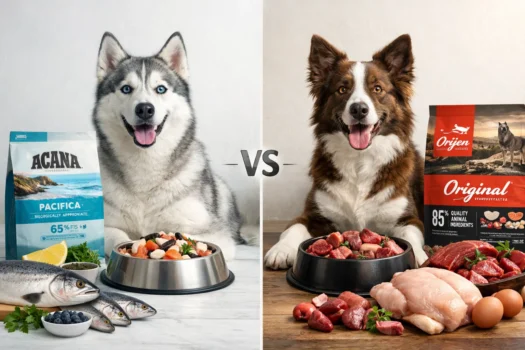
Both Acana and Orijen are premium dog food brands made by Champion Petfoods, sharing a similar philosophy around high-protein, meat-forward nutrition. Despite coming from the same manufacturer, they occupy different positions in the market — with clear distinctions in ingredient density, protein concentration, and price point that matter for dog owners choosing between them.
This comparison covers six decision-critical dimensions: protein and calorie density, ingredient quality, digestibility for sensitive stomachs, puppy formulas, daily feeding cost, and suitability for active dogs. Every section gives you a direct verdict so you can choose with confidence — not just “both are great” hedging.
- Best Overall Value → Acana Wild Atlantic — ~$3.00–$3.50/day (medium dog)
- Best for Active & Working Dogs → Orijen Original — ~$4.00–$5.00/day (medium dog)
- Best for Sensitive Stomachs → Acana Singles Duck & Pear — single protein, elimination-friendly
- Best Puppy Formula → Acana Puppy — safer Ca:P ratio for large breeds; Orijen Puppy for small/medium breeds prioritizing protein density
- Highest Protein Density → Orijen Original (38%) vs Acana Wild Atlantic (35%)
Daily cost estimates assume a 30 lb dog eating roughly 2 cups/day.
Acana vs Orijen: Quick Verdict for Dog Owners
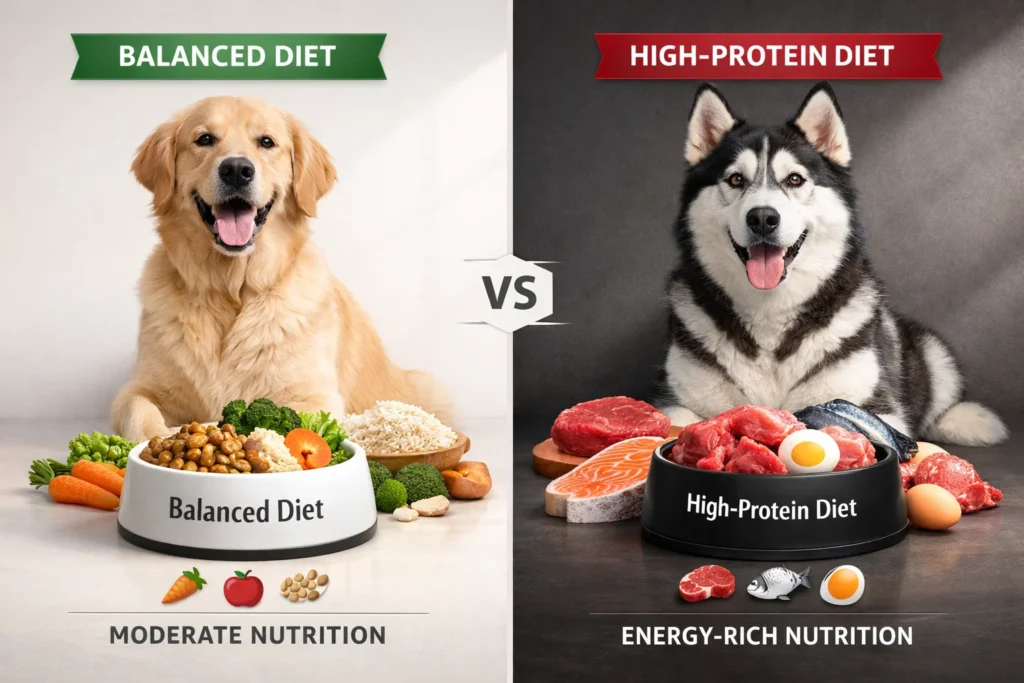
Who Should Choose Acana
- Budget-conscious owners who still want premium, meat-first ingredients without dropping to mid-tier brands
- Dogs with moderate activity levels, a tendency toward weight gain, or those transitioning up from mid-tier kibble
- Large-breed puppy owners where controlled Ca:P ratios matter for skeletal development
Who Should Choose Orijen
- Owners prioritizing maximum protein density and the closest approximation to a whole-prey diet in dry kibble form
- Highly active, working, sporting, or athletic dogs with high daily caloric needs
- Dogs that have thrived on high-protein diets before and whose owners are comfortable with the premium price point
Bottom line: Choose Acana for balanced high-protein nutrition at a more accessible price. Choose Orijen when maximum meat inclusion and the highest protein concentration are your primary goals — and your dog’s activity level justifies the caloric density.
Acana vs Orijen: Key Brand Differences Explained
Acana and Orijen are both made by Champion Petfoods in DogStar Kitchens facilities in Kentucky, using the same regional-ingredient sourcing philosophy. The difference is one of intensity. Orijen pushes every nutritional metric — protein percentage, organ inclusion, meat-to-plant ratio — further than Acana, which is designed to be a more broadly accessible premium option.
Acana targets the upper-mid tier of the premium segment. It uses fresh and raw animal ingredients as the primary protein base, but includes a higher proportion of legumes and vegetables compared to Orijen. This results in protein levels typically ranging from 29–35% depending on the formula.
Orijen is built around a biologically appropriate whole-prey philosophy — meaning it includes not just muscle meat but also organs, cartilage, and bone in proportions meant to mimic what a dog would eat in the wild. This drives protein to 38–44% across its lineup and pushes the price into the ultra-premium tier.
Acana vs Orijen Comparison: Protein, Price & Ingredients at a Glance
| Factor | Acana | Orijen |
|---|---|---|
| Protein Range | 29–35% | 38–44% |
| Fat Range | 15–17% | 18–20% |
| Calories (approx.) | ~370 kcal/cup | ~421–449 kcal/cup |
| Ingredient Style | High-protein, regional, balanced macros | Whole-prey, maximum meat & organ inclusion |
| Price Per Pound | ~$3.50–$4.50 | ~$4.50–$6.00 |
| Annual Cost Difference | — | ~$400–$700 more vs Acana |
| Best For | Moderate-activity adults, large-breed puppies, sensitive stomachs | Active/working dogs, maximum protein priority |
Acana vs Orijen: Protein and Calorie Comparison
This is where the two brands diverge most clearly. Orijen consistently delivers 3–9% more protein per formula than the closest Acana equivalent, alongside meaningfully higher caloric density. For most pet owners, that difference determines which brand actually fits their dog’s lifestyle.

Best for: Adult dogs with moderate-to-active lifestyles who need high-protein nutrition without the ultra-premium price tag of Orijen. Also a strong choice for owners transitioning up from mid-tier kibble.
Why It Made the List
- 35% protein from five wild-caught North Atlantic fish species — herring and mackerel as the first two ingredients, providing natural omega-3s without supplemental fish oil as the primary source
- ~370 kcal/cup caloric density is meaningfully lower than Orijen, giving owners more portioning flexibility for dogs prone to weight gain or those on moderate exercise routines
- Grain-free formula uses lentils and chickpeas as the primary carbohydrate sources — no corn, wheat, soy, or tapioca used as fillers
Key Specs
- Protein: 35% | Fat: 17% | Fiber: 5% | kcal: ~370/cup
- AAFCO: Formulated for adult maintenance [VERIFY on current bag label]
- Top 5 ingredients: Herring, Mackerel, Herring Meal, Acadian Redfish, Herring Oil
Honest Take
- The all-fish ingredient deck is a genuine differentiator — this is one of the few kibbles where every top-5 ingredient is a named fish species, not chicken or turkey with fish oil added as an afterthought
- Compared to Orijen, the lower kcal/cup makes it easier to feed appropriate portions to less active or neutered dogs without a separate weight-management formula
- Most common owner report: Improved coat shine and reduced shedding within 4–6 weeks, attributed to high omega-3 content. Most common complaint: Strong fish smell that some owners find off-putting when opening the bag.

Best for: Highly active, working, or athletic dogs where maximum protein and caloric density matter. Also suited for dogs that have already been on high-protein grain-free diets and are known to do well with rich formulas.
Why It Made the List
- 38% protein from whole chicken, turkey, whole eggs, and organ meats in the top 5 — the organ inclusion (chicken liver, turkey liver) adds natural micronutrient density that synthetic supplements are typically used to replicate in lesser formulas
- ~449 kcal/cup means a 50 lb active dog can meet daily energy needs with a smaller feeding volume than Acana, reducing meal prep and bag consumption rate
- Two-thirds of the formula is animal-based ingredients by weight — Orijen publishes this ratio explicitly, which no mid-tier brand can match and few ultra-premium competitors verify publicly
Key Specs
- Protein: 38% | Fat: 18% | Fiber: 4% | kcal: ~449/cup
- AAFCO: Formulated for adult maintenance [VERIFY on current bag label]
- Top 5 ingredients: Chicken, Turkey, Whole Eggs, Chicken Liver, Turkey Liver
Honest Take
- The higher caloric density is a genuine advantage for working and sporting dogs, but it’s also a liability for sedentary or indoor dogs — portion miscalculation is the most common cause of weight gain reported with Orijen
- The price premium over Acana is real and substantial — for a 50 lb dog, you’re spending roughly $400–$600 more per year; make sure your dog’s activity level justifies the investment before committing
- Most common owner report: Visibly leaner muscle tone and sustained energy in active breeds within 6–8 weeks. Most common complaint: Loose stools or digestive upset during the first 1–2 weeks if transitioning too quickly from a lower-protein diet.
Orijen’s higher caloric density means smaller daily serving sizes for active dogs — an advantage for working breeds, but a portion-control risk for sedentary pets. Always weigh food rather than relying on cup measurements if your dog is prone to weight fluctuation. Consult your vet before switching to a higher-protein formula if your dog has any history of kidney or digestive conditions.
Acana vs Orijen for Sensitive Stomach: Which Is Easier to Digest?
High-protein diets aren’t automatically hard on digestion — but ingredient complexity matters. A dog reacting to chicken needs a different solution than a dog reacting to grain. Here’s how each brand addresses the sensitive-stomach problem.

Best for: Dogs with confirmed or suspected food sensitivities where isolating a single protein source is the diagnostic priority. Also suitable for dogs that have reacted to poultry or red meat and need a novel protein option.
Why It Made the List
- Duck is the sole animal protein — no chicken, turkey, beef, or fish cross-contamination in the formula, making it a practical option for elimination protocols that require strict single-protein feeding
- Pear as the primary carbohydrate source is a genuinely uncommon choice — it’s low-glycemic, easily digestible, and unlikely to be a previously encountered ingredient for most dogs, reducing the chance of a pre-existing sensitivity
- 6% fiber is the highest in this comparison — supports gut motility and stool consistency in dogs prone to loose stools from rich, high-fat diets
Key Specs
- Protein: 29% | Fat: 15% | Fiber: 6% | kcal: ~370/cup
- AAFCO: Formulated for adult maintenance [VERIFY on current bag label]
- Top 5 ingredients: Duck, Duck Meal, Whole Pears, Whole Lentils, Whole Chickpeas
Honest Take
- This is Acana’s most defensible option for sensitive dogs — the limited ingredient approach is purpose-built for the problem, not retrofitted from a regular formula with ingredients removed
- At 29% protein, it’s lower than most Acana formulas, which makes it easier on kidneys and generally better tolerated during digestive recovery periods
- Most common owner report: Firmer, more consistent stools within 2 weeks of transition, particularly in dogs previously on poultry-based formulas. Most common complaint: Less palatability than the Wild Atlantic formula — some picky dogs take longer to accept the duck-and-pear combination.

Best for: Dogs with confirmed poultry or red meat intolerances that still need Orijen-level protein density. Not suitable as an elimination diet — the six-fish formula has multiple protein sources — but a strong option for dogs that are known fish-tolerant and need high protein alongside digestive support.
Why It Made the List
- All six protein sources are fish — mackerel, herring, flounder, and their respective meal forms — making this a practical poultry-free option that still delivers Orijen’s characteristic 38% protein
- Fish-based proteins are among the most digestible animal proteins for dogs, with high bioavailability of essential amino acids — a meaningful advantage for dogs with compromised gut function
- Naturally elevated omega-3 content from six fish species supports skin barrier integrity, which often degrades alongside gut dysbiosis in sensitive dogs
Key Specs
- Protein: 38% | Fat: 18% | Fiber: 4% | kcal: ~421/cup
- AAFCO: Formulated for adult maintenance [VERIFY on current bag label]
- Top 5 ingredients: Whole Mackerel, Whole Herring, Whole Flounder, Mackerel Meal, Herring Meal
Honest Take
- This is not a substitute for a true limited-ingredient diet if your vet has recommended an elimination protocol — the six fish species is still six protein sources, and any one of them could theoretically be a trigger
- The 38% protein at ~421 kcal/cup is more than most sensitive dogs need — if your dog is less active alongside being sensitive, weight management becomes a secondary concern to monitor
- Most common owner report: Improved coat condition and reduced itching in dogs with previously suspected poultry allergies. Most common complaint: Strong fish odor similar to Acana Wild Atlantic — a consistent characteristic of fish-forward kibbles at this quality tier.
If your dog has confirmed food sensitivities and you’re not sure which direction to go, consult your vet before selecting a formula. Elimination diets are most effective when guided by a professional who can rule out environmental triggers alongside dietary ones.
Acana vs Orijen Puppy Formula Comparison
Puppy nutrition is where the protein-density gap between Acana and Orijen has the most practical implications. More protein isn’t automatically better for puppies — skeletal development depends on controlled calcium-to-phosphorus ratios, especially in large breeds.
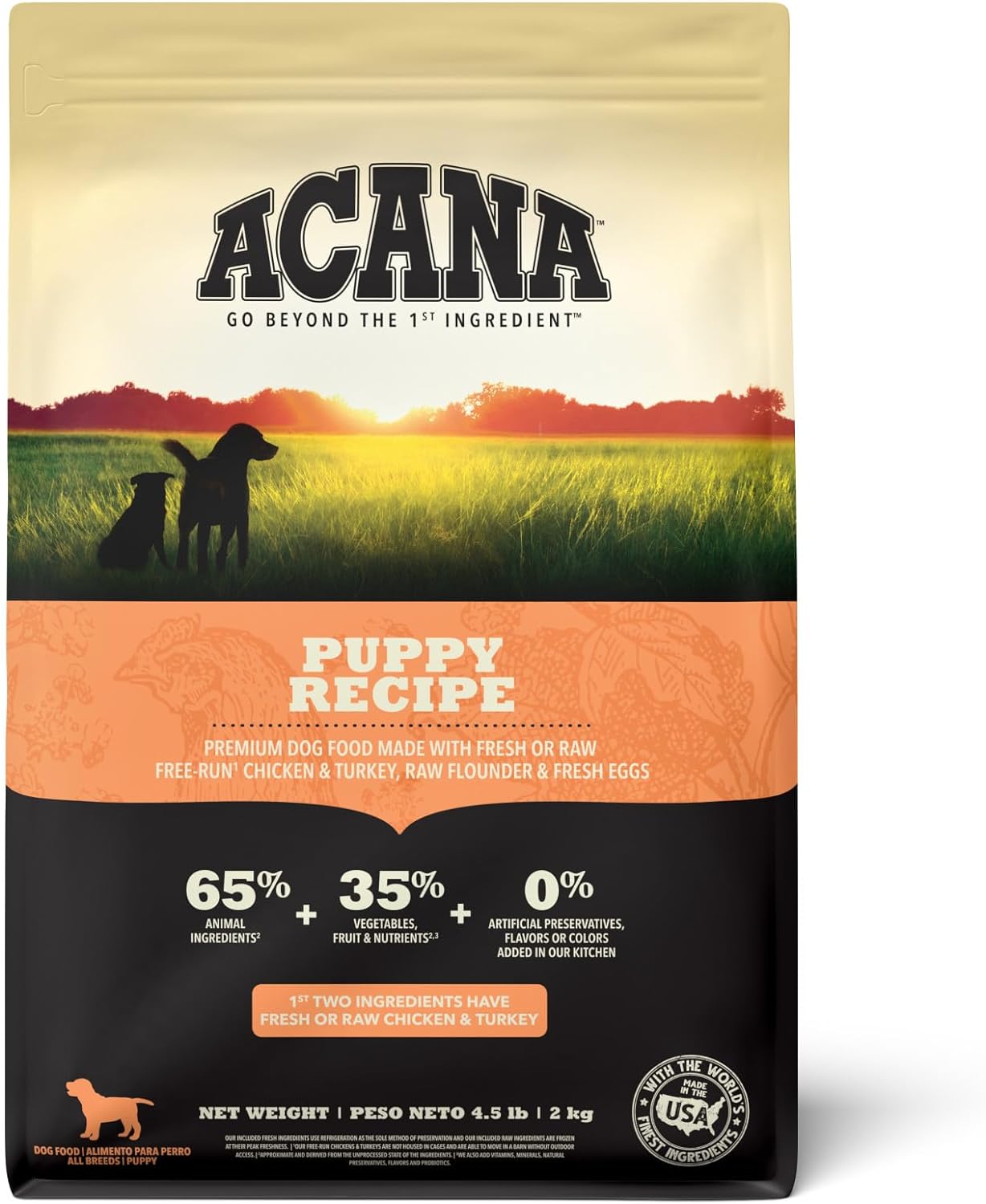
Best for: Puppies of all sizes, but particularly recommended for large and giant breeds where controlled growth rates matter. The more moderate protein and fat profile reduces the risk of rapid developmental growth associated with musculoskeletal problems in larger dogs.
Why It Made the List
- 31% protein and 16% fat is a more controlled macronutrient profile for puppies than Orijen’s 42%/20% — this matters significantly for breeds over 50 lbs adult weight where excessive early protein can accelerate growth beyond what bone density can support
- First five ingredients include chicken, chicken meal, turkey meal, whole herring, and chicken liver — multi-protein sourcing without the extreme organ-meat density of Orijen, which can cause loose stools in puppies not yet adjusted to rich diets
- Lower caloric density (~370 kcal/cup) makes portion control more forgiving for puppy owners still learning appropriate feeding volumes for their breed
Key Specs
- Protein: 31% | Fat: 16% | Fiber: 5% | kcal: ~370/cup
- AAFCO: Growth and reproduction / all life stages [VERIFY on current bag label]
- Top 5 ingredients: Chicken, Chicken Meal, Turkey Meal, Whole Herring, Chicken Liver
Honest Take
- For large-breed puppy owners, this is the more defensible choice over Orijen — the industry consensus is that large breeds are better served by controlled-growth nutrition, not maximum protein density, during the first 12–18 months
- The price is meaningfully lower than Orijen Puppy, which is a real consideration given puppies typically eat more per pound of body weight than adults
- Most common owner report: Good palatability and consistent stool quality even during the initial transition. Most common complaint: Some owners of small breeds feel the protein level is lower than they want — in that case, Orijen Puppy is worth considering.

Best for: Small and medium breed puppies (projected adult weight under 50 lbs) where protein density supports rapid but appropriate development. Also suitable for owners who have already fed adult dogs Orijen successfully and want to continue in the same family of formulas.
Why It Made the List
- 42% protein from chicken, turkey, chicken liver, whole eggs, and turkey liver — the organ-meat density in the top 5 is higher than any other puppy formula in this comparison, providing natural B vitamins, iron, and zinc without relying entirely on supplementation
- 20% fat supports the high caloric needs of small-breed puppies, which have faster metabolisms and higher energy-per-pound requirements than large breeds during the growth phase
- ~449 kcal/cup means puppies can meet daily energy needs with less food volume than Acana Puppy — relevant for small breeds with small stomachs that fill quickly
Key Specs
- Protein: 42% | Fat: 20% | Fiber: 4% | kcal: ~449/cup
- AAFCO: Growth and reproduction / all life stages [VERIFY on current bag label]
- Top 5 ingredients: Chicken, Turkey, Chicken Liver, Whole Eggs, Turkey Liver
Honest Take
- The 42% protein and 20% fat profile is aggressive — for large-breed puppies, this is not the right choice regardless of price, as excess protein-driven growth can create long-term joint issues in dogs like Labradors, Goldens, and German Shepherds
- For Frenchies, Beagles, Cocker Spaniels, and similar medium breeds, this is one of the strongest puppy kibbles on the market in terms of ingredient integrity and protein quality
- Most common owner report: Strong palatability — picky puppy owners frequently note this is one of the few formulas their dogs eat without hesitation. Most common complaint: Price is high for a puppy formula, particularly given puppies eat more per pound than adults and bags disappear faster.
If you’re unsure which puppy formula is right for your dog’s breed size, consult your vet — breed-specific growth curves vary considerably, and what works for a Chihuahua puppy isn’t appropriate guidance for a Great Dane.
Acana vs Orijen Price Comparison: Daily and Annual Cost Breakdown
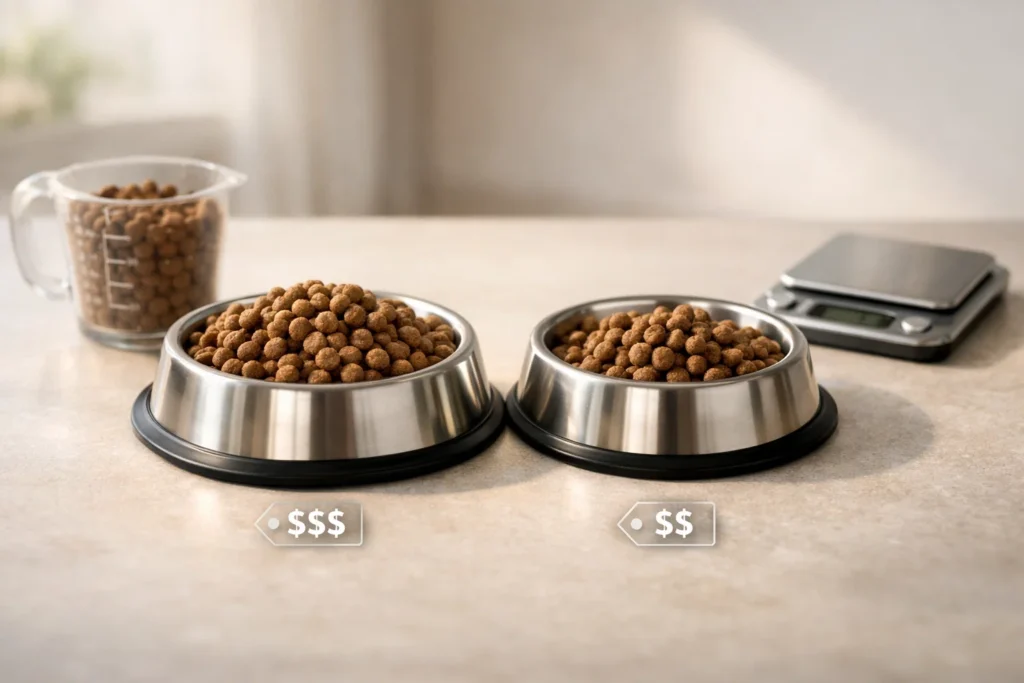
Acana typically retails at around $3.50–$4.50 per pound depending on the formula and bag size. Orijen ranges from approximately $4.50–$6.00 per pound. That per-pound gap translates to a meaningful daily difference when you factor in feeding volumes.
| Dog Size | Daily Cups (approx.) | Acana Daily Cost | Orijen Daily Cost | Annual Difference |
|---|---|---|---|---|
| Small (15 lbs) | ~1 cup | ~$1.25–$1.75 | ~$1.75–$2.50 | ~$180–$275 more |
| Medium (30 lbs) | ~2 cups | ~$2.50–$3.50 | ~$3.50–$5.00 | ~$365–$550 more |
| Large (60 lbs) | ~3.5 cups | ~$4.50–$6.00 | ~$6.00–$8.75 | ~$550–$1,000 more |
For most dog owners feeding a medium-sized dog, the annual premium for Orijen over Acana runs $400–$700. Both are genuinely premium products — the question is whether your dog’s specific nutritional needs justify the additional spend. For a healthy, moderately active adult dog, Acana delivers comparable ingredient quality without the caloric density that working-dog formulas like Orijen are designed around.
Acana vs Orijen for Active Dogs: Energy Density and Feeding Guide
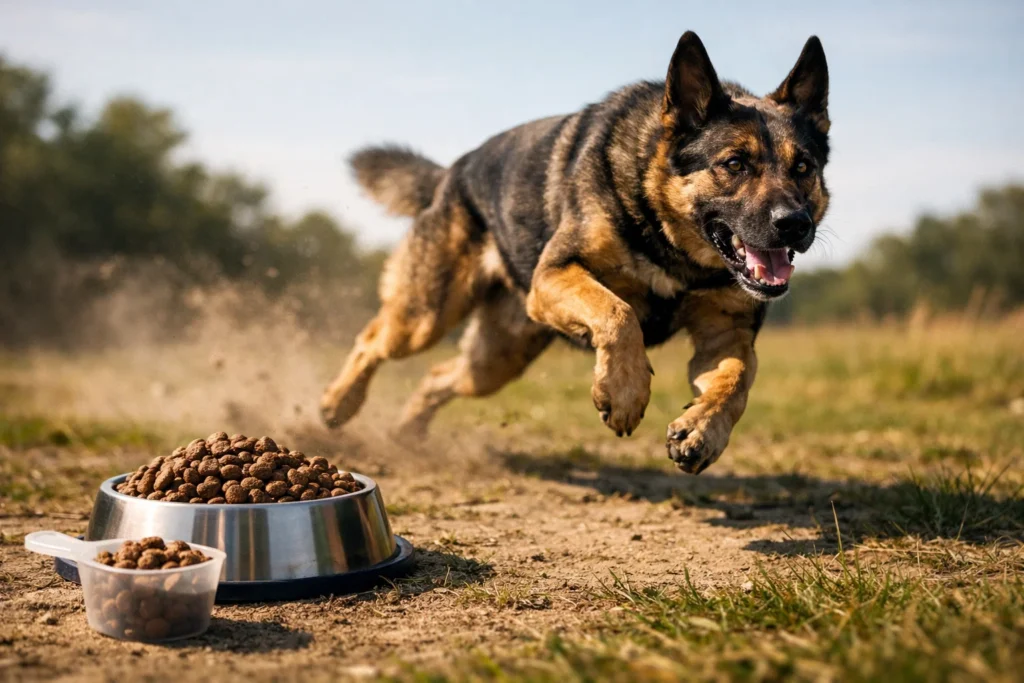
Energy density — not just protein percentage — is what separates these two brands for working and sporting dogs. A food can have high protein but low kcal/cup and still underperform for a dog burning 1,500+ calories per day. Here’s how each formula holds up under real activity demands.
Which Formula for Your Dog’s Activity Level?
- Sedentary or indoor dogs (under 30 min/day exercise) → Acana Wild Atlantic. The lower kcal/cup reduces overfeeding risk without sacrificing ingredient quality.
- Moderately active dogs (30–60 min/day, daily walks + play) → Either works. Acana offers more portioning flexibility; Orijen suits dogs that run lean and struggle to maintain weight.
- Highly active dogs (60–90+ min/day, hiking, fetch, agility) → Orijen Original. The 449 kcal/cup means you can meet high daily energy needs without overloading the stomach with volume.
- Working or sporting dogs (sled dogs, hunting, field trial dogs) → Orijen Original. This is the use case the formula was built for — sustained high-output energy from protein and fat, not carbohydrate-driven glucose spikes.
For working dogs and sled breeds burning extreme daily calories, Orijen’s combination of 38% protein and ~449 kcal/cup provides meaningful fueling efficiency over Acana. For the average pet owner with an active-but-not-athletic dog, Acana’s ~370 kcal/cup is sufficient and considerably more cost-effective.
Who Should Avoid Acana or Orijen? Conditions and Exceptions

- Kidney disease or phosphorus restriction: Both brands are high-protein and high-phosphorus by design — they are not appropriate for dogs with diagnosed renal conditions. Prescription diets like Hill’s k/d or Royal Canin Renal Support are the appropriate category.
- Pancreatitis history: The fat content in both brands (15–20%) is meaningfully above what pancreatitis-prone dogs should consume without veterinary clearance. A low-fat prescription diet is typically required post-episode.
- Confirmed single-protein allergy requiring a prescription novel protein: Acana Singles is close to LID territory, but it still contains legumes and multiple plant sources that may complicate severe allergy cases. A hydrolyzed or prescription single-protein diet may be necessary.
- Obesity or extreme caloric restriction needs: Neither brand offers a dedicated weight-management formula with significantly reduced fat. A veterinary therapeutic diet under supervision is more appropriate for clinically obese dogs.
- Metabolic, urinary, or hepatic conditions requiring prescription nutrition: These conditions require formulas specifically designed around therapeutic targets — neither Acana nor Orijen is formulated for this purpose.
Always consult your vet before switching to a high-protein diet if your dog has any diagnosed health condition. This is especially important for senior dogs, where kidney function naturally declines with age and protein load becomes a more significant variable.
Acana vs Orijen: Frequently Asked Questions
Is Acana better than Orijen?
Neither brand is objectively better — they serve different dogs. Orijen delivers higher protein (38–42%) and greater meat inclusion, making it the stronger choice for highly active dogs or owners prioritizing whole-prey nutrition. Acana offers slightly lower but still high protein (29–35%) at a more accessible price point. For most average-activity adult dogs, Acana provides excellent nutritional value without the caloric density that can cause weight gain in less active pets. For working, sporting, or highly athletic dogs, Orijen has a measurable advantage in protein and energy density.
How does protein compare between Acana and Orijen?
Orijen consistently delivers 3–9% more protein than comparable Acana formulas. Orijen Original sits at 38% protein; Acana Wild Atlantic is 35%. The puppy formulas show the largest gap — Orijen Puppy reaches 42% versus Acana Puppy’s 31%. Both brands exceed AAFCO minimum protein requirements for adult dogs, but Orijen’s higher protein concentration and greater organ-meat inclusion may provide additional benefit for athletic or working dogs with elevated amino acid demands.
Which is better for a sensitive stomach — Acana or Orijen?
Acana Singles Limited Ingredient Duck & Pear is the stronger choice for dogs with confirmed food sensitivities. It uses duck as the sole animal protein source, making it practical for elimination protocols aimed at isolating dietary triggers. Orijen Six Fish uses multiple fish proteins and is highly digestible, but is not a true limited-ingredient diet. If your dog has a diagnosed allergy or intolerance, Acana Singles provides greater ingredient control. If your dog simply does better on fish-based diets without a specific confirmed allergy, Orijen Six Fish is a viable alternative. Consult your vet before starting any elimination diet.
What is the cost difference between Acana and Orijen?
Acana typically costs $3.50–$4.50 per pound; Orijen ranges from $4.50–$6.00 per pound. For a medium-sized 30 lb dog, the annual cost difference is approximately $365–$550, with Orijen being the more expensive option. For large dogs eating higher volumes, that gap can reach $700–$1,000 per year. Both are premium products, but Orijen sits firmly in the ultra-premium tier. If budget is a consideration but you still want meat-first, high-protein nutrition, Acana delivers comparable ingredient integrity at a lower price.
Is it safe to switch between Acana and Orijen?
Switching between the two brands is generally safe but should be done gradually over 7–10 days to minimize digestive disruption. Start with roughly 25% new food mixed into 75% current food, and increase the ratio every 2–3 days. Because Orijen has notably higher protein and fat than Acana, transitioning upward to Orijen may cause loose stools if done too quickly. Dogs with sensitive digestion may need up to 2 weeks. If loose stools persist beyond the transition window, consult your vet.
Are Acana and Orijen AAFCO compliant?
Yes. Both Acana and Orijen formulas are manufactured to meet AAFCO nutritional standards for the life stages indicated on their packaging. Products labeled for adult maintenance or all life stages have been formulated or tested to meet minimum nutritional requirements. Always verify the specific AAFCO statement on the bag you purchase, as not all formulas within each brand cover all life stages — some adult formulas are not appropriate for puppies or pregnant and nursing dogs.
Our Verdict: Acana vs Orijen
Both Acana and Orijen are among the best dry dog foods available in the U.S. premium market. Choosing between them comes down to three variables: your dog’s activity level, your budget, and whether your dog has any specific health conditions that favor one formula profile over the other.
For most dog owners — those with healthy adult dogs on moderate exercise routines — Acana is the better practical choice. The ingredient quality is genuinely premium, the protein levels exceed what most adult dogs require, and the price point is more sustainable long-term. You’re not compromising on quality by choosing Acana over Orijen; you’re simply choosing the formula that fits a broader range of dogs.
Orijen earns its premium price for specific dogs: working breeds, sporting dogs, highly active pets, and owners who want the closest approximation to a whole-prey diet in kibble form. If your dog genuinely burns the calories and you can absorb the annual cost premium, Orijen delivers on its nutritional promises.
If you’re still unsure which formula fits your dog’s specific needs, talk to your vet — especially if your dog is a puppy, a senior, or has any diagnosed health conditions that affect how they process protein and fat.