 Marco Williams
Raw feeding is one of the most debated topics in dog nutrition, and most articles online pick a side before you finish the first paragraph. This one doesn’t.
Raw dog food for puppies isn’t a simple yes-or-no question. The answer depends heavily on what kind of raw you’re talking about — a commercial product tested against AAFCO’s nutrient standards, or a homemade recipe assembled at the kitchen counter. It also depends on your puppy’s expected adult size, since large and giant breed puppies have nutritional needs that smaller breeds don’t.
This guide walks through what AAFCO labeling actually means for a growing puppy, what major veterinary organizations have said about raw feeding and why, what raw feeding advocates point to, and — if you decide this is the right path — how to start safely.
Is Raw Dog Food Safe for Puppies?
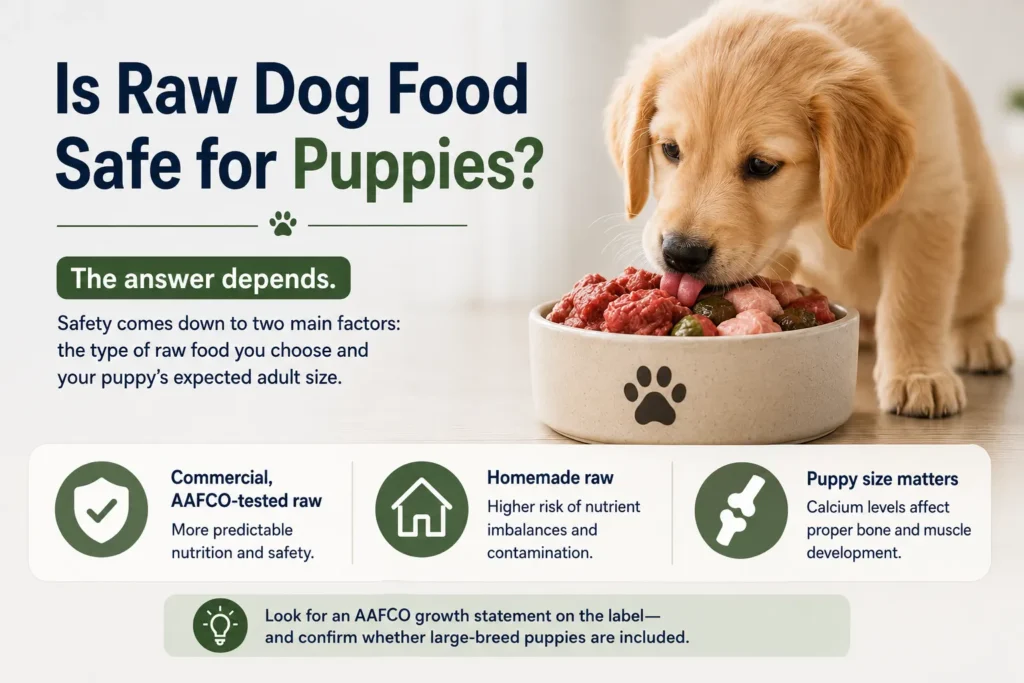
The honest answer is: it depends — mainly on whether you’re talking about commercial, AAFCO-tested raw food or homemade raw, and on your puppy’s expected adult size.
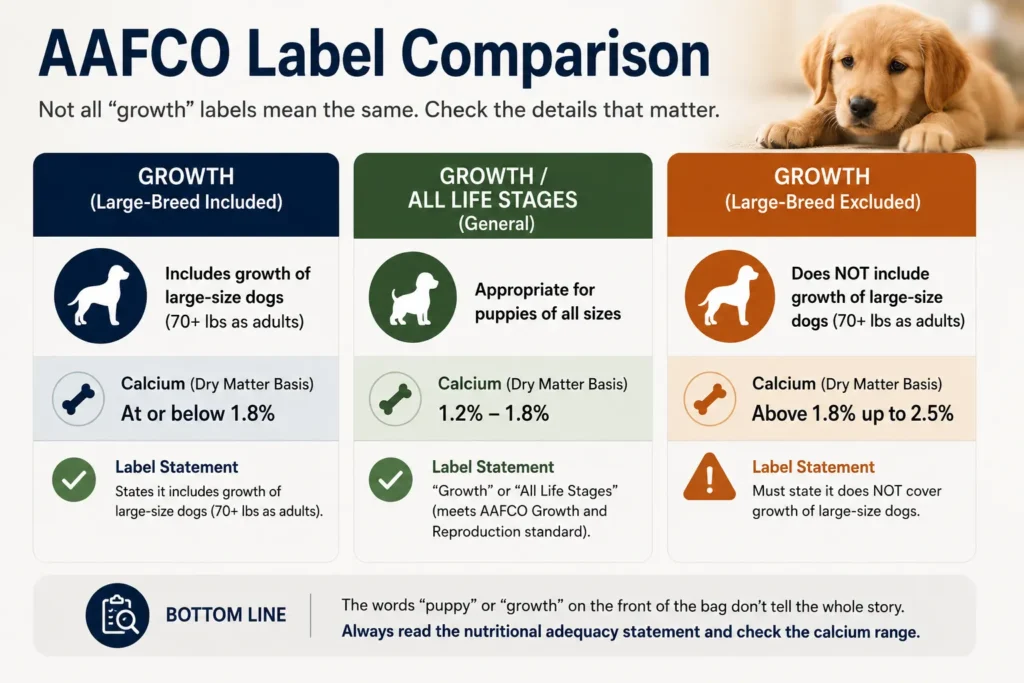
Puppies have different nutritional needs than adult dogs, and the differences aren’t small. AAFCO maintains two nutrient profiles for dog food: Adult Maintenance, and Growth and Reproduction. A product can only be labeled appropriate for puppies if it meets the Growth and Reproduction profile, or “All Life Stages,” meaning it meets both. Calcium is the nutrient where this matters most, since both too little and too much during the growth phase can affect skeletal development.
| Life Stage / Size | Calcium Range (Dry Matter Basis) | What the Label Says |
|---|---|---|
| Adult Maintenance | 0.5% – 2.5% | “Adult” or “Maintenance” |
| Growth / All Life Stages (general) | 1.2% – 1.8% | “Growth” or “All Life Stages” |
| Growth — large-breed included | At or below 1.8% | States it includes growth of large-size dogs (70+ lbs as adults) |
| Growth — large-breed excluded | Above 1.8% (up to 2.5%) | Must state it does NOT cover growth of large-size dogs |
Here’s the distinction most owners never see. A product can say “growth” or “all life stages” right on the front of the bag — and still explicitly exclude large-breed puppies, depending on which row of that table its calcium level falls into. The words “puppy” and “growth” on the packaging don’t tell you which row applies. You have to check the actual nutritional adequacy statement on the label.
Major veterinary organizations, including the American Veterinary Medical Association, discourage raw feeding for dogs and cats based on documented findings of bacterial contamination — Salmonella, Listeria monocytogenes, E. coli, and Campylobacter — in raw pet food testing conducted by the FDA and in peer-reviewed studies. This is a real, documented concern, not a fringe opinion.
At the same time, the picture is more nuanced than a single warning suggests. In one study cited by the AVMA’s own materials, Salmonella was found in stool samples from dogs fed homemade raw diets, but not in dogs fed commercial raw diets. The AVMA also notes that no studies have established the relative population-level risk between raw diets and kibble overall, and that there have been no confirmed reports of human illness specifically linked to raw pet food to date.
The rest of this guide focuses on commercial raw products that carry an AAFCO growth statement. Homemade raw for a puppy should only be attempted with a board-certified veterinary nutritionist’s formulation — calcium and phosphorus levels are easy to get wrong without that kind of guidance, and the consequences during the growth phase are not minor.
What Raw Feeding Advocates Say
Raw feeding advocates make several points worth understanding, even if DFI isn’t endorsing them as established facts.
One frequently cited point is carbohydrate content. Puppies have no nutritional requirement for carbohydrates, while kibble averages 30% to 60% carbohydrate content by weight. Advocates argue that a lower-carb, higher-protein diet more closely matches what dogs evolved to eat.
Some owners report improved digestibility and firmer, smaller stools after switching to raw. Ingredient transparency is another common point — with raw, owners can see exactly what’s going into each meal, down to the specific cuts and organs used.
Advocates also point to anecdotal improvements in coat condition, energy levels, and allergy symptoms after a switch to raw. These reports are common in raw feeding communities, but they’re anecdotal rather than clinically established.
On the safety side, some commercial raw brands use processing methods like high pressure processing (HPP), which is designed to reduce pathogen load while keeping the product raw — addressing part of the contamination concern raised in the previous section without cooking the food.
These are commonly cited points from raw feeding advocates, not clinical guarantees. The product comparison below focuses on commercial options that pair these potential benefits with AAFCO testing and, in some cases, pathogen-reduction processing.
Best Raw Dog Food for Puppies: 5 Commercial Options
These five products were selected based on AAFCO growth labeling status, whether large-breed puppies are explicitly included, sourcing transparency, and availability through U.S. retailers.
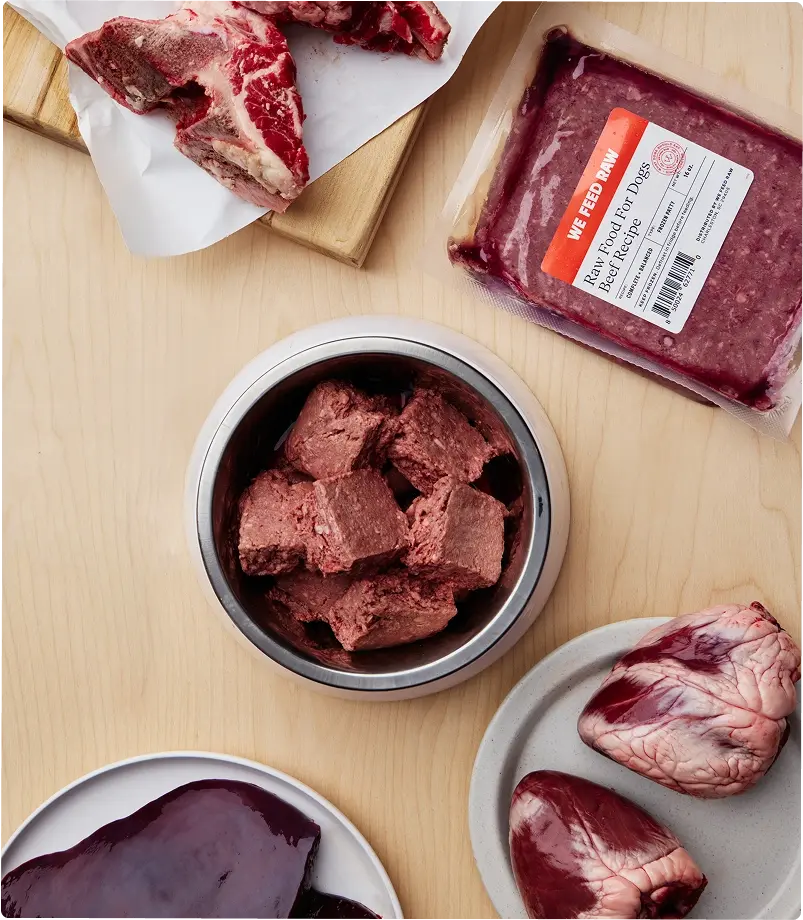
- Format: Frozen raw patties/chubs
- AAFCO statement: All 6 recipes formulated to meet AAFCO requirements for dogs of all life stages, including the growth of large-breed puppies (70+ lbs as adults)
- Large-breed puppy inclusion: Explicitly stated
- Processing: Cold-pressure processing (HPP) to inactivate potential pathogens
- Formulation: Recipes formulated by a PhD animal nutritionist with 40 years of experience
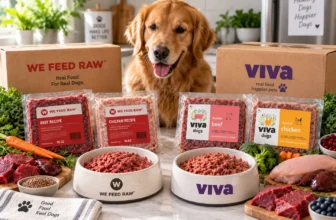
We Feed Raw is the rare product that directly answers both concerns raised earlier in this guide. Its AAFCO statement explicitly covers large-breed puppy growth — not just “growth” in general — and its cold-pressure processing is aimed at reducing the bacterial contamination risk that major veterinary bodies have flagged with raw diets. For owners managing cost, the brand can be used as a 25% or 50% kibble topper, and buying in bulk with budget proteins like chicken or beef can bring the daily cost down.

- Full product name: Stella & Chewy’s Freeze-Dried Raw Dinner Patties, Puppy Recipe
- Format: Freeze-dried patties, 14 oz bag
- AAFCO statement: Formulated specifically for puppies, with DHA, Vitamin E, and L-Carnitine to support body and brain development; made with salmon, beef, organs, and bone
- Large-breed puppy inclusion: Verify per bag
- Price: ~$24–28 for 14 oz bag
- Rating: 4.6/5 on Amazon
This is one of the few puppy-specific raw recipes that’s also labeled for all life stages, meaning you don’t necessarily need to switch formulas once your puppy reaches adulthood. The freeze-dried format makes it easy to store and rehydrate, which is a practical advantage over frozen raw if freezer space is limited. As with any product, check the bag for the large-breed growth statement if your puppy is expected to weigh 70+ lbs as an adult.

- Full product name: Instinct FreshDried Raw Meals, Puppy Recipe, Cage-Free Chicken, 25 oz
- Format: Freeze-dried (FreshDried raw), scoop and serve
- AAFCO statement: Formulated to meet AAFCO Dog Food Nutrient Profiles for growth, EXCEPT for growth of large-size dogs (70 lbs or more as an adult)
- Large-breed puppy inclusion: Explicitly excluded
- Key nutrients: Natural DHA for brain and eye development, plus calcium and phosphorus for strong bones and teeth
Instinct’s FreshDried puppy recipe is one of the clearest real-world examples of the label distinction covered earlier in this guide. It’s formulated for growth — but its own label explicitly excludes large-breed puppies (70 lbs or more as adults). If you have a small or medium-breed puppy, this recipe’s growth formulation applies. If you’re raising a future large or giant breed, this specific recipe isn’t the one for your puppy, even though “puppy” and “growth” both appear on the label. One owner reported starting an 8-week-old puppy on Instinct’s puppy line with good digestion and a positive result at the next vet visit.
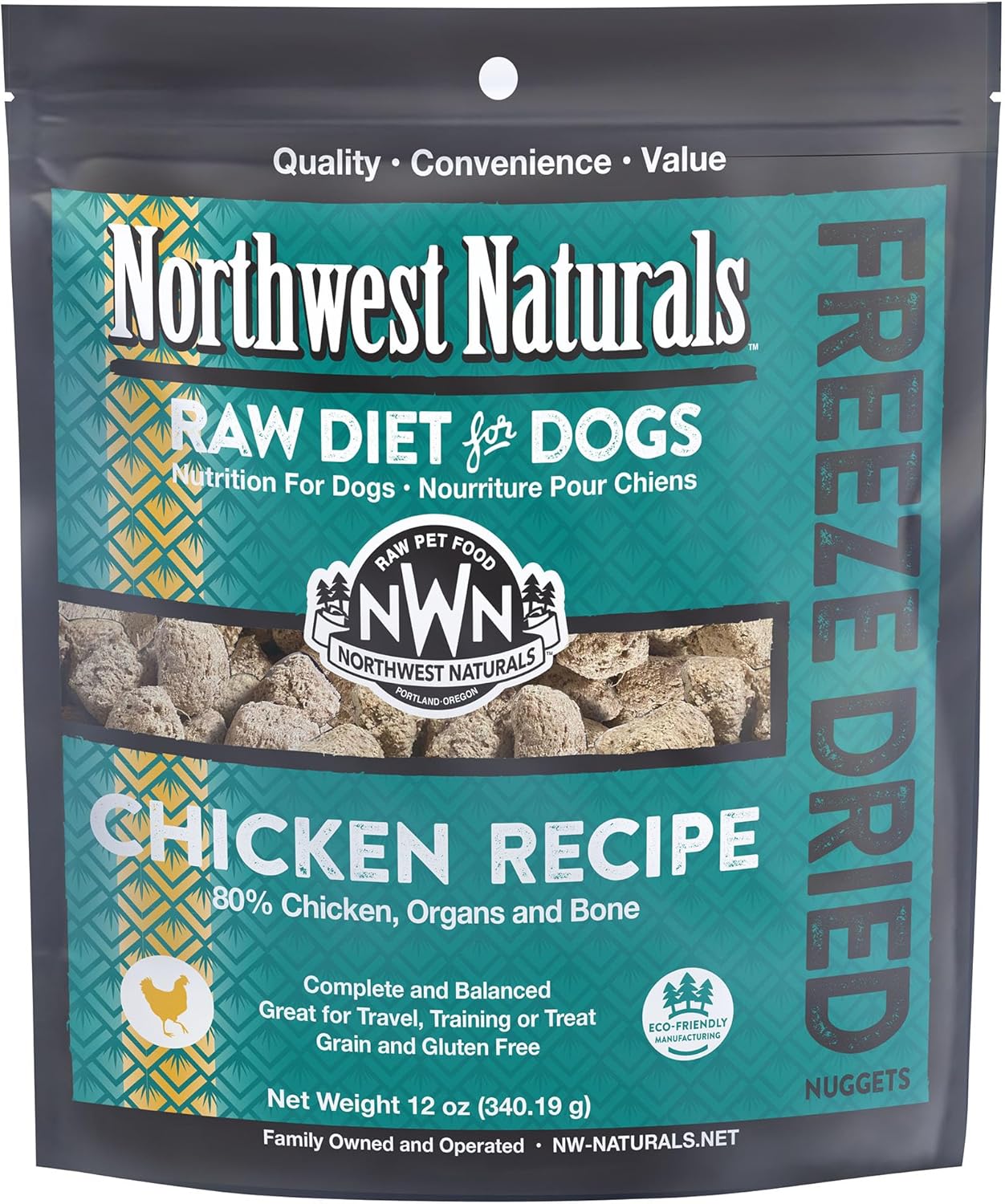
- Full product name: Northwest Naturals Freeze-Dried Chicken Dog Food, Bite-Sized Nuggets, 12 oz
- Format: Freeze-dried nuggets, rehydrate or serve dry
- AAFCO statement: Formulated to meet AAFCO Dog Food Nutrient Profiles for growth/all life stages, INCLUDING growth of large-size dogs (70 lb or more as an adult)
- Large-breed puppy inclusion: Explicitly included
- Sourcing: USDA-inspected, human-grade ingredients
Northwest Naturals’ Chicken recipe is one of the few freeze-dried options on this list that explicitly covers large-breed puppy growth on its own label — useful if you’re raising a future large or giant breed and want a freeze-dried format. The bite-sized nuggets work as a complete meal when rehydrated, or as a kibble topper. Keep reading, because the next product on this list is from the same brand — and tells a very different story.

- Full product name: Northwest Naturals Freeze-Dried Beef Dog Food, Bite-Sized Nuggets, 12 oz
- Format: Freeze-dried nuggets, rehydrate or serve dry
- AAFCO statement: Formulated to meet AAFCO Dog Food Nutrient Profiles for growth/all life stages, EXCEPT for growth of large-size dogs (70 lbs or more as an adult)
- Large-breed puppy inclusion: Explicitly excluded
- Sourcing: USDA-inspected, human-grade ingredients
This is the most important product in this entire guide — not because of what’s in the bag, but because of what’s on the label. Northwest Naturals’ Beef recipe is the same brand, same format, and similar price as the Chicken recipe above — but its AAFCO statement explicitly excludes large-breed puppy growth, while the Chicken recipe explicitly includes it. Same company. Different recipe. Opposite answer to the single most important question in this guide. If you take one thing away from this product section, it’s this: the brand name on the front of the bag tells you nothing about large-breed compliance. Only the specific statement on the specific bag does.
Full Comparison
| Product | Format | AAFCO Growth-Labeled? | Large-Breed Inclusion? | Where to Buy |
|---|---|---|---|---|
| We Feed Raw | Frozen | Yes, all recipes | Included | We Feed Raw |
| Stella & Chewy’s Puppy Recipe | Freeze-dried | Yes | Verify per bag | Amazon |
| Instinct FreshDried Puppy | Freeze-dried | Yes (growth) | Excluded | Amazon |
| Northwest Naturals Chicken Nuggets | Freeze-dried | Yes (growth/all life stages) | Included | Amazon |
| Northwest Naturals Beef Nuggets | Freeze-dried | Yes (growth/all life stages) | Excluded | Amazon |
Look at the last two rows of this table. Same brand, same format — opposite large-breed statements. That’s not an inconsistency in Northwest Naturals’ lineup; it’s exactly why “verify per SKU, not per brand” matters. Always check the specific bag before you buy.
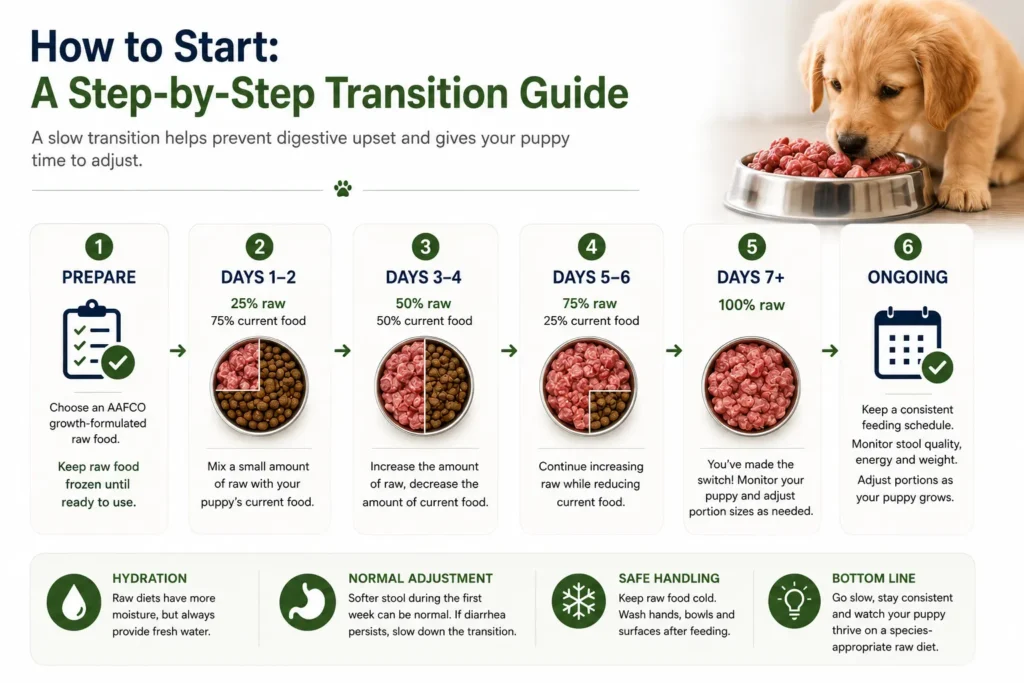
How to Start: A Step-by-Step Transition Guide
Choosing the Right Product
Look for an AAFCO statement that says “Growth” or “All Life Stages” on the bag — not just the word “puppy” on the front packaging. If your puppy is expected to weigh 70 lbs or more as an adult, confirm the label specifically states it includes growth of large-size dogs. If it doesn’t say this explicitly, assume it doesn’t apply and check with the manufacturer or your vet before feeding it to a large-breed puppy.
[Image: 7-10 day raw food transition timeline graphic]
The Transition Timeline
Introduce raw food gradually over 7 to 10 days, slowly increasing the proportion of raw food while decreasing the current diet. Puppies with sensitive digestion may need a slower pace — there’s no harm in stretching this out longer if your puppy’s stool stays loose.
Portioning by Weight — and Why Large-Breed Puppies Are Different
Portions should be based on both your puppy’s current weight and their expected adult weight, not current weight alone. For large-breed puppies, this matters more than it might seem — overfeeding accelerates growth rate, and a faster growth rate has been linked to skeletal development issues like hip dysplasia.
| Puppy Age | Feedings Per Day | What’s Happening |
|---|---|---|
| 8–12 weeks | 4–6 | Small, frequent meals support rapid early growth |
| 3–6 months | 3–4 | Rapid growth phase — portion accuracy matters most here |
| 6–12 months | 2–3 | Growth slows for small and medium breeds |
| 12–24 months (large/giant breeds) | 2 | Still growing — continue large-breed formula and portions |
Exact amounts vary by product and by your puppy’s individual growth curve, so use the feeding guide on your chosen product as a starting point and adjust with your vet based on body condition.
Hygiene and Handling Practices
Treat raw dog food prep the way you’d treat raw meat for human cooking. Use separate prep surfaces from your own food, wash your hands immediately after handling, and clean food bowls promptly after each meal. These habits matter for every household, but they matter more in homes with young children, elderly residents, or anyone with a weakened immune system.
What to Monitor
Watch stool quality, energy levels, and weight gain over the first few weeks. A small amount of stool softening during transition isn’t unusual, but ongoing diarrhea, vomiting, or a sudden drop in energy are reasons to slow the transition or check in with your vet.
Special Considerations
Large and Giant Breed Puppies
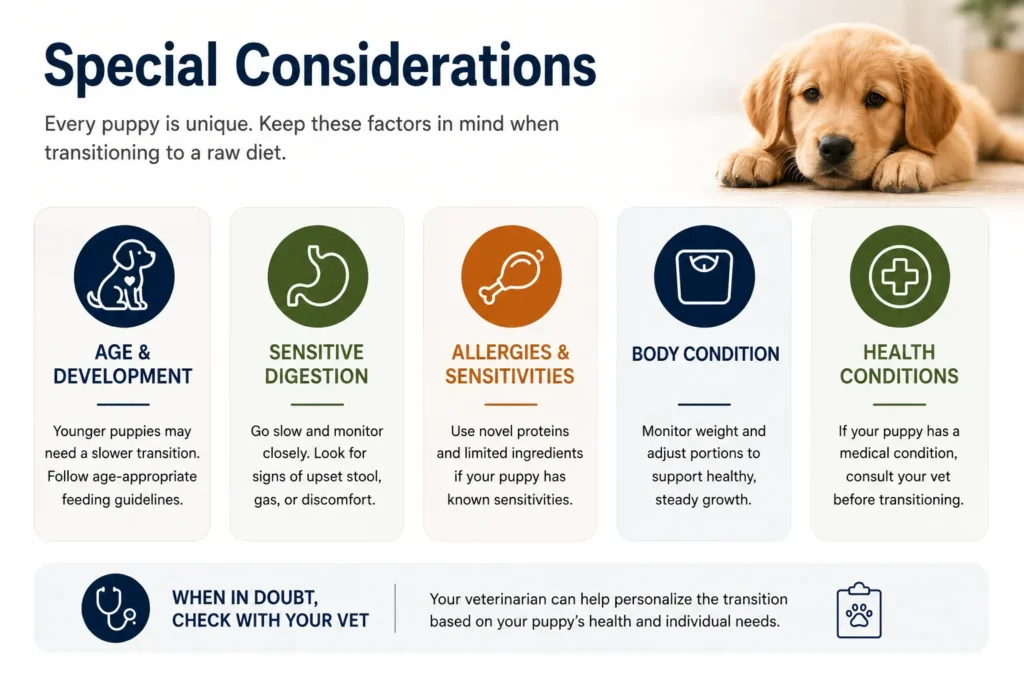
If you have a large or giant breed puppy — German Shepherd, Labrador, Golden Retriever, Great Dane, Bernese Mountain Dog, or similar — talk to your vet before settling on a raw food, even if the bag says “growth” or “all life stages.”
Large-breed puppies fed standard puppy formulas not specifically labeled for large breeds have been associated with developing hip dysplasia at notably higher rates. Feeding for a slower, more controlled growth rate doesn’t change your puppy’s eventual adult size — it just reduces stress on developing joints during the months when bone and joint development are happening fastest.
Confirm with your vet that your chosen raw product’s calcium level and large-breed growth statement match your puppy’s needs. One thing worth repeating: never add a calcium supplement to a raw diet without veterinary direction. Both too little and too much calcium can cause skeletal problems in a growing puppy, and a raw diet that’s already complete and balanced doesn’t need additional calcium on top.
Multi-Pet and Vulnerable Households
If your household includes infants, elderly family members, or anyone who is immunocompromised, talk to your vet about hygiene practices before starting raw feeding — regardless of whether your puppy ever shows any symptoms.
The bacterial contamination concern with raw food isn’t only about whether your puppy gets sick. It’s also about whether bacteria present in the raw food can be transferred to people in the household through handling, bowls, or surfaces. This is a hygiene and handling question, not a question of whether raw feeding is “allowed” in your home — but it’s worth planning for before you start, not after.
Multi-pet households should also be mindful of cross-contamination during meal prep and avoid letting pets share bowls or lick up spilled raw food from shared spaces.
Frequently Asked Questions
Is raw dog food safe for puppies?
It depends on the type of raw food and your puppy’s size. Commercial raw products with an AAFCO growth statement — and, for large breeds, an explicit large-breed growth statement — are formulated to meet a puppy’s nutritional needs during development. Major veterinary organizations caution against raw feeding generally due to documented bacterial contamination findings, and that caution is worth taking seriously alongside good hygiene practices.
What does “AAFCO all life stages” mean for raw dog food?
It means the product meets AAFCO’s Growth and Reproduction nutrient profile, which is stricter than the Adult Maintenance profile, particularly for calcium. But “all life stages” can still exclude large-breed puppies — if a product’s maximum calcium is above 1.8% on a dry matter basis, the label must state it does not cover growth of dogs that will weigh 70 lbs or more as adults. Always check the specific statement, not just the phrase “all life stages.”
Can large-breed puppies eat raw food?
Yes, if the product specifically states it includes growth of large-breed dogs (70 lbs or more as adults) — not just “puppy” or “all life stages” in general. Products like We Feed Raw state this explicitly on their label, which makes this check easier. Talk to your vet to confirm the product matches your puppy’s expected adult size and growth rate.
How do I transition my puppy to raw food?
Introduce raw food gradually over 7 to 10 days, increasing the proportion of raw while decreasing the current diet at the same pace. Watch your puppy’s stool and energy levels during this period, and slow the transition if you notice ongoing digestive upset.
Is homemade raw food safe for puppies?
Homemade raw diets carry more risk of nutritional imbalance without expert formulation — getting the calcium and phosphorus ratio right during the growth phase is difficult without guidance. In one study, Salmonella was found in stool samples from dogs on homemade raw diets but not from dogs on commercial raw diets. If you want to pursue homemade raw for a puppy, work with a board-certified veterinary nutritionist on the formulation.
What are the signs my puppy isn’t getting the right nutrition on raw food?
Poor coat condition, low energy, abnormal stool, or growth that seems unusually fast or slow for your puppy’s breed are all reasons to check in with your vet. None of these signs are a diagnosis on their own, but they’re worth discussing at your puppy’s next visit — especially during the rapid growth phase between 3 and 6 months.
Raw vs. Kibble for Puppies: A Decision Framework
There’s no universal answer here — the right choice depends on your puppy’s size, your household, and what fits your life.
Consider commercial raw if you want raw’s potential benefits — lower carb content, ingredient transparency, and in some cases pathogen-reduction processing — with AAFCO safeguards already built into the formula, and you’re prepared for the cost and prep that come with it.
Talk to your vet first if you have a large or giant breed puppy, so you can confirm the product’s large-breed growth statement matches your puppy’s expected adult size, or if your household includes infants, elderly members, or anyone immunocompromised, so you can plan hygiene practices before you start.
Consider waiting or choosing a growth-labeled kibble if the cost, freezer space, or prep time doesn’t fit your household right now. A well-chosen kibble formulated for your puppy’s breed size is also a reasonable choice, and raw feeding is something you can revisit later if your circumstances change.
If you do decide commercial raw is the right fit, We Feed Raw stands out for two reasons covered throughout this guide: its AAFCO statement explicitly includes large-breed puppy growth, and its cold-pressure processing is designed to reduce the bacterial contamination concern that’s the central caution from veterinary organizations.
We update this article every 90 days as AAFCO labeling, product formulations, and availability change.