 Marco Williams
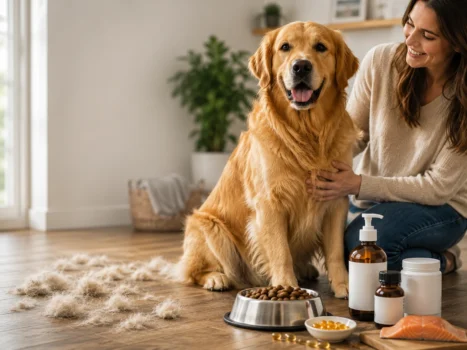
The supplement aisle is full of products promising to fix your dog’s shedding. Shed-control chews, salmon oil pumps, biotin blends, omega capsules — the options are overwhelming, and the claims are often identical. Most of them say the same things: shinier coat, less fur, visible results in weeks.
The problem is that most of those products are not backed by the same quality of evidence. When it comes to supplements for dog shedding, one ingredient has a clear lead over everything else. The rest range from genuinely useful in specific situations to filler dressed up as a selling point.
The short answer: omega-3 fatty acids (EPA and DHA) from marine sources are the only supplement category with strong veterinary evidence for reducing excess shedding. Everything else is secondary.
Best overall: Nutramax Welactin Omega-3 Softgels — vet-recommended, 255mg EPA+DHA per softgel, works for all dog sizes, widely available
Best budget pick: Grizzly Salmon Plus Omega 3-6-9 — 966mg EPA+DHA per tsp at ~$0.10/serving; the best value liquid on the market
Best for picky eaters: Zesty Paws Omega Bites Skin & Coat — chicken-flavored soft chew most dogs accept willingly; AlaskOmega certified fish oil
Best premium multi-ingredient: Native Pet Skin & Coat Air-Dried Chews — combines omega-3, collagen, biotin, zinc, and probiotics in one daily chew
Do Supplements Actually Reduce Dog Shedding?
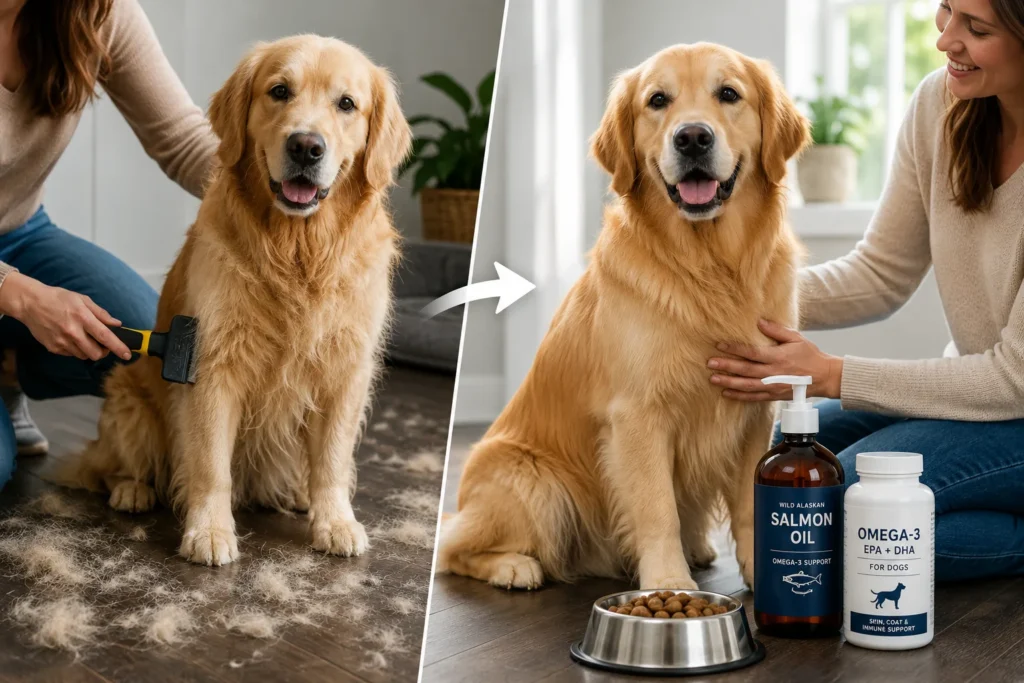
Yes — but only for shedding driven by nutritional deficiency or chronic skin inflammation. Seasonal coat blows, breed-programmed shedding, and health conditions are outside what any supplement can fix. If your Husky blows their undercoat every spring, no pill or oil will change that. But if your Labrador is shedding year-round with a dry, dull coat, nutrition is very likely a factor.
Here’s where the evidence actually stands on the main ingredients:
| Ingredient | Evidence | Works for most dogs? |
|---|---|---|
| Omega-3 (EPA + DHA) — marine source | Strong | Yes — if dose is sufficient |
| Biotin (Vitamin B7) | Moderate | Only if dog is deficient |
| Zinc | Moderate | Mainly Arctic breeds with absorption issues |
| Probiotics | Emerging | Indirect — improves nutrient absorption |
| Flaxseed oil (ALA) | Weak | No — dogs convert less than 10% to usable EPA/DHA |
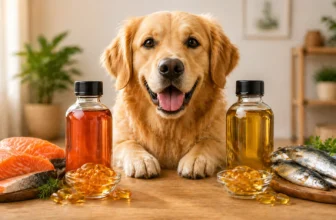
Omega-3 fatty acids from marine sources are the standout. EPA and DHA reduce pro-inflammatory cytokines in skin tissue — chronic skin inflammation weakens the bond between hair and follicle, pushing more hairs into the shedding phase. By calming that response, fish oil keeps more hairs in the growth phase longer. It also improves skin hydration and sebum quality, which protects hair shafts from breakage.
The flaxseed problem is worth calling out specifically. It appears in many budget shedding chews and looks like an omega-3 source on the label. It isn’t — not for dogs. The ALA in flaxseed requires a conversion step dogs perform at less than 10% efficiency, delivering essentially zero functional EPA or DHA.
Expect 8–12 weeks before you see meaningful changes in shedding volume. The first month may bring some improvement in skin texture and coat shine, but actual fur reduction takes longer — you’re growing new hair from the follicle up. Owners who quit at week 4 are usually stopping just before results begin.
Which Ingredients in Shedding Supplements Actually Do Something?
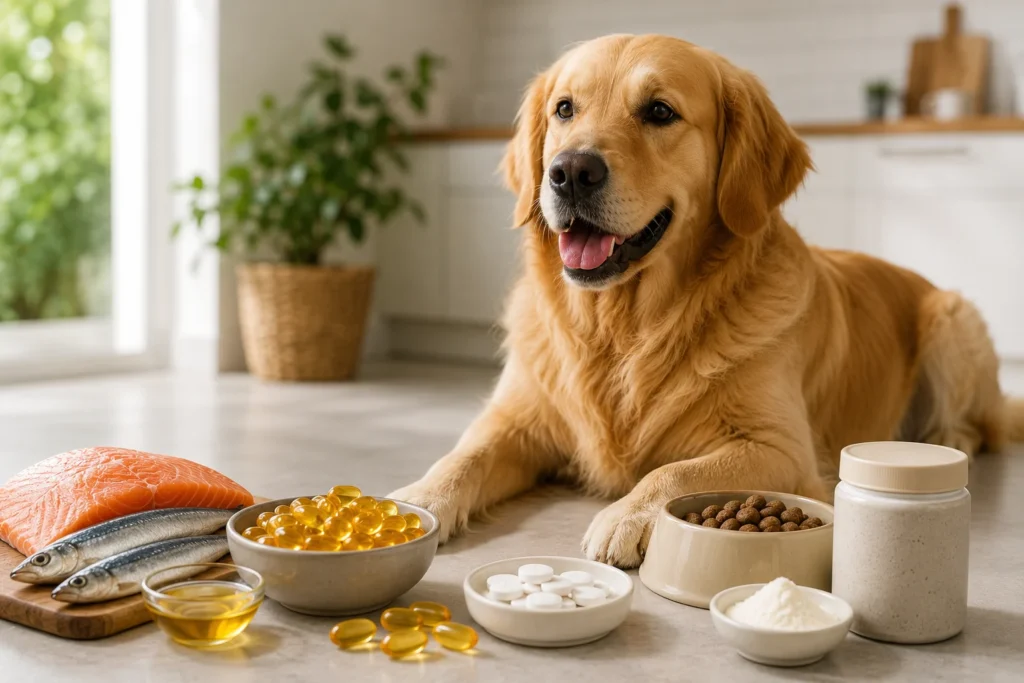
Omega-3 Fatty Acids (EPA + DHA) — The Only One With Strong Evidence
EPA and DHA are preformed long-chain fatty acids that dogs can use immediately. The source must be marine — fish oil, salmon oil, or algae oil. ALA from flaxseed, chia, or hemp requires a conversion process that dogs perform very inefficiently (less than 10% converts to EPA, even less to DHA), making plant-based omega-3s a non-starter for coat support.
A commonly cited veterinary guideline is approximately 40mg of EPA+DHA per pound of body weight per day. This varies by dog, health status, and what you’re treating — consult your vet for your dog’s specific needs before starting supplementation. The key is choosing a product that actually discloses its EPA+DHA content by milligram, so you can dose accurately.
Biotin (Vitamin B7) — Helpful Only If Your Dog Is Deficient
Biotin supports keratin production — the structural protein that makes up hair. A genuine biotin deficiency causes increased coat fragility and shedding, and this is confirmed in veterinary literature. The problem is that most dogs eating a complete and balanced commercial diet are not biotin-deficient. Supplementing biotin in a non-deficient dog is unlikely to produce any visible change in shedding. It’s a legitimate ingredient, but it’s not the reason to buy a product.
Zinc — Matters Most for Arctic Breeds
Zinc supports skin barrier function and regulates keratinization — the process by which skin cells mature and hair follicles cycle. Zinc-responsive dermatosis is a documented clinical condition in Siberian Huskies, Alaskan Malamutes, Samoyeds, and Doberman Pinschers. These breeds have impaired zinc absorption even when eating adequate diets, making supplementation genuinely necessary for some of them. For German Shepherds, Labrador Retrievers, and most other breeds, zinc in a multi-ingredient supplement offers general skin support — useful, but not a direct shedding treatment.
Probiotics — The Indirect Pathway
If your dog’s gut isn’t absorbing nutrients efficiently, even a high-quality fish oil may not fully reach skin and hair follicles. Probiotics support the intestinal environment that allows omega-3s, biotin, and zinc to be absorbed. This is why some premium multi-ingredient formulas pair omega-3s with a probiotic blend — it’s not marketing fluff, it addresses a real absorption bottleneck.
What to Skip: Flaxseed Oil, Proprietary Blends, Vitamin A Overload
Flaxseed oil is the most important ingredient to watch for — it’s in many budget shedding chews but provides essentially no usable EPA+DHA for dogs. Vague “proprietary blends” that don’t disclose per-ingredient amounts make dosing impossible. Excessive vitamin A is fat-soluble and can accumulate to toxic levels with prolonged over-supplementation. Artificial preservatives like BHA and BHT are worth avoiding when alternatives (mixed tocopherols) are available.
The 6 Best Supplements for Dog Shedding in 2026
These six products were selected based on omega-3 content per dollar, ingredient label transparency, sourcing quality, and availability on Amazon or Chewy for U.S. buyers. They cover every budget and form factor.

- Price: ~$22–$26 (16 oz) | ~$0.10/serving
- Omega-3 per serving: 598mg EPA + 368mg DHA = 966mg combined per tsp
- Form: Pump liquid
- Source: Wild Alaskan Salmon + Pollock + Whitefish, wild-caught
- Certifications: NASC member; wild-caught; third-party batch tested
- Rating: 4.6/5 (thousands of reviews on Amazon and Chewy)
Grizzly Salmon Plus delivers more EPA+DHA per dollar than any other product in this comparison — 966mg per teaspoon at roughly $0.10/serving makes it the clear value choice for large dogs or owners who want a high-dose liquid. The pump mechanism is convenient, but reviewers note it can break or leak with heavy use. Some dogs resist the smell; if yours does, start by adding just a few drops to food and building up over a week.

- Price: ~$7.97 (60 chews) | ~$0.13/serving (medium dog)
- Omega-3 per serving: Not disclosed by mg; salmon oil listed as ingredient
- Form: Soft chew, hickory smoke flavor
- Source: Salmon oil
- Certifications: NASC quality seal; manufactured in USA
- Rating: 4.5/5 (72 ratings on Walmart)
Nutri-Vet Shed Defense is the most affordable soft chew in this comparison and works well as an entry-level supplement for small or medium dogs who refuse liquid oil. The hickory smoke flavor gets mixed reviews — some dogs love it, others won’t touch it. The main limitation is transparency: the label doesn’t disclose EPA+DHA content by milligram, and the ingredient list includes flaxseed alongside salmon oil, which dilutes the omega-3 value. For dogs under 25 lbs on a modest budget, it’s a reasonable starting point.
This product is not currently available on Amazon. Check current pricing on Walmart or the Nutri-Vet website directly.

- Price: ~$18–$22 (120 count) | ~$0.17/softgel
- Omega-3 per serving: 155mg EPA + 100mg DHA = 255mg per softgel
- Form: Softgel (puncture and squeeze over food, or give whole)
- Source: Wild-caught cold-water fish
- Certifications: #1 veterinarian-recommended omega-3 brand (per Nutramax survey); manufactured in USA; rigorous quality inspections
- Rating: 4.6/5 (10,000+ reviews on Amazon)
Nutramax Welactin is the most consistently recommended omega-3 supplement across veterinary practices in the U.S., and the 10,000+ review count reflects long-term owner satisfaction. The softgel format gives you exact per-dose omega-3 control — puncture the gel and squeeze over kibble, or give it whole to dogs who eat it like a treat. The main limitation for large dogs: at 255mg EPA+DHA per softgel, a 75-lb dog needs 5–6 capsules to reach a meaningful daily dose, which drives up cost at scale. For small to medium dogs, it’s the most practical and trust-backed choice in this comparison.

- Price: ~$25–$30 (90 chews) | ~$0.30/chew
- Omega-3 per serving: Not disclosed by mg; uses AlaskOmega certified fish oil concentrate from Wild Alaskan Pollock
- Form: Soft chew, chicken flavor
- Source: Wild Alaskan Pollock (Bering Sea), sustainably sourced
- Certifications: AlaskOmega certified; sustainably sourced
- Rating: 4.6/5 (3,000+ reviews)
Zesty Paws Omega Bites solve the palatability problem. Most dogs accept these willingly — the chicken flavor works well for dogs who turn their nose up at fish-smelling liquids. AlaskOmega is a certified fish oil ingredient from Wild Alaskan Pollock, so the sourcing is solid even though the per-chew EPA+DHA isn’t explicitly listed in milligrams. Some owners report chews arriving crumbly in warm weather. For small to medium dogs with picky eating habits, compliance matters more than the perfect omega-3 concentration — a supplement your dog eats every day beats one they refuse.

- Price: ~$30–$38 (120 chews) | ~$0.50–$0.63/serving (1 chew per 25 lbs)
- Omega-3 per serving: DHA from microalgae + salmon oil (specific mg not publicly disclosed)
- Form: Air-dried chew (not a soft chew — ingredient integrity better preserved)
- Source: Salmon oil + microalgae-based DHA
- Certifications: Formulated by veterinarians; only 3 inactive ingredients; no artificial fillers
- Rating: 4.7/5 (highly reviewed on Chewy)
Native Pet Skin & Coat Chews are the only product in this comparison with a genuine multi-ingredient stack: collagen peptides (bovine and porcine), microalgae DHA, salmon oil, Vitamin E, echinacea, zinc proteinate, hyaluronic acid, biotin, and a probiotic blend — all in one daily chew. The air-dried format preserves active ingredient quality better than standard soft chews. The downside is straightforward: this is the most expensive option per serving, and for large dogs needing 3–4 chews daily, the cost adds up quickly. Owners who want a single supplement addressing coat, skin, and gut health in one product will find it here.

- Price: ~$32–$38 (16 oz liquid) | ~$0.40/tsp; softgel version ~$0.13/softgel (180 count)
- Omega-3 per serving: 1,380mg total omega-3 per tsp (liquid, large dog formula); 165mg EPA + 105mg DHA per softgel = 270mg combined
- Form: Liquid (unflavored) or softgel
- Source: Wild-caught anchovy + sardine; Friend of the Sea certified
- Certifications: Triglyceride molecular form (the natural form found in fish; may support better absorption than ethyl ester form); non-GMO; third-party tested; no artificial colors, flavors, or preservatives
- Rating: 4.7/5 (consistently top-rated on Amazon and Chewy)
Nordic Naturals Omega-3 Pet is formulated in the triglyceride molecular form — the form naturally found in fish — which some research suggests may support more efficient absorption than the ethyl ester form found in many budget fish oils. The large dog liquid delivers 1,380mg of total omega-3 per teaspoon, making it the highest-concentration option in this comparison. The unflavored format is the main practical limitation: picky dogs may refuse it mixed into food, and it requires refrigeration after opening. For owners who prioritize purity and maximum bioavailability above all else, this is the premium standard.
Full Product Comparison
| Product | Form | Price/serving | EPA+DHA/serving | Source | Best For |
|---|---|---|---|---|---|
| Grizzly Salmon Plus | Liquid | ~$0.10 | 966mg | Wild Alaskan salmon/pollock | Budget; large dogs |
| Nutri-Vet Shed Defense | Soft chew | ~$0.22 | Not disclosed | Salmon oil | Budget; entry-level |
| Nutramax Welactin | Softgel | ~$0.17 | 255mg | Wild-caught cold-water fish | Best overall; all sizes |
| Zesty Paws Omega Bites | Soft chew | ~$0.30 | Not disclosed (AlaskOmega) | Wild Alaskan pollock | Picky eaters; small–medium dogs |
| Native Pet Skin & Coat | Air-dried chew | ~$0.58 | DHA + salmon oil (mg undisclosed) | Salmon oil + microalgae | Multi-ingredient; premium buyers |
| Nordic Naturals Omega-3 Pet | Liquid/softgel | ~$0.13–$0.40 | 270mg (softgel) / 1,380mg (liquid/tsp) | Wild anchovy + sardine | Premium purity; large dogs |
Which Shedding Supplement Should You Actually Buy?
If Your Dog Has Dry, Flaky Skin Alongside Shedding
Dry, flaky skin is the clearest visible sign of omega-3 deficiency. The priority here is high-purity EPA+DHA — not a multi-ingredient blend with zinc and collagen added. Go with Nordic Naturals Omega-3 Pet if budget allows, or Nutramax Welactin for the most cost-effective mid-range option. If you’re also considering a dietary change to address skin issues from the food level up, see our guide to best dog food for itchy skin.
If You Have a Large or Giant Breed Dog (50+ lbs)
The math on soft chews breaks down fast for large dogs. At $0.30/chew and 3–5 chews needed daily for a 60–80 lb dog, you’re spending $0.90–$1.50/day. Grizzly Salmon Plus liquid at $0.10/serving stays under $0.20/day even for a large dog — that’s a real cost difference compounded over months. Liquid scales cheaply; chews do not. For breed-specific dietary context for large dogs, see [INTERNAL: best dog food for large breeds].
If Your Dog Is a Picky Eater
Compliance matters more than the ideal formula if your dog refuses the supplement. A picky dog who consistently eats Zesty Paws Omega Bites every day will get more benefit than a dog who occasionally tolerates a liquid oil pump in their bowl. The chicken flavor is the main reason this product has such high repeat-purchase rates. Start with one chew daily regardless of weight, and if they eat it willingly, scale up to the appropriate serving.
If You Want More Than Just Omega-3s
If your dog has a dull coat combined with visible skin irritation or itching, that combination often suggests multiple deficiencies rather than omega-3 alone — and a multi-ingredient product makes more sense than a straight fish oil. If you want one supplement covering omega-3s, collagen, biotin, zinc, and probiotics together, Native Pet Skin & Coat Chews are the only product in this comparison that delivers the full stack. Best for dogs with multiple coat concerns rather than straightforward shedding alone.
A note on whole food alternatives: Canned sardines in water (no salt added, no oil), fresh mackerel, or a small amount of canned salmon can all deliver real EPA+DHA at very low cost. For owners who prefer food-first approaches, this is a genuinely effective option — no supplement required. See We Feed Raw review for a raw diet option that naturally provides high omega-3 levels through species-appropriate feeding.
How Much Should You Give Your Dog?
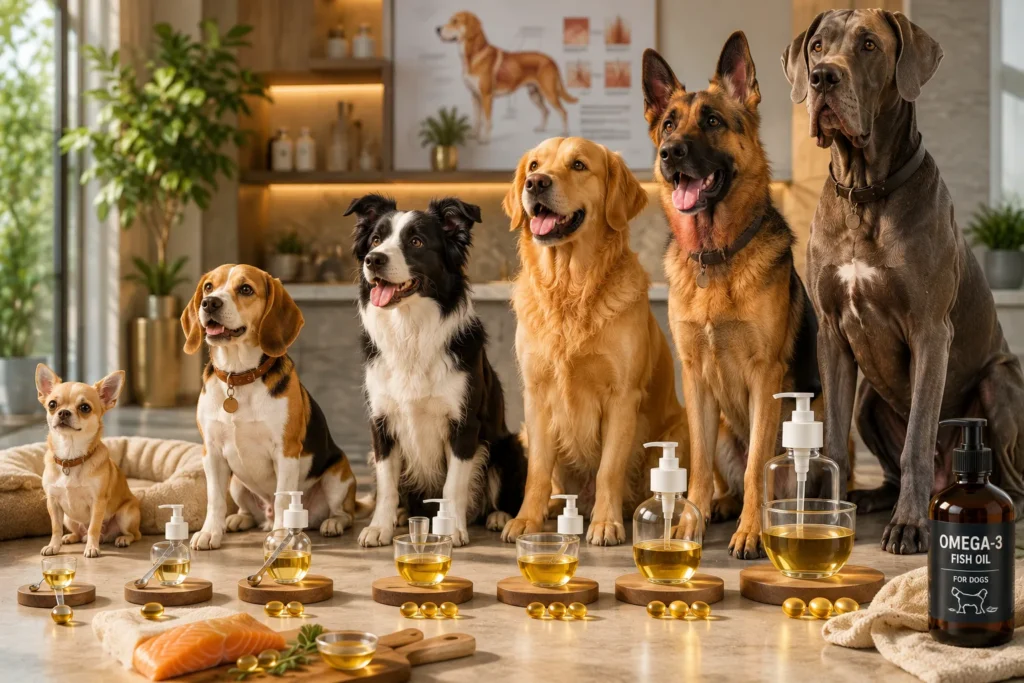
These are general guidelines — always check with your vet before starting any supplement, especially if your dog takes other medications or has an existing health condition.
The dosage reference below is based on the commonly cited veterinary guideline of approximately 40mg of EPA+DHA per pound of body weight per day. Individual needs vary; your vet may recommend a different dose depending on your dog’s condition.
| Dog Weight | Omega-3 per day (EPA+DHA) | Grizzly Salmon Plus (liquid) | Nutramax Welactin (softgels) |
|---|---|---|---|
| Under 10 lbs | ~150–200mg | ~1/4 tsp | 1 softgel |
| 10–25 lbs | ~400–500mg | ~1/2 tsp | 2 softgels |
| 25–50 lbs | ~800–1,000mg | ~1 tsp | 3–4 softgels |
| 50–75 lbs | ~1,200–1,500mg | ~1.5 tsp | 5–6 softgels |
| 75–100 lbs | ~1,800–2,000mg | ~2 tsp | 7–8 softgels |
| 100+ lbs | ~2,400–3,000mg | ~2.5–3 tsp | Consult your vet — softgels become impractical at this scale |
- Signs you may be giving too much: Loose or oily stool is the most common signal of over-supplementation. Persistent fishy breath that doesn’t clear up and mild lethargy can also occur at excessive doses. If you notice these, reduce the dose by half for a week and monitor — if symptoms persist, contact your vet.
- How to introduce it: Start with half the target dose for the first 7–10 days. Digestive systems need time to adjust to increased fat intake, particularly in dogs accustomed to a low-fat diet. Jumping straight to a full dose often causes the loose stool that leads owners to abandon supplements prematurely.
- Form preference by dog type: Soft chews are most practical for small and medium dogs needing one or two per day. Liquid oil is significantly more economical for dogs over 40 lbs requiring larger daily doses. Softgels are a good middle option for dogs who eat kibble — puncture and squeeze directly onto food at mealtime.
Frequently Asked Questions
Do supplements actually reduce dog shedding?
Yes — but only for shedding that is driven by nutritional gaps or chronic skin inflammation, not seasonal coat blows or breed-programmed shedding patterns. Omega-3 supplements (EPA+DHA) from marine sources have the strongest evidence base of any supplement category for coat health. Most owners who stick with a quality fish oil product consistently report a noticeable improvement in coat quality and daily shed volume after 8–12 weeks.
Is fish oil or soft chews better for dog shedding?
Liquid fish oil delivers significantly more EPA+DHA per dollar than soft chews — often 5–10 times more per serving cost for equivalent omega-3 content. Soft chews are better for one specific situation: dogs who won’t tolerate fish oil mixed into their food. If palatability isn’t a barrier, liquid wins on every measurable dimension. If your dog refuses liquid oil, compliance with a soft chew beats the theoretical superiority of a product they won’t eat.
How long does it take for shedding supplements to work?
Most owners report visible improvement in coat quality at the 8–12 week mark, not the 2–4 weeks many products suggest on their packaging. Supplements support new hair growth from the follicle up — that biological process takes time. Shedding volume is the last thing to change; coat texture and skin condition improve first. Consistency over the first 90 days matters far more than dose size.
Can I use human fish oil capsules for my dog?
Many human fish oil softgels are safe for dogs, but check the label carefully before using them. Avoid any product containing xylitol, artificial sweeteners, or added flavorings. The omega-3 concentration in human capsules is often higher than pet-specific products, so adjust the dose down based on your dog’s body weight relative to the labeled human dose. Purpose-formulated options like [AMAZON LINK: Nutramax Welactin Omega-3 Softgels] (rel=”nofollow sponsored”) are dosed specifically for dogs, which removes the guesswork.
What are the signs my dog needs more omega-3s?
A dull or brittle coat, dry and flaky skin, excessive shedding outside of seasonal changes, and slower-than-normal wound healing can all suggest insufficient omega-3 intake. These signs are most common in dogs eating low-fat kibble or certain grain-free diets, which tend to be higher in omega-6 fatty acids. Omega-6s and omega-3s compete for the same metabolic pathways — a diet high in omega-6 without balancing omega-3 can worsen skin inflammation over time.
The Bottom Line on Dog Shedding Supplements
Nutramax Welactin Omega-3 Softgels is the right choice for most dog owners. It’s the most consistently recommended omega-3 supplement across U.S. veterinary practices, the label is fully transparent on EPA+DHA content, the softgel format works for all dog sizes, and the 10,000+ review count reflects genuine long-term satisfaction rather than a launch spike. At ~$0.17/softgel it’s not the cheapest option, but it’s the most trusted.
If you have a large dog (50+ lbs) and cost is the deciding factor, switch to Grizzly Salmon Plus liquid. At $0.10/serving with 966mg EPA+DHA per tsp, it outperforms every soft chew and most softgels on a pure cost-per-omega-3 basis. The liquid format is the only practical choice for dogs who need 1,500mg+ of EPA+DHA daily without spending $2/day on chews.
If you want a single daily supplement that goes beyond omega-3s to include collagen, biotin, zinc, and probiotics, Native Pet Skin & Coat Chews are the only product in this comparison that delivers all of it.
Start with a 90-day commitment. Results appear at 8–12 weeks — not sooner. The supplement won’t change seasonal or breed-driven shedding, but it can make a real difference in the coat quality and daily fur volume of dogs whose shedding has a nutritional root.
We update this article every 90 days as product formulations, pricing, and availability change.