 Marco Williams
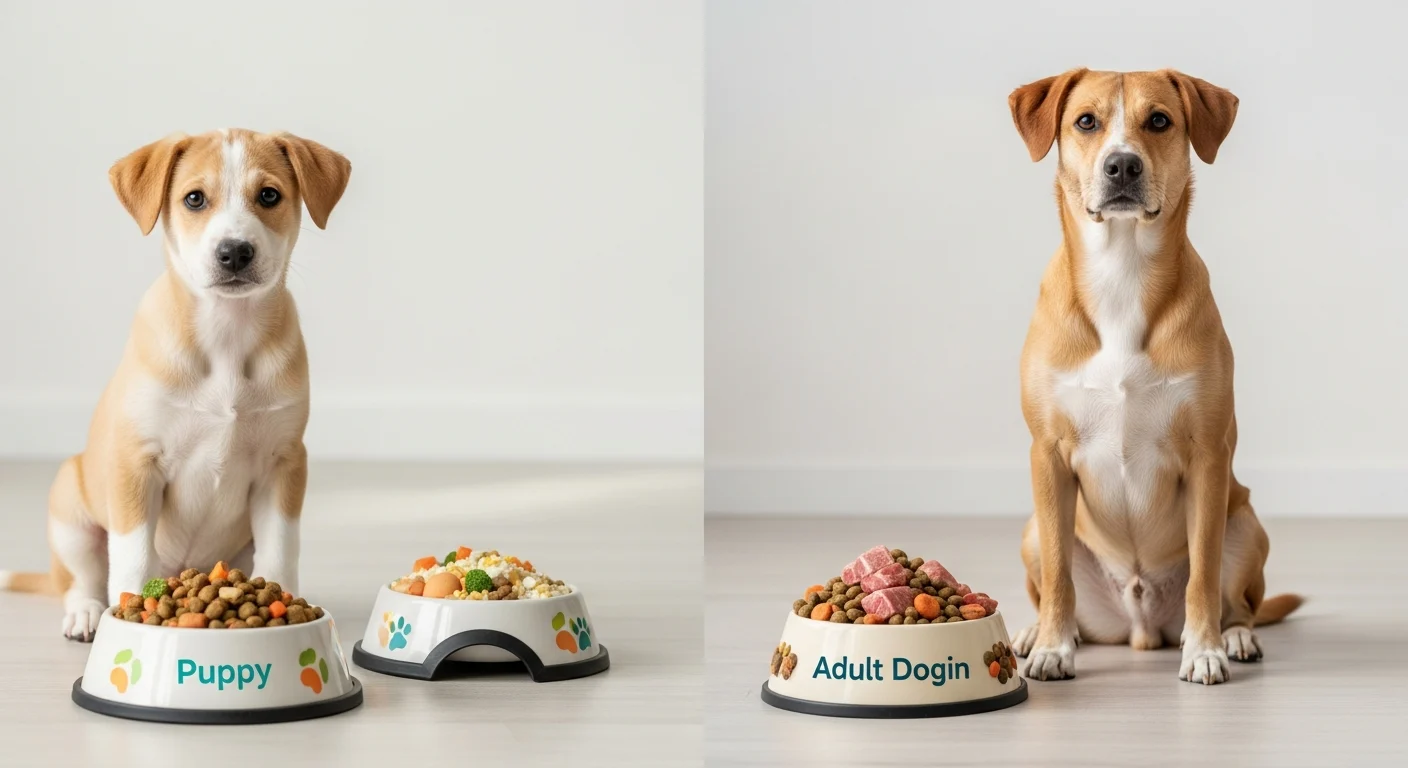
Choosing the right dog food can feel complicated. With bags labeled “puppy,” “adult,” and “all life stages,” it’s easy to assume they are mostly the same. The ingredient lists might even look similar. However, the nutritional purpose behind puppy food and adult dog food is fundamentally different. One is designed for rapid development, and the other is for long-term maintenance.
Making the wrong choice—or sticking with one for too long—can lead to silent health problems that may not show symptoms until much later. This guide explains the real, biological differences between these formulas and when the distinction is most critical for your dog’s long-term well-being.
The Fundamental Difference: Growth vs. Maintenance
The core distinction between puppy and adult dog food isn’t about premium ingredients or marketing claims; it’s about their biological job.
Puppy food is growth fuel. Its primary purpose is to support the intense, short-term project of building a healthy dog from scratch. This includes constructing a strong skeleton, developing complex neurological pathways, and building muscle mass. Every nutrient is calibrated for rapid, healthy development.
Adult dog food is maintenance fuel. It’s designed to keep a fully grown dog in a state of metabolic balance. Its focus shifts to maintaining a healthy weight, supporting joint health, ensuring good digestion, and providing the steady energy an adult dog needs for years to come.
This difference is not a suggestion; it is a non-negotiable biological reality. Using one when the other is needed introduces risks that can affect a dog for its entire life.
Nutritional Differences That Actually Matter
While recipes vary, puppy and adult foods sold in the U.S. market show consistent nutritional patterns driven by their different goals. Understanding these differences helps clarify why you cannot simply use them interchangeably.
Protein
Protein provides the amino acids necessary for building tissue. Puppies, in their rapid growth phase, have a much higher demand for these building blocks.
- Puppy Food: Typically contains higher protein levels, often ranging from 26% to 32%. This concentration supports the rapid development of muscles, organs, and the immune system.
- Adult Food: Moderates protein to between 22% and 26%. These levels are sufficient to repair tissue and maintain muscle mass in a dog that is no longer growing, without overburdening its metabolism.
- The Risk of Misapplication: Feeding a high-protein puppy formula to an adult dog for too long can contribute to unnecessary weight gain, as excess protein is often stored as fat.
Fat & Calories
Fat is a crucial source of energy and essential fatty acids. A food’s calorie density determines how much energy is packed into every cup.
- Puppy Food: Is more calorie-dense and higher in fat (15–20%) to power the energy-intensive process of growth. A small amount of food delivers a large amount of energy.
- Adult Food: Reduces fat (12–16%) and overall calories to match the lower energy needs of a mature dog. This helps prevent the steady weight gain that leads to obesity.
- The Risk of Misapplication: An adult dog fed a calorie-dense puppy formula is at high risk of becoming overweight. This excess weight puts significant strain on joints, the heart, and other organs.
Calcium & Phosphorus
These minerals are critical for building strong bones, but the right balance is essential. This is especially true for large and giant-breed puppies.
- Puppy Food: Particularly formulas for large breeds, have strictly controlled calcium and phosphorus levels. Too much calcium can cause the skeleton to develop too quickly, leading to joint malformations and lifelong orthopedic problems.
- Adult Food: Contains calcium levels appropriate for maintaining the bone density of a mature dog. These levels are often too high for a growing large-breed puppy and can be dangerous.
- The Risk of Misapplication: Giving adult dog food to a large-breed puppy too early can create irreversible skeletal damage due to imbalanced mineral ratios.
DHA
DHA (docosahexaenoic acid) is an omega-3 fatty acid that is a key building block for the brain and retina.
- Puppy Food: Almost always includes DHA to support healthy neurological and vision development during the critical first year.
- Adult Food: Rarely emphasizes DHA. While beneficial, it is not considered an essential nutrient for a dog whose brain and eyes are already fully developed.
- The Risk of Misapplication: A puppy fed an adult formula too soon misses out on this vital nutrient during a key developmental window.
Digestive & Physical Differences
Beyond nutrition, the physical form of the food is also tailored to a dog’s life stage.
A puppy’s digestive system is still maturing and is more sensitive than an adult dog’s. Puppy kibble is often formulated to be highly digestible. The kibble itself is typically smaller and may have a different texture, making it easier for a puppy with baby teeth to chew and swallow.
As a dog matures, its digestive system becomes more robust. Adult kibble is usually larger and harder, which can help with dental cleaning. It’s a common misconception that easier digestion in puppy food means it’s made from “better” ingredients. The formulation is simply different to match a puppy’s immature digestive capabilities.
When Puppy Food Becomes Harmful
Continuing to feed puppy food long after a dog has stopped growing is one of the most common feeding mistakes. The high-calorie, nutrient-dense formula that was once essential becomes a liability, leading to several health issues:
- Excess Weight Gain: This is the most immediate risk. The high fat and calorie content will quickly lead to obesity in a dog with lower energy needs.
- Joint and Skeletal Stress: Carrying extra weight puts constant, damaging pressure on a dog’s joints, hips, and spine, increasing the risk of arthritis and other mobility problems later in life.
- Growth Abnormalities: In large breeds that mature slowly, continuing a high-calorie diet for too long can contribute to developmental orthopedic diseases, even after they appear fully grown.
- Metabolic Overload: Forcing an adult dog’s system to process nutrient levels designed for growth can place unnecessary strain on its organs over time.
Owners often overlook subtle signs like a loss of the visible “tuck” at the waist or the inability to easily feel the ribs. These are early indicators that a dog is gaining excess weight and a diet change is overdue.
When Should Dogs Switch to Adult Food?
The right time to transition from puppy to adult food depends on when a dog reaches its full adult size. This is determined by breed size, not just age. Growth rate is the most important factor.
- Small Breeds (under 20 lbs): Mature quickly, often reaching their full size between 9 and 12 months.
- Medium Breeds (20–50 lbs): Typically finish growing around 12 to 14 months.
- Large Breeds (50–100 lbs): Grow for much longer, reaching their adult framework between 15 and 18 months.
- Giant Breeds (over 100 lbs): Have the longest growth period and may not be fully mature until 18 to 24 months.
Consult with your veterinarian to determine the best transition time for your specific dog. They can assess your dog’s body condition and growth plates to make an accurate recommendation.
“All Life Stages” Dog Food Explained
Foods labeled for “All Life Stages” can be confusing. According to regulatory standards, to make this claim, a food must meet the minimum nutritional requirements for growth and reproduction—the most demanding life stages.
This means these foods are essentially formulated to puppy standards. They typically have higher protein (30%+), higher fat (16–18%), and contain DHA. While they are nutritionally adequate for puppies, they carry the same risks as puppy food when fed to adult dogs: the high calorie density makes overfeeding and weight gain a significant concern.
For large-breed puppies, an “All Life Stages” food is only appropriate if the label explicitly states it is formulated for the growth of large-breed dogs. Otherwise, it may not have the controlled calcium levels necessary for safe skeletal development.
How to Transition Safely from Puppy to Adult Food
Switching food formulas abruptly can cause digestive upset. A gradual transition over 7 to 10 days allows your dog’s system to adjust.
- Days 1–3: Mix 25% new adult food with 75% old puppy food.
- Days 4–6: Mix 50% new food with 50% old food.
- Days 7–9: Mix 75% new food with 25% old food.
- Day 10: Feed 100% new adult food.
During this period, it’s normal to see slight changes in stool consistency. However, if your dog experiences significant diarrhea, vomiting, or loss of appetite, slow down the transition. Go back to the previous ratio for a few days before trying to increase the new food again.
Puppy Food vs. Adult Dog Food: Comparison Table
| Feature | Puppy Food | Adult Dog Food |
|---|---|---|
| Purpose | Supports rapid growth and development. | Maintains health in a fully grown dog. |
| Protein Role | Higher levels (26-32%) to build tissue. | Moderate levels (22-26%) for maintenance. |
| Fat & Calorie Density | High, to fuel intense growth. | Lower, to prevent weight gain. |
| Calcium Control | Strictly controlled, especially for large breeds. | Set for maintaining adult bone density. |
| DHA Relevance | Essential for brain and eye development. | Optional; not critical for maintenance. |
| Intended Duration | Temporary; used only during the growth phase. | Long-term; for the majority of a dog’s life. |
The Bottom Line
Life-stage nutrition is not a marketing gimmick; it is a critical component of responsible dog ownership. Puppy food is temporary, situational nutrition designed for the demanding job of building a healthy body. Adult food is a long-term maintenance diet formulated for stability and health.
Using the right food at the right time is one of the most effective ways to support your dog’s well-being. By understanding these fundamental differences and timing the transition correctly, you can help prevent silent, and often irreversible, health damage, setting your companion up for a long and healthy life.
FAQ
Can puppies eat adult dog food?
Puppies should not regularly eat adult dog food. Adult formulas lack the calorie density, DHA, and controlled mineral balance puppies need for healthy growth. Feeding adult food too early can increase the risk of poor development, especially in large-breed puppies.
Can adult dogs eat puppy food?
Adult dogs can eat puppy food occasionally, but feeding it long-term is not recommended. Puppy food is higher in calories and fat, which often leads to weight gain and joint stress once growth has stopped.
When should I stop feeding my dog puppy food?
Most dogs should switch to adult food once they finish growing. Small breeds usually transition around 9–12 months, while large and giant breeds may need puppy food for 15–24 months. Growth completion matters more than age alone.
Is “All Life Stages” dog food safe for puppies?
“All Life Stages” dog food can be safe for puppies because it meets growth nutrition standards. However, for large-breed puppies, it should only be used if the label specifically states it supports large-breed growth with controlled calcium levels.
Why does puppy food have more protein and fat?
Puppy food is higher in protein and fat to support rapid growth, muscle development, and high energy needs. Adult dogs no longer require this level of energy intake, which is why adult food is more calorie-controlled.
What happens if I switch my puppy to adult food too early?
Switching too early can limit growth support and may reduce intake of important nutrients like DHA. In large breeds, improper mineral intake during growth can contribute to lifelong joint and skeletal problems.
Why do large-breed puppies need special puppy food?
Large-breed puppies grow quickly but must grow slowly and evenly. Special large-breed puppy foods carefully control calcium and phosphorus levels to reduce the risk of hip dysplasia and other orthopedic issues.
How do I switch from puppy food to adult dog food safely?
Transition gradually over 7–10 days by slowly increasing the amount of adult food while decreasing puppy food. This allows your dog’s digestive system and gut bacteria to adjust, reducing the risk of stomach upset.