 Marco Williams
Walk down the dog food aisle and marketing pits chicken against lamb as if one is universally “premium” and the other “standard.” In canine nutrition, better isn’t a marketing claim — it’s a biological one. Chicken is typically leaner and easier to digest for most dogs; lamb is richer and higher in fat, which can help dogs needing more energy, coat support, or relief from a chicken sensitivity, but isn’t right for every digestive system.
This guide isn’t a product roundup. We’re examining the ingredient logic behind lamb and chicken — digestibility, allergy risk, fat and protein density — so you can match the right protein to your dog’s actual physiology and life stage, not the bag’s marketing.
If you’re short on time, here’s the bottom line on lamb vs chicken.
Choose chicken if your dog has no known sensitivities, needs lean, low-fat nutrition for puppyhood or weight management, or you want a more budget-friendly, widely available protein.
Choose lamb if your dog shows signs of chicken sensitivity (itching, ear infections, loose stools), needs extra calories or coat support, or you’re rotating proteins to reduce long-term sensitivity risk.
Watch for: Lamb’s higher fat content isn’t ideal for dogs with a pancreatitis history or a tendency to gain weight. Chicken remains the most common dietary allergen simply because of how often it appears in commercial food — not because it’s inherently riskier.
Best for digestion: Chicken | Best for coat & skin: Lamb | Best for budget: Chicken | Best for active/high-calorie dogs: Lamb
How Protein Sources Affect Dogs
Before comparing specific meats, it is vital to understand the role animal protein plays in a dog’s diet. Dogs do not eat for flavor alone; they eat for fuel and repair.
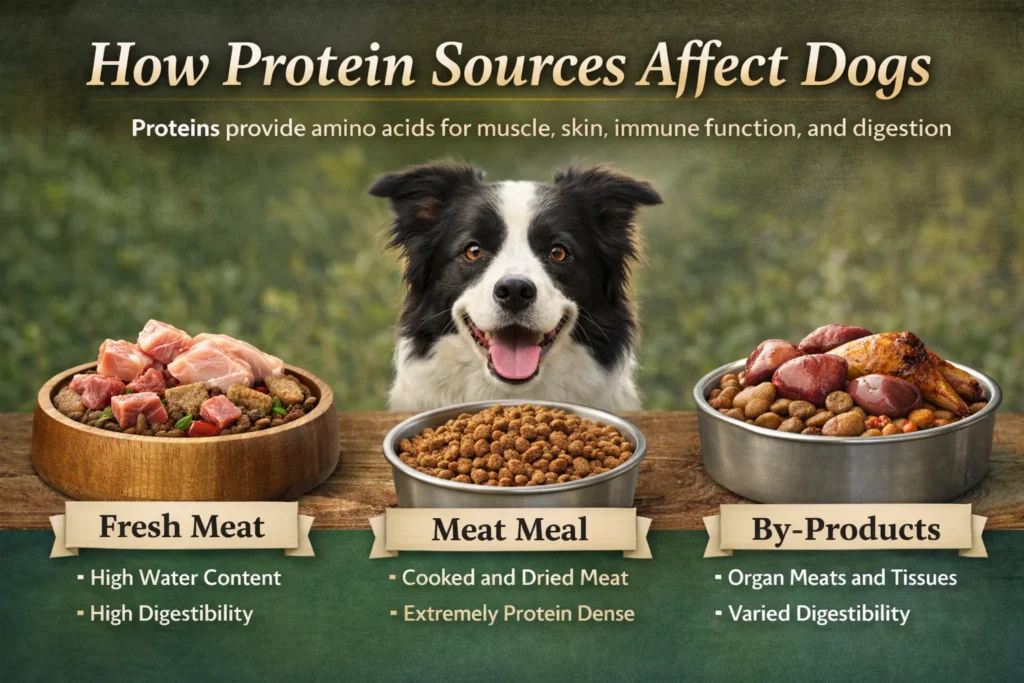
Proteins provide amino acids, the building blocks for muscle, skin, antibodies, and enzymes. While dogs can survive on plant proteins, animal proteins generally offer a more complete amino acid profile that is easier for their systems to utilize.
However, the word “Chicken” or “Lamb” on a bag can mean different things depending on the form:
- Fresh Meat: High water content, generally high digestibility, but lower total protein by weight once cooked down.
- Meat Meal: Meat that has been rendered (cooked and dried). It is extremely protein-dense but varies in quality depending on the source.
- By-Products: Nutrient-rich organs and tissues. While often demonized, they can be excellent sources of vitamins, though they vary in digestibility.
The biological reaction your dog has to food depends heavily on the quality of these sources. Two foods may both list “Chicken” as the first ingredient, yet one may be highly digestible muscle meat while the other is connective tissue that passes through the gut largely unabsorbed.
On raw protein content: Ounce for ounce of cooked, lean muscle meat, chicken breast and lamb leg are fairly close in protein density — both fall in a similar range per 100g. The meaningful difference isn’t protein quantity, it’s the fat that comes attached to it. Chicken (especially breast meat) carries less fat per gram, which pushes its protein-to-calorie ratio higher, while lamb’s extra fat dilutes its protein density per calorie even though total protein is comparable.
Lamb Meal vs Whole Lamb: What’s the Real Difference?
This distinction trips up more owners than any other labeling issue — and it matters because “lamb” and “lamb meal” represent very different things nutritionally, even though they sound nearly identical on the bag.
Whole lamb (or “deboned lamb”) listed as the first ingredient sounds impressive, but fresh meat is roughly 70–75% water. Once that water cooks off during kibble extrusion, the actual protein contribution by weight drops significantly. A food that lists “lamb” first may contain less real lamb protein than one listing “lamb meal” second or third.
Lamb meal is lamb that has already been rendered — cooked and dried before it enters the formula. The water is gone, so what remains is a concentrated protein source containing roughly 3x more protein by weight than fresh lamb. When you see “lamb meal” high on the ingredient list, that’s typically a stronger protein commitment than “deboned lamb” in first position.
Lamb by-product meal includes organs, bones, and other tissues. It’s nutrient-rich (organs are dense in vitamins and minerals), but quality varies widely between manufacturers. Brands that specify which by-products are included — “lamb liver,” “lamb heart” — generally signal higher quality control than those using the generic “by-product meal” term.
The practical takeaway: don’t judge a lamb-based food solely by whether “lamb” or “lamb meal” appears first. A formula with lamb meal in position two often delivers more usable lamb protein than one with whole lamb in position one. What matters is the total protein picture across the first five ingredients, not which single word leads the panel.
Digestibility: Lamb vs Chicken
Digestibility refers to how much nutrient value a dog actually absorbs versus how much ends up as waste in the backyard. It’s important to understand that digestibility is impacted not only by the protein source listed on the label, but also by factors such as fat percentage, ingredient processing quality, and the overall formulation of the food. Two foods labeled with the same protein can have very different digestive outcomes depending on these variables.
Chicken Digestion Patterns
Chicken is widely used in the pet food industry because it is generally easier for most dogs to digest. It is a “low residue” protein, meaning the body uses most of it, leading to smaller, firmer stools in healthy dogs. Its protein structure is relatively simple for canine enzymes to break down, which is why boiled chicken is the standard recommendation for a dog with an upset stomach.
Lamb Digestion Patterns
Lamb is often slightly heavier. It tends to be higher in fat than chicken, which can slow down gastric emptying. For many dogs, this is a benefit; it provides sustained energy and keeps them full. However, for dogs with sensitive pancreases or those prone to loose stools from rich foods, lamb can sometimes be harder to digest than poultry.
Common Gut Responses:
- Chicken: Generally consistent stool quality; gas is less common unless the dog has an intolerance.
- Lamb: Can cause softer stools during the transition phase due to higher fat content; generally produces a healthy, shiny coat due to natural oils.
Allergy & Sensitivity Reality
Allergy concerns are a common reason owners shift from chicken to lamb, but there are several myths surrounding food allergies that require clarification.
The Chicken Allergy Factor
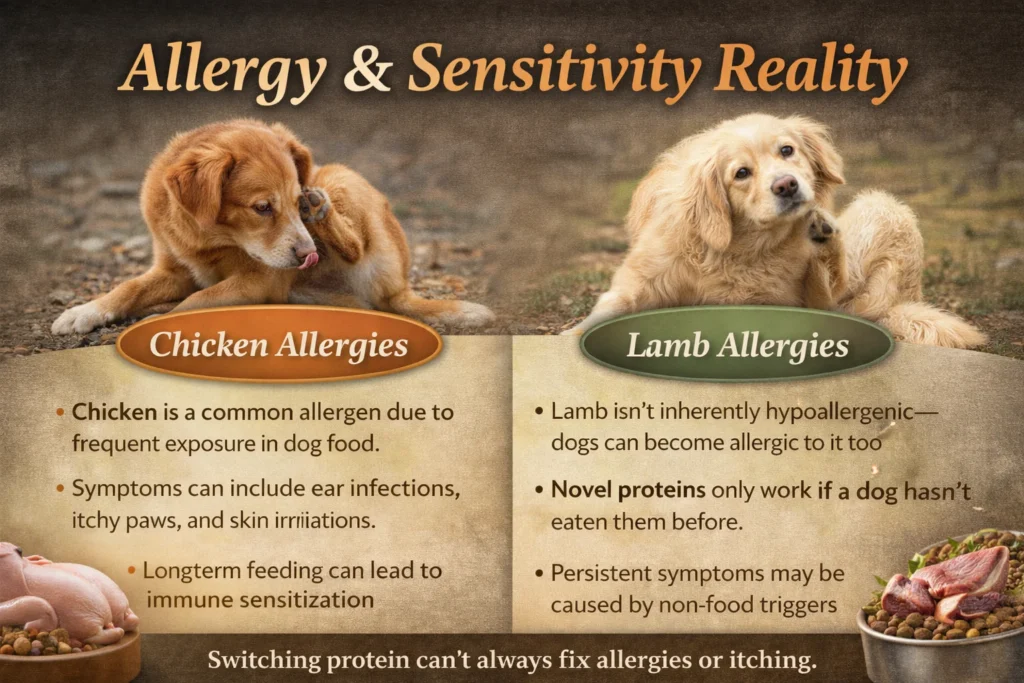
Chicken ranks among the most commonly reported food allergens in dogs, primarily because it appears frequently in commercial diets—not because it is uniquely problematic. Allergies most often develop after long-term, repeated exposure to the same protein source.
Common signs of chicken intolerance include:
- Chronic ear infections
- Red, itchy paws (often resulting in licking)
- Hot spots or generalized skin irritation
Is Lamb Hypoallergenic?
Lamb is not inherently hypoallergenic—it simply presents a different protein structure than chicken. Early on, lamb was considered a “novel protein” because it was uncommon in dog foods, so dogs hadn’t typically developed sensitivities to it. Now that lamb is a standard ingredient, sensitivities can develop much as they do with chicken.
If your dog reacts to chicken, switching to lamb may help—provided lamb has not already been part of their diet. “Novel protein” simply means a protein your dog’s immune system has not encountered before. If symptoms continue after the switch, the underlying cause may be environmental or unrelated to food protein.
Beyond allergies, the nutritional profiles of these two meats serve different physiological needs.
Amino Acid Density
Both provide all ten essential amino acids dogs need. However, chicken is often more protein-dense per calorie. If you have a working dog that needs muscle repair without excess calories, chicken is often the more efficient delivery system.
Fat Levels and Coat Health
Lamb usually brings more fat to the bowl. This includes linoleic acid, which is crucial for skin and coat health.
- Chicken diets often need added fats (like chicken fat or fish oil) to match the coat-boosting properties of a lamb diet.
- Lamb diets are naturally richer, making them excellent for dogs with dry, flaky skin or brittle fur.
Energy Density
Because fat contains more calories per gram than protein, lamb-based foods are often more calorically dense.
- Active Dogs: May thrive on lamb because the higher fat provides long-burning fuel.
- Sedentary Dogs: May gain weight more easily on a lamb diet if portion sizes aren’t strictly managed.
When Lamb Is the Better Choice
Lamb can be the preferred option in several scenarios:
- Suspected Chicken Sensitivity: Dogs showing skin irritation or loose stool with chicken may benefit from a shift to lamb.
- Coat and Skin Support: The higher fat content supports dogs with dry, flaky skin or brittle coats.
- High Calorie Needs: Dogs with fast metabolisms or needing to gain or maintain weight may utilize lamb’s greater caloric density.
- Variety and Rotation: For dogs accustomed to chicken, rotating to lamb can diversify nutrients and may lower sensitivity risk.
Potential Downsides: Lamb’s higher fat content may lead to weight gain in less active dogs. It is not suited for dogs with a history of pancreatitis or those prone to digestive upset from rich foods.
Chicken remains a staple protein for many dogs due to its unique nutritional properties and wide availability.
- Puppies and Growth: Chicken delivers lean, high-quality protein needed for healthy growth and muscle development without the excess fat that can pose risks for large breeds.
- Sensitive Digestion: Many dogs tolerate chicken well when bland, gentle nutrition is required, making it a practical choice for those with delicate stomachs.
- Weight Management: Its naturally lean profile supports calorie control, which helps dogs maintain or lose weight while still feeling full.
- Budget and Accessibility: Sourcing consistent, quality chicken foods tends to be less expensive and more widely available than comparable lamb formulas.
Potential Downsides: Chicken is among the most common food allergens for dogs and, after frequent exposure, can sometimes be linked to recurring itching or gastrointestinal upset in sensitive individuals.
Dog Foods With Real Chicken or Lamb as the First Ingredient
Deciding on a protein is step one. Confirming a food actually contains that protein as a primary ingredient is the next challenge — and it’s where most owners get misled by labeling. Once you’ve identified which protein fits your dog, here’s what to look for, and four real examples sold on Amazon USA that match clean first-ingredient profiles.
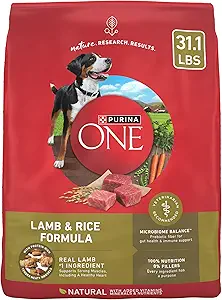
- First ingredient: Real lamb, named directly — not “meat meal” or a generic blend.
- Formulated for: Standard adult maintenance, general all-purpose digestibility.
- Best for: Owners who specifically want a lamb-first formula without paying a specialty or prescription-diet price.
- Note: A standard maintenance recipe, not a limited-ingredient or allergy-specific diet — check the full panel if your dog has a confirmed allergy.

- First ingredient: Farm-raised chicken, named directly.
- Ingredient profile: No added poultry by-product meal or fillers in the lead ingredients.
- Best for: Routine adult feeding where simplicity and ingredient transparency matter most.
- Note: Not formulated as a sensitive-stomach or allergy-specific diet — a general everyday recipe.
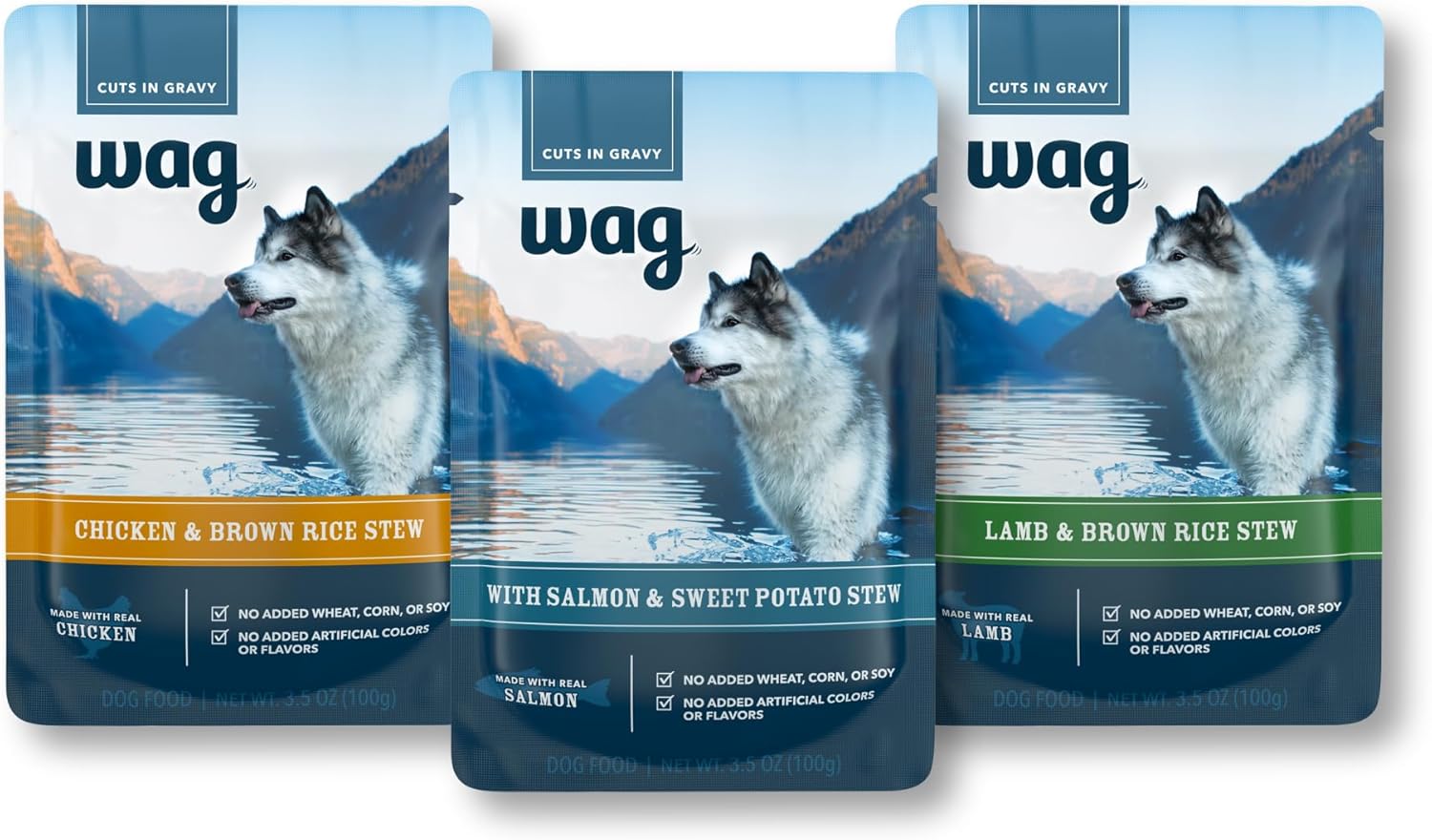
- Format: Wet topper, not a standalone complete diet on its own.
- Protein blend: Combines both lamb and chicken in one product.
- Best for: Adding variety or palatability on top of an existing complete diet.
- Note: Only appropriate for dogs that already tolerate both poultry and red meat — not suitable for an elimination trial.

- First ingredient: Chicken, named directly as the lead protein.
- Carb base: Sweet potato — grain-free formulation.
- Best for: Dogs that do well on grain-free, poultry-based diets.
- Note: The most budget-friendly of the chicken-based picks here.
How to Read Dog Food Labels for Lamb or Chicken
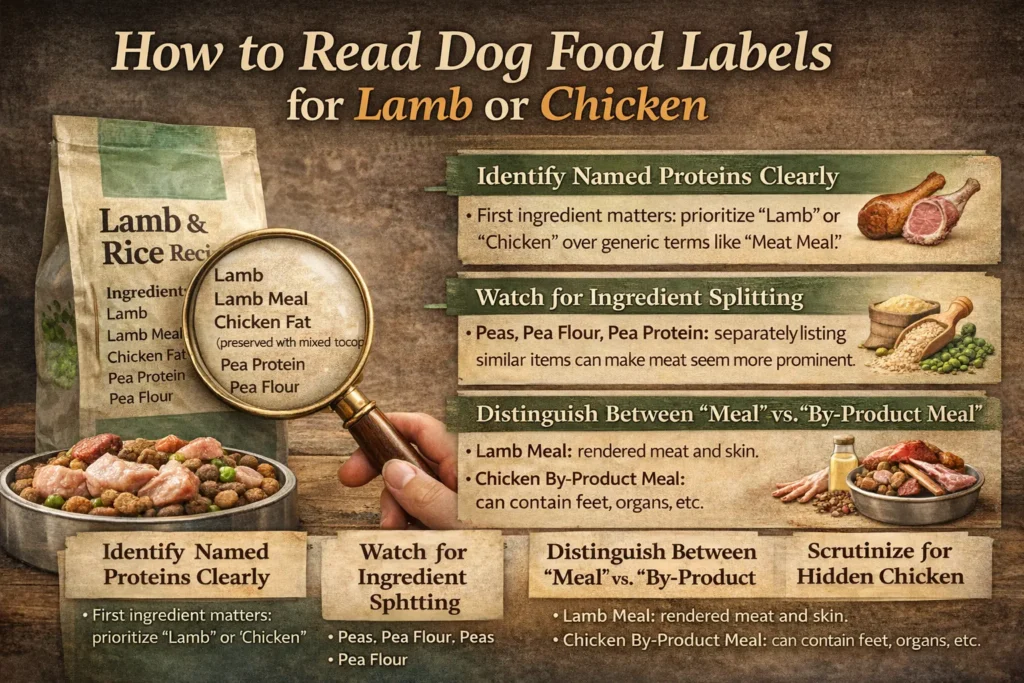
Manufacturers may use labeling practices that can confuse even experienced owners. Use this checklist before trusting any front-of-bag claim.
1. Identify Named Proteins Clearly
- First ingredient matters: Make sure “Chicken” or “Lamb” appears as the very first item listed.
- Avoid generic labeling: Terms like “Meat Meal” or “Poultry Fat” do not specify the animal source. Insist on clear animal identification.
2. Watch for Ingredient Splitting
- Order of ingredients: Ingredients are listed by pre-cooked weight.
- Splitting tactics: Some brands will separate similar plant ingredients (for example, “Peas,” “Pea Flour,” “Pea Protein”) to make the meat protein appear more prominent.
- Composite review: Always consider the combined weight of similar items to ensure your chosen protein is truly predominant.
3. Distinguish Between “Meal” and “By-Product Meal”
- Chicken Meal / Lamb Meal: Indicates rendered meat and skin, offering a highly concentrated protein source that is generally suitable.
- Chicken By-Product Meal: Includes organs, feet, and undeveloped eggs; nutritional value may vary. Quality-focused formulas tend to specify meal ingredients more precisely.
4. Scrutinize for Misleading Blends
- Scan for hidden animal proteins: Products labeled “Lamb and Rice” or similar can still contain chicken meal or chicken fat further down the ingredient list, so review carefully.
- Examine the entire panel: Go beyond front-of-bag marketing and verify that every protein source listed aligns with your dog’s needs.
Choosing between chicken and lamb isn’t just about protein—it directly impacts digestion, skin health, and allergy risk in Bernedoodles.
| Feature | Chicken | Lamb |
|---|---|---|
| Digestibility | High; generally low waste | Moderate to High; can be richer |
| Allergy Risk | High (due to common exposure) | Moderate (common alternative) |
| Fat Content | Generally Lower | Generally Higher |
| Best Use Case | Puppies, Weight Loss, Sensitive Tummies | Skin/Coat Issues, Active Dogs, Rotation |
| Common Downside | Frequent cause of itching/ear infections | Can cause loose stool if too rich |
Final Decision Guidance
There’s no one-size-fits-all answer when choosing between lamb and chicken. The right protein is the one your dog digests comfortably and that supports their overall health.
Always base your decision on your dog’s current needs and life stage. Chicken’s lean protein often suits puppies and dogs needing calorie control, while lamb’s higher fat content can benefit adults requiring extra energy or support for skin and coat. Remember, needs often change as dogs age.
Prioritize what you see over marketing claims. Key signals to monitor include:
- Stool: Should be firm and regular
- Coat: Shiny and healthy, not dry or greasy
- Energy: Alert and consistently active
If issues persist, consider a protein change rather than simply switching brands. Make any transition gradual, observe closely, and let your dog’s condition guide your choices. Calm, ongoing observation is the most reliable approach for your dog’s long-term nutrition.
Frequently Asked Questions
How do I choose between lamb and chicken dog food for better digestion?
Start with your dog’s current stool quality. If your dog already has firm, consistent stools on a chicken-based diet, there’s no digestive reason to switch — chicken is a low-residue protein that most dogs process efficiently. If your dog has chronic soft stools, gas, or skin issues that started after sustained chicken feeding, a trial switch to lamb (as a true novel protein, assuming it hasn’t been fed before) over a 6–8 week elimination period is the more diagnostic approach. Avoid switching back and forth quickly, since digestive symptoms need time to stabilize before you can judge the result.
Is lamb easier to digest than chicken?
Not generally. Chicken is typically the easier protein to digest for most dogs because it’s leaner and lower-residue, which is why it’s the standard recommendation for dogs with upset stomachs. Lamb’s higher fat content slows gastric emptying, which can mean softer stools during a transition. Lamb becomes the better digestive choice specifically when a dog has developed a chicken sensitivity, not as a general rule.
Is lamb or chicken better for dogs with sensitive stomachs?
For most dogs with sensitive stomachs and no diagnosed protein allergy, chicken is the safer starting point because of its lower fat content and lower residue. Lamb is the better option specifically when sensitivity is tied to chicken exposure rather than fat tolerance — in that case, lamb’s novel-protein status (if it hasn’t been fed before) can resolve symptoms that chicken was triggering.
Does lamb have more protein than chicken?
Not meaningfully. Ounce for ounce of cooked, lean muscle meat, chicken and lamb are fairly close in raw protein content. The real difference is fat: chicken (particularly breast meat) carries less fat per gram, which gives it a higher protein-to-calorie ratio, while lamb’s extra fat dilutes its protein density per calorie even though total protein is comparable. If your priority is maximum protein with minimum calories, chicken is the more efficient choice — not because it contains dramatically more protein, but because it carries less fat alongside it.
What dog foods use real chicken or lamb as the first ingredient?
Check the ingredient panel, not the front-of-bag marketing. The first ingredient must name the animal directly — “Chicken” or “Lamb,” not “Meat Meal” or “Poultry Fat.” Watch for ingredient splitting, where similar plant ingredients are broken into multiple smaller-weight entries (like “Peas,” “Pea Flour,” “Pea Protein”) to push the named meat artificially higher on the list. Formulas like Purina ONE Lamb & Rice and Rachael Ray Nutrish Real Chicken & Veggies are examples that list the named protein first without relying on this tactic.
Is lamb or chicken better for puppies?
Chicken is generally the better default for puppies. It delivers lean, high-quality protein for growth and muscle development without the extra fat and calorie density that lamb carries — which matters most for large-breed puppies prone to excess weight gain during growth. Lamb can still be appropriate for puppies with a documented chicken sensitivity, but it should be a breed-appropriate puppy formula either way, not an adult-formulated lamb diet.
Lamb vs chicken: which is better overall for dogs?
Neither is universally better — the right choice depends on your dog’s individual digestion, allergy history, and activity level. Chicken is the better default for most dogs: leaner, more digestible, more affordable, and lower-calorie. Lamb is the better choice for dogs with a confirmed or suspected chicken sensitivity, dogs needing extra calories or coat support, or owners rotating proteins to reduce long-term sensitivity risk. The most reliable way to decide is to watch your own dog’s stool quality, coat condition, and energy level on whichever protein they’re currently eating.