 Marco Williams
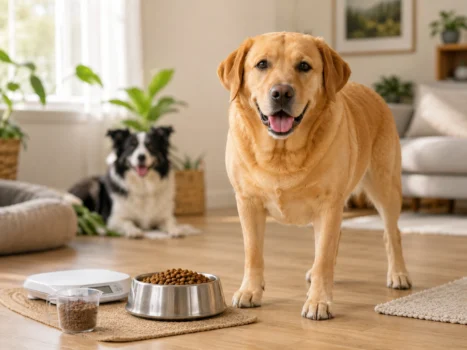
If your vet flagged your dog as overweight, or you’ve noticed your dog carrying more weight than usual, you’re probably staring at a wall of “weight management” bags trying to figure out which one actually fits your situation.
Not every overweight dog needs the same food. This guide sorts seven Amazon-verified weight loss dog foods into three practical tiers, OTC Weight Management, OTC Weight Loss, and Veterinary Prescription, so you can match the right food to your dog’s actual needs. Before switching foods, consult your vet about how much weight your dog needs to lose and over what timeline, since that determines which tier you should be shopping in.
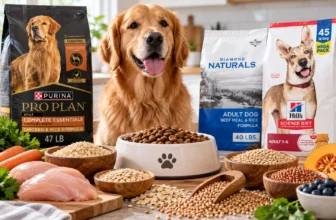
- Best Overall → Purina Pro Plan Weight Management — ~$1.40/day
- Best for Small & Toy Breeds → Hill’s Science Diet Perfect Weight (Small Bites) — ~$2.45/day
- Best Natural Ingredient List → Blue Buffalo Life Protection Healthy Weight — ~$1.96/day
- Best Budget Pick → Diamond Naturals Light Adult — ~$1.02/day
- Best Budget Pick with Joint Support → Purina ONE SmartBlend Healthy Weight — ~$1.04/day
- Best Vet-Prescribed for Obese Dogs → Royal Canin Veterinary Diet Satiety Support — ~$3.80/day
- Best Vet-Prescribed for Fast Results → Hill’s Prescription Diet Metabolic — ~$3.40/day
Quick Comparison Table
| Product | Best For | kcal/cup | Cost/Day | Price | Rating |
|---|---|---|---|---|---|
| Purina Pro Plan Weight Management | Best Overall | 330 | $1.40 | $77.48 (34 lb) | 4.6★ (3,572) |
| Hill’s Science Diet Perfect Weight (Small Bites) | Best for Small & Toy Breeds | 317 | $2.45 | $92.99 (25 lb) | 4.8★ (2,865) |
| Blue Buffalo Life Protection Healthy Weight | Best Natural Ingredient List | 326 | $1.96 | $43.97 (15 lb) | 4.7★ (5,671) |
| Diamond Naturals Light Adult | Best Budget Pick | 310 | $1.02 | $41.99 (30 lb) | 4.6★ (2,376) |
| Purina ONE SmartBlend Healthy Weight | Best Budget Pick with Joint Support | 325 | $1.04 | $49.99 (31.1 lb) | 4.6★ (4,020) |
| Royal Canin Satiety Support (Rx) | Best Vet-Prescribed for Obese Dogs | 224 | $3.80 | $128.99 (26.4 lb) | 4.6★ (198) |
| Hill’s Prescription Diet Metabolic (Rx) | Best Vet-Prescribed for Fast Results | 257 | $3.40 | $133.99 (27.5 lb) | 4.5★ (1,130) |
How We Chose These 7 Foods?
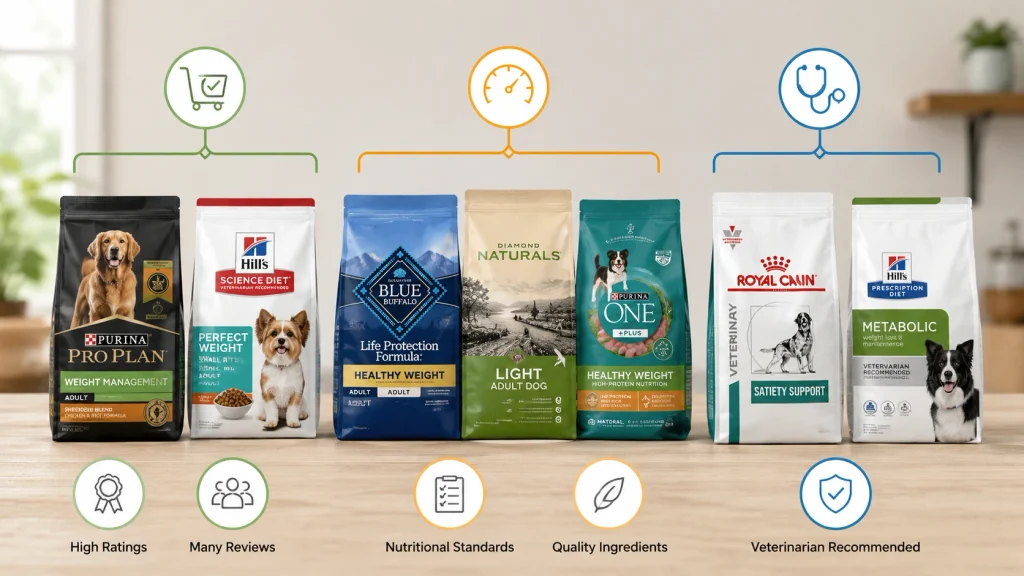
We started with a wider field of weight management and weight loss dog foods and narrowed it down using a few filters: Amazon’s Choice status or a comparable purchase-volume signal, a 4.0-star minimum rating, and enough reviews to reflect sustained feedback rather than a handful of early reactions.
Royal Canin Satiety Support is the one exception. It’s the only pick without an Amazon’s Choice badge, and it has far fewer reviews than the other six. That’s a result of being sold under veterinary authorization only, not a sign of a weaker product.
- OTC Weight Management (roughly 300–360 kcal/cup): for dogs a few pounds over ideal weight
- OTC Weight Loss (lower end of that range, higher fiber): for dogs who need more of a calorie deficit than standard weight management provides
- Veterinary Prescription (roughly 210–260 kcal/cup): for dogs who are significantly overweight or obese, where a vet needs to be involved in the plan
Fresh food and raw diet brands were left out of this list. They’re evaluated separately and come with different cost and handling tradeoffs than kibble.
The 7 Best Weight Loss Dog Foods
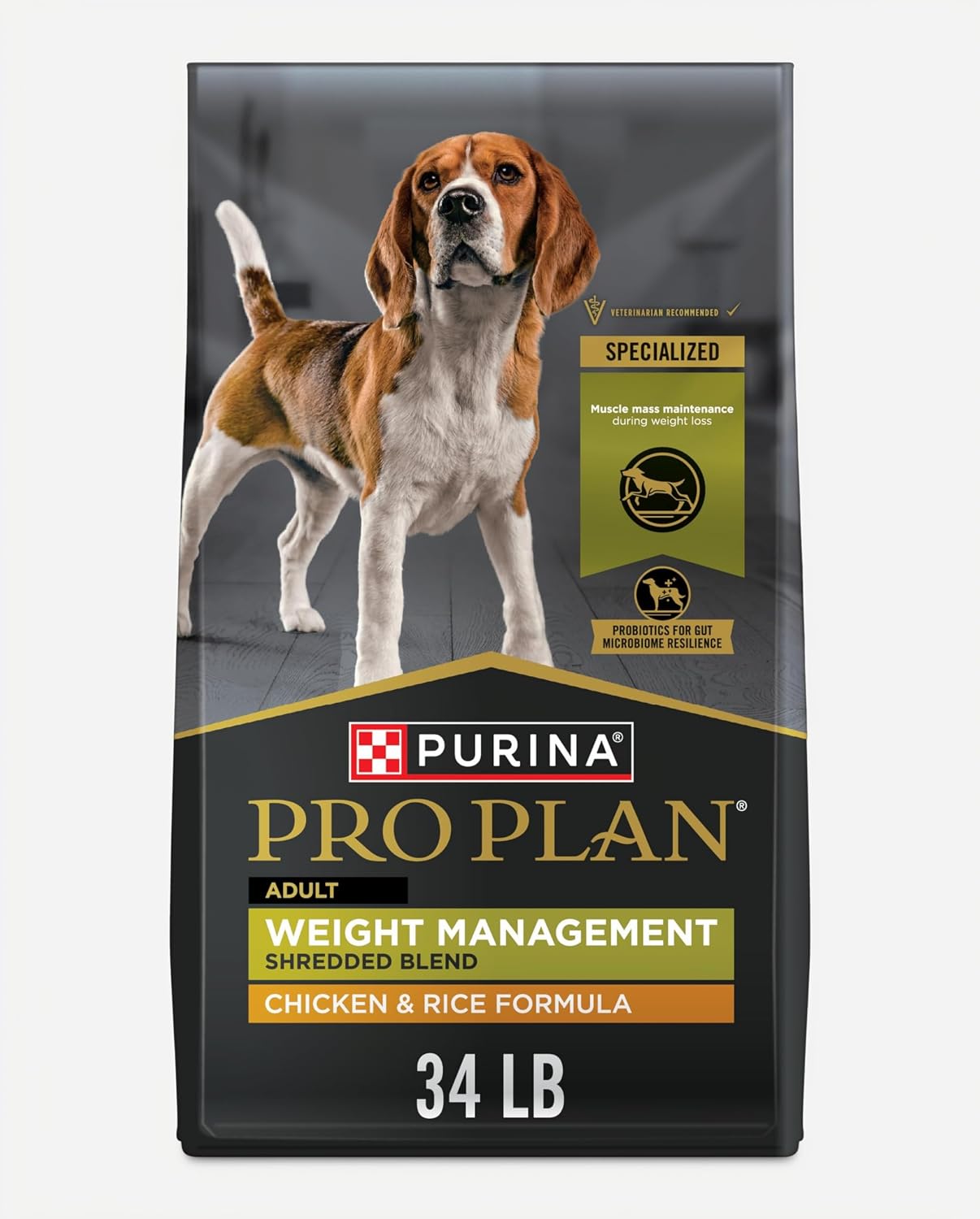
Best For: Adult dogs needing standard OTC weight management with no health complications
Cost Per Day: $1.40 (34 lb bag, $2.28/lb)
Why It Made the List?
- 330 kcal/cup with a 15% fat reduction versus Purina’s standard adult formula
- Shredded-blend kibble texture designed to ease the transition for picky eaters
- Contains guaranteed live probiotics for digestive support during the diet change
Key Specs
- 330 kcal/cup · 25% protein min · 8–12% fat · 5.5% fiber max
- AAFCO statement: adult maintenance (animal feeding tests substantiated)
- First 5 ingredients: Chicken, Brewers Rice, Whole Grain Corn, Corn Germ Meal, Poultry By-Product Meal
Honest Take
- Most reviewed product in this roundup at 3,572 ratings, holding a steady 4.6-star average
- Several owners noted the full 7–10 day transition window mattered — rushing it led to loose stools in a few cases
- Most common owner report: steady, gradual weight loss without digestive upset.
- Most common complaint: occasional stool sensitivity if the transition is rushed.

Best For: Small and toy breed dogs who need smaller kibble and steady weight loss
Cost Per Day: $2.45 (25 lb bag, $3.72/lb)
Why It Made the List?
- 317 kcal/cup in a Small Bites–specific formula sized for smaller mouths
- Hill’s-reported study data showing visible results within 10 weeks
- L-carnitine included to support fat metabolism during weight loss
Key Specs
- 317 kcal/cup · 24% protein min · 8% fat min · 13% fiber max
- AAFCO statement: adult maintenance
- First 5 ingredients: Chicken, Cracked Pearled Barley, Brown Rice, Pea Fiber, Corn Gluten Meal
Honest Take
- Highest-rated product in this list at 4.8 stars across 2,865 reviews
- One owner reported a senior corgi held a stable weight for five years on this formula
- Most common owner report: long-term weight stability and improved mobility in senior dogs.
- Most common complaint: higher price per pound than mass-market competitors.

Best For: Owners who want a weight control formula without corn, wheat, soy, or poultry by-product meals
Cost Per Day: $1.96 (15 lb bag, $2.93/lb)
Why It Made the List?
- 326 kcal/cup with no corn, wheat, soy, or poultry by-product meals
- LifeSource Bits antioxidant blend plus 100 mg/kg L-Carnitine minimum
- Glucosamine and chondroitin included for joint support during weight loss
Key Specs
- 326 kcal/cup · 20% protein min · 9% fat min · 10% fiber max
- AAFCO statement: adult maintenance
- First 5 ingredients: Deboned Chicken, Chicken Meal, Brown Rice, Oatmeal, Barley
Honest Take
- Highest review count in the lineup at 5,671 ratings
- Owners managing dogs with hip dysplasia specifically cite this formula for joint-friendly weight support
- Most common owner report: visible weight loss alongside improved coat condition.
- Most common complaint: price relative to bag size versus mass-market brands.
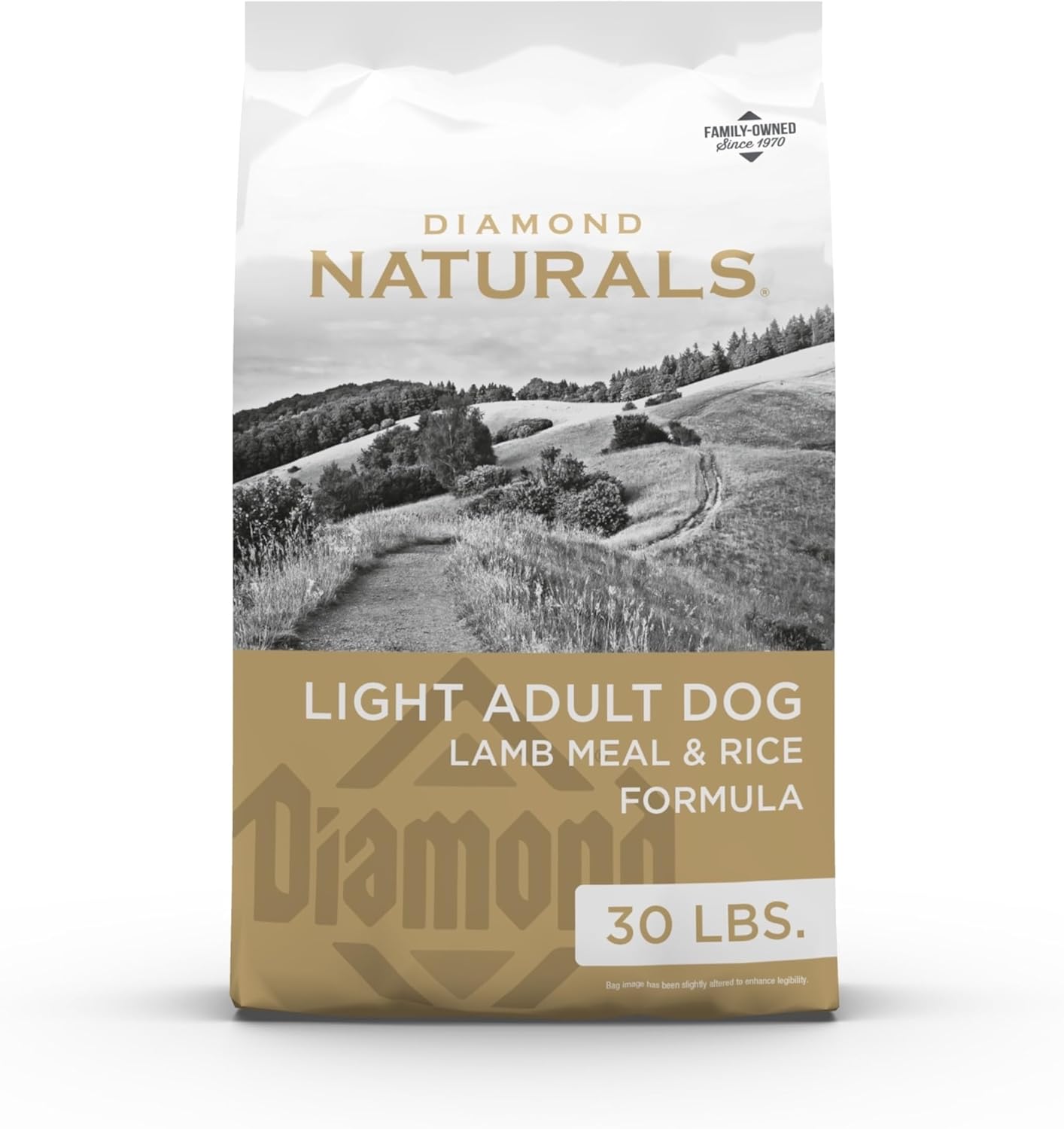
Best For: Owners looking for a lower-cost OTC weight loss option without cutting corners on formulation
Cost Per Day: $1.02 (30 lb bag, $1.40/lb)
Why It Made the List?
- 310 kcal/cup, running 15–20% fewer calories than Diamond’s standard adult formula
- Includes L-Carnitine, glucosamine, and chondroitin at a value price point
- Real pasture-raised lamb as the first ingredient
Key Specs
- 310 kcal/cup · 18% protein min · 6% fat min · 8% fiber max
- AAFCO statement: adult maintenance
- First 5 ingredients: Lamb Meal, Whole Grain Brown Rice, Oatmeal, Cracked Pearled Barley, White Rice
Honest Take
- Lowest cost-per-day in the lineup at $1.02/day
- Frequently cited for improved coat condition within a few weeks of switching
- Most common owner report: steady weight loss and reduced shedding.
- Most common complaint: limited protein source variety (lamb-only for this SKU).

Best For: Owners who want glucosamine-based joint support bundled into a budget-friendly weight formula
Cost Per Day: $1.04 (31.1 lb bag, $1.61/lb)
Why It Made the List?
- 325 kcal/cup with 25% less fat than Purina ONE’s standard adult formula
- Natural glucosamine sources included for joint support
- Real turkey as the first ingredient with 0% fillers
Key Specs
- 325 kcal/cup · 27% protein min · 8–12% fat · 5.5% fiber max
- AAFCO statement: adult maintenance
- First 5 ingredients: Turkey, Rice Flour, Soybean Meal, Corn Gluten Meal, Chicken By-Product Meal
Honest Take
- Second-cheapest option in the lineup at $1.04/day
- Palatability draws consistent praise, which matters since dogs that reject a diet food often end up back on treats
- Most common owner report: strong palatability and steady weight results.
- Most common complaint: smaller kibble size not ideal for large-breed dogs.

Best For: Dogs who are significantly overweight or obese and need a vet-supervised weight loss plan
Cost Per Day: $3.80 (26.4 lb bag, $4.89/lb)
Because this is a prescription diet, consult your vet before ordering — they’ll need to confirm it’s the right fit for your dog’s weight loss plan and authorize the purchase.
Why It Made the List?
- 224 kcal/cup, the lowest calorie density and highest fiber content (14.8–18.8%) in this lineup
- Requires veterinary prescription and checkout verification
- Royal Canin-reported study data showing most dogs lost weight within 3 months
Key Specs
- 224 kcal/cup · 28% protein min · 7.5–11.5% fat · 14.8–18.8% fiber
- AAFCO statement: adult maintenance
- First 5 ingredients: Chicken By-Product Meal, Corn, Pea Fiber, Powdered Cellulose, Wheat
Honest Take
- Smallest review base in this list (198 reviews), consistent with its prescription-only availability
- Owners report reduced begging behavior during the weight loss period
- Most common owner report: noticeable satiety and reduced begging.
- Most common complaint: premium price point and prescription requirement adds friction to reordering.

Best For: Dogs needing a more aggressive, vet-supervised weight loss timeline
Cost Per Day: $3.40 (27.5 lb bag, $4.87/lb)
This is a prescription diet — consult your vet to authorize the order.
Why It Made the List?
- 257 kcal/cup, confirmed directly through Hill’s customer service
- Requires veterinary prescription and checkout verification
- Positioned by Hill’s as a step-up option when OTC formulas haven’t worked
Key Specs
- 257 kcal/cup · 28% protein · 11.7% fat · 13.6% fiber
- AAFCO statement: adult maintenance
- First 5 ingredients: Whole Grain Wheat, Whole Grain Corn, Chicken Meal, Powdered Cellulose, Soybean Meal
Honest Take
- Vets frequently cite this as a step-up recommendation when OTC formulas haven’t worked
- Highest price per pound in the lineup at $4.87/lb
- Most common owner report: faster, more noticeable weight loss than OTC formulas.
- Most common complaint: cost and the added step of vet authorization for reorders.
OTC vs Veterinary Weight Loss Food — Which Does Your Dog Need?
Of the seven picks above, five are available without a prescription and two require veterinary authorization. Here’s how to know which category fits your dog.
- Mildly to moderately overweight, no health complications → any of the 5 OTC picks above
- Vet has confirmed obesity, not just excess weight → Royal Canin Satiety Support
- No progress after a reasonable OTC trial → Hill’s Prescription Diet Metabolic
- Small or toy breed needing smaller kibble → Hill’s Science Diet Perfect Weight
- Budget-conscious, still want functional ingredients → Diamond Naturals Light or Purina ONE Healthy Weight
If you’re not sure which category applies, consult your vet at your next visit. They can assess your dog’s body condition score and point you toward the right tier before you buy anything.
How to Feed for Safe, Steady Weight Loss?
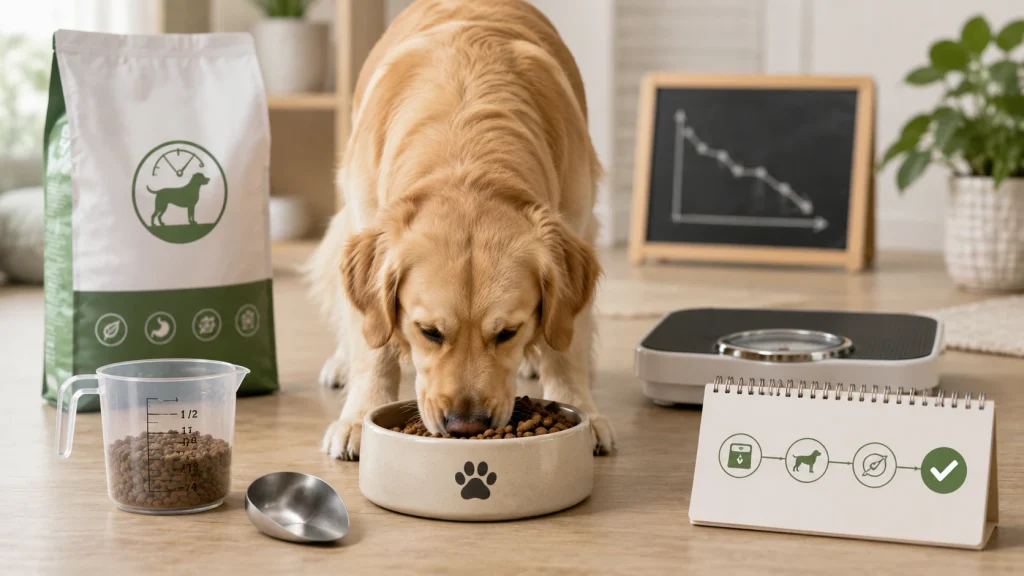
Switching foods is only part of the equation. A few habits make a real difference no matter which product you choose:
- Measure, don’t eyeball: Use an actual measuring cup, not a scoop or “about this much.” Overfeeding a weight loss food defeats the purpose.
- Reduce gradually: A sudden, large calorie cut can cause digestive upset. Most brands recommend a 7–10 day transition period.
- Track body condition, not just the scale: You should be able to feel your dog’s ribs without heavy pressure, with a visible waist from above.
- Cut back on treats proportionally: Treats should stay under 10% of daily calories, even during weight loss.
Consult your vet about a target weight and a safe rate of weekly loss for your dog. This varies enough between a 10 lb dog and an 80 lb dog that a one-size answer isn’t useful.
Weight Loss by Dog Size and Life Stage

Small & Toy Breeds
Small dogs burn through calories faster relative to their size, which leaves less room for error on portioning. A few extra kibble pieces matter more on a 10 lb dog than a 60 lb dog. That’s part of why small-bite, calorie-controlled formulas like Hill’s Perfect Weight Small Bites and Blue Buffalo’s small breed sizing exist. They’re built around that tighter margin.
Large & Giant Breeds
Weight loss in large breeds carries an added consideration: joint stress. Extra weight on a large dog’s frame accelerates wear on hips and knees, which is one reason formulas like Royal Canin Satiety Support pair the calorie reduction with glucosamine and chondroitin. Purina Pro Plan also offers a large-breed-specific weight management SKU worth checking if you’re feeding a dog over 50 lbs.
Senior Dogs Carrying Extra Weight
Senior dogs that gain weight often have overlapping issues: slower metabolism, reduced activity, and sometimes early joint or metabolic changes. If your senior dog needs to lose weight, consult your vet sooner rather than later, since age-related conditions can affect which formula and timeline make sense.
Frequently Asked Questions
How many calories should a dog eat to lose weight?
It depends on your dog’s current weight, target weight, and activity level — there’s no single number that applies across all dogs. Your vet can calculate a starting calorie target based on your dog’s Resting Energy Requirement (RER) and adjust from there. Consult your vet before starting a specific calorie plan.
Is prescription dog food necessary for weight loss, or can OTC formulas work?
Many dogs lose weight successfully on OTC weight management formulas, especially if they’re only mildly overweight. Prescription formulas become more relevant for dogs who are obese, have related health conditions, or haven’t responded to OTC options after a reasonable trial. Consult your vet to determine which tier fits your dog.
How long does it take for a dog to lose weight on a diet food?
Most weight management formulas show measurable results within 8–10 weeks when fed correctly and consistently, though this varies by how much weight a dog needs to lose and how strictly portions are measured.
What’s the difference between “weight management” and “weight loss” dog food?
Weight management formulas are typically designed to prevent gain and support dogs who are only slightly over ideal weight. Weight loss formulas run a lower calorie density and are built for dogs who need to actively shed weight, not just maintain it.
Can I mix weight loss food with regular food during the transition?
Yes. Most brands recommend a gradual transition over 7–10 days, mixing increasing amounts of the new food with decreasing amounts of the old food to avoid digestive upset.
Final Recommendation
For most dogs carrying a modest amount of extra weight, Purina Pro Plan Weight Management is the strongest overall starting point. It’s well-reviewed, reasonably priced, and backed by the highest purchase volume in this lineup. If your dog is a small or toy breed, Hill’s Science Diet Perfect Weight (Small Bites) is worth the higher cost per day for the kibble sizing alone.
Budget-conscious owners should look at Diamond Naturals Light or Purina ONE Healthy Weight. Both come in well under $1.10 a day while still including real functional ingredients like L-carnitine and glucosamine.
If your vet has identified your dog as obese rather than just overweight, don’t try to solve that with an OTC formula. Royal Canin Satiety Support and Hill’s Prescription Diet Metabolic exist specifically for that heavier-lift scenario, and getting your vet involved from the start will get your dog to a healthy weight faster and more safely than guessing on your own.