
 Marco Williams

A diabetes diagnosis changes how you shop for dog food. You start reading fiber percentages instead of checking the price tag first. And one decision comes up fast: does your dog need a prescription diet, or will a vet-approved over-the-counter food work just as well?
This guide compares seven diabetic-friendly dog foods, four prescription and three non-prescription, using real nutrition data, verified pricing, and honest owner feedback. It isn’t medical advice. Any diet change for a diabetic dog should happen with your veterinarian’s input, since the right food depends on your dog’s weight, insulin schedule, and overall health picture.
- Best Overall (Prescription) → Hill’s Prescription Diet w/d Multi-Benefit (Dry) — ~$4.00/day
- Best No-Prescription Pick → Ketona Chicken Recipe — cost per day not calculable, kcal/kg not published
- Best Value Prescription Option → Royal Canin Veterinary Diet Glycobalance (Dry) — ~$3.87/day
- Best No-Prescription Wet Food → Dave’s Pet Food Carbolight — ~$12.44/day
How Diet Affects Blood Sugar in Diabetic Dogs?
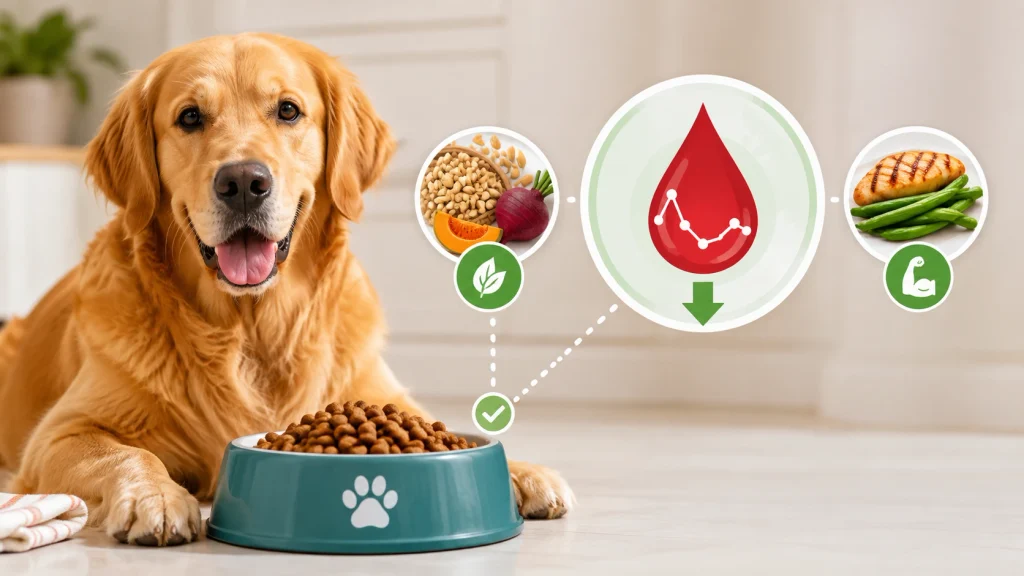
Why Fiber Matters?
Fiber slows how quickly sugar enters your dog’s bloodstream after a meal. Soluble fiber does this most directly, while insoluble fiber adds bulk that helps your dog feel full on fewer calories. Most diabetic-focused diets use both types.
Fat and Carbohydrate Content
Lower-to-moderate fat and controlled carbohydrates are common in diabetic dog food, though the ideal balance isn’t the same for every dog. A lean dog and an overweight dog often need different fiber and calorie targets, even with the same diagnosis.
Is “Low Glycemic” an Official Label?
No. “Low glycemic” appears often in dog food marketing, but it isn’t a regulated AAFCO term. Every guaranteed analysis panel reviewed for this article lists starch and sugar as “not recognized as an essential nutrient by the AAFCO Dog Food Nutrient Profiles.” The term is useful shorthand, not a certified standard, so don’t treat it as a guarantee.
Talk to your vet before making any diet change. The right fiber and fat balance depends on your dog’s current weight, insulin therapy, and any other health conditions — factors only your veterinarian can weigh accurately.
Comparison Table — All 7 Diabetic-Friendly Dog Foods
| Product | Format | Prescription? | Crude Fiber | Crude Fat | Calories | Price | Rating |
|---|---|---|---|---|---|---|---|
| Hill’s w/d Multi-Benefit (Dry) | Dry | Yes | 20% max | 9.5% min | 3,100 kcal/kg | $98.99 | 4.8★ (5,375) |
| Hill’s w/d Multi-Benefit (Wet) | Wet | Yes | 13.7% | 11.4% | 305 kcal/can | $59.99 | 4.6★ (2,300+) |
| Royal Canin Glycobalance (Dry) | Dry | Yes | 10% max | 10–14% | 3,330 kcal/kg | $102.99 | 4.3★ (26) |
| Royal Canin Glycobalance (Canned) | Wet | Yes | 2.4% max | 2.5% min | 809 kcal/kg | $119.76 | 4.1★ (16) / 4.7★ (1.4K Chewy) |
| Hill’s Science Diet Perfect Weight | Dry | No | 10.3% max | 11.2% min | 3,189 kcal/kg | $92.99 | 4.7★ (4,197) |
| Dave’s Pet Food Carbolight | Wet | No | 3% max | 3.5% min | 900 kcal/kg | $49.99 | 4.8★ (18 Chewy) |
| Ketona Chicken Recipe | Dry | No | 11% max | 16% min | Not published | $42.99 | 4.4★ (1,062) |
Best Prescription Diets for Diabetic Dogs

Best For: Dogs managing multiple conditions at once — glucose, weight, digestion, and urinary health together.
Cost Per Day: Roughly $4.00, based on 3,100 kcal/kg and a 1,000 kcal/day reference for a moderately active 50 lb dog.
Why It Made the List?
- The most-reviewed diabetic-support food in this lineup, with 5,375 ratings on Chewy and a 4.8-star average
- Amazon’s Choice with over 300 purchases in the past month
- Addresses glucose, weight, and urinary health in one formula rather than requiring separate diets
Key Specs
- 20% max crude fiber, 9.5% min crude fat, 3,100 kcal/kg
- Formulated to meet AAFCO nutrient profiles for adult maintenance
- First 5 ingredients: whole grain wheat, powdered cellulose, chicken meal, whole grain corn, corn gluten meal
Honest Take
- Multiple reviewers describe glucose levels stabilizing and stool quality improving within weeks of switching
- This diet requires veterinary authorization to purchase — confirm with your vet that it fits your dog’s complete health picture before switching
- Most common owner report: stabilized glucose and improved stool consistency.
- Most common complaint: one verified reviewer noted the food alone didn’t bring glucose down and required additional veterinary intervention

Best For: Picky eaters, or dogs who need extra hydration alongside glucose management.
Cost Per Day: Roughly $16.39, based on 305 kcal per 13 oz can.
Why It Made the List?
- Same clinical formula as the dry version, in a softer, more palatable format
- Amazon’s Choice with 400+ bought in the past month
- 4.6-star average across more than 2,300 Chewy reviews
Key Specs
- 13.7% crude fiber, 11.4% crude fat, 305 kcal per can
- Formulated to meet AAFCO nutrient profiles for adult maintenance
- First 5 ingredients: water, pork liver, whole grain corn, chicken, cracked pearled barley
Honest Take
- A consistent pick for dogs transitioning off dry kibble or needing a topper to encourage eating
- Costs noticeably more per day than the dry version — worth factoring in if feeding long term
- Most common owner report: reliable palatability, even for picky eaters transitioning from dry food.
- Most common complaint: higher cost per day compared to the dry formula

Best For: Dogs needing a high-protein prescription option with meaningfully reduced starch.
Cost Per Day: Roughly $3.87, based on 3,330 kcal/kg.
Why It Made the List?
- 35% minimum protein, with starch cut 49 to 53% compared to Royal Canin’s standard adult formula
- Amazon’s Choice with 100+ purchases in the past month
- Combines soluble and insoluble fiber with prebiotics to help minimize glucose fluctuations
Key Specs
- 10% max crude fiber, 10–14% crude fat, 3,330 kcal/kg
- Formulated to meet AAFCO nutrient profiles for adult maintenance
- First 5 ingredients: chicken by-product meal, barley, pea fiber, wheat gluten, corn protein meal
Honest Take
- Reviewers frequently mention improved stool consistency and successful transitions under vet guidance
- One review flagged a 2026 formula update that caused temporary digestive upset — watch your dog’s stool for the first week or two after switching
- Most common owner report: improved digestion and consistent stools.
- Most common complaint: a recent formula change caused digestive upset for at least one dog

Best For: Dogs who prefer wet food, or need a lower-fat prescription option.
Cost Per Day: Roughly $16.25, based on 307 kcal per can.
Why It Made the List?
- Lower fat than the dry Glycobalance formula while keeping the same starch-controlled approach
- Can be fed alone or mixed with Royal Canin Glycobalance dry for variety and added hydration
- 4.7-star average across 1,400+ Chewy reviews
Key Specs
- 2.4% max crude fiber, 2.5% min crude fat, 809 kcal/kg
- Formulated to meet AAFCO nutrient profiles for adult maintenance
- First 5 ingredients: water sufficient for processing, pork by-products, chicken, pork liver, chicken by-products
Honest Take
- Owners of diabetic dogs report stable glucose numbers, with several mentioning it as part of a twice-daily insulin routine
- The most common complaint is cost relative to the small can size
- Most common owner report: stable glucose numbers when paired with a consistent insulin schedule.
- Most common complaint: price feels high relative to the portion size per can
Prescription vs Over-the-Counter — What You Just Saw, Compared?
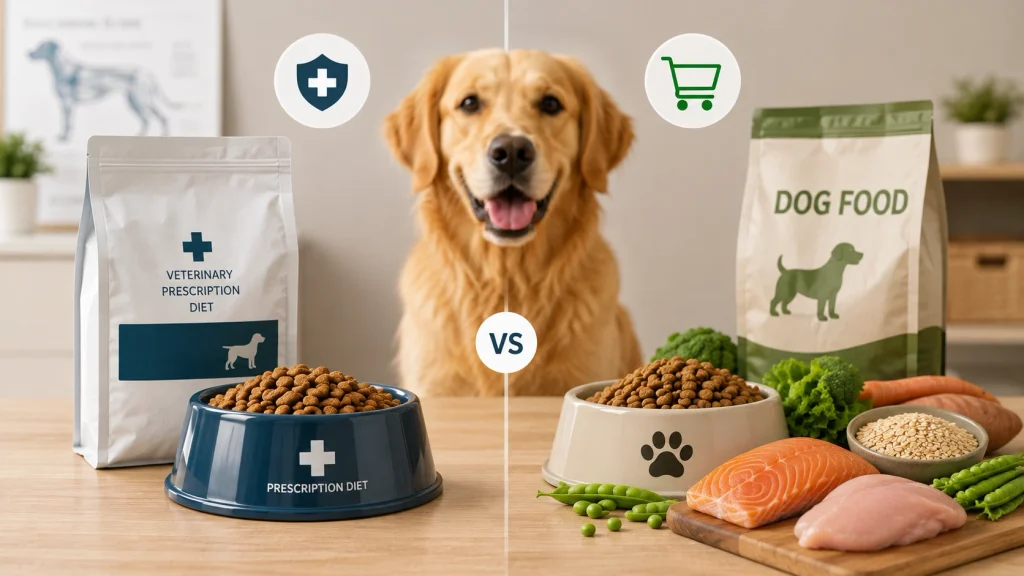
All four prescription options above require veterinary authorization before you can complete checkout on Amazon or Chewy — typically a 24 to 72 hour approval window if your vet’s office responds promptly.
Cost tells its own story here. Based on verified pricing, the prescription foods above run $92.99 to $119.76 per bag or case. The three non-prescription options below run $42.99 to $92.99.
That price gap doesn’t mean OTC food is automatically the better choice. It means not every diabetic dog needs a prescription formula — and that’s a conversation worth having with your vet rather than assuming either direction is right by default.
Best Non-Prescription Options for Diabetic Dogs
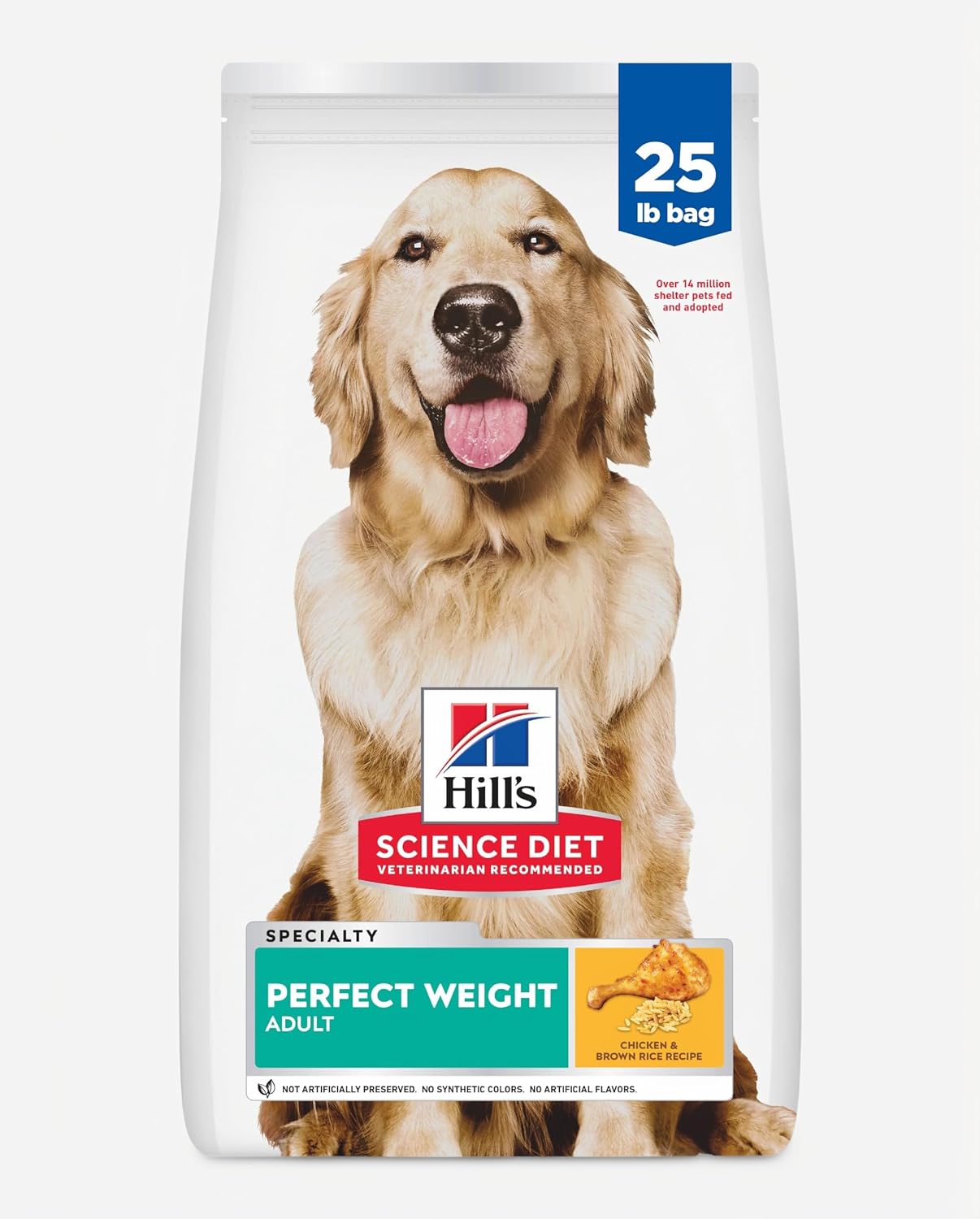
Best For: Dogs needing weight and glucose support without a prescription requirement.
Cost Per Day: Roughly $2.57, the lowest cost per day on this entire list, based on 3,189 kcal/kg.
Why It Made the List?
- The highest-volume product in this lineup, with more than 6,000 units bought in the past month
- Amazon’s Choice with a 4.7-star average across 4,197 ratings
- No prescription or vet authorization required to purchase
Key Specs
- 10.3% max crude fiber, 11.2% min crude fat, 3,189 kcal/kg
- Formulated to meet AAFCO nutrient profiles for adult maintenance
- First 5 ingredients: chicken, cracked pearled barley, brown rice, pea fiber, corn gluten meal
Honest Take
- Customer reviews consistently mention meaningful weight loss, some dogs dropping 5 to 24 pounds
- The strongest social proof of any product on this list, and the only top pick that skips the vet-authorization step
- Most common owner report: visible weight loss along with better energy and coat condition.
- Most common complaint: larger kibble size can be difficult for small-breed dogs
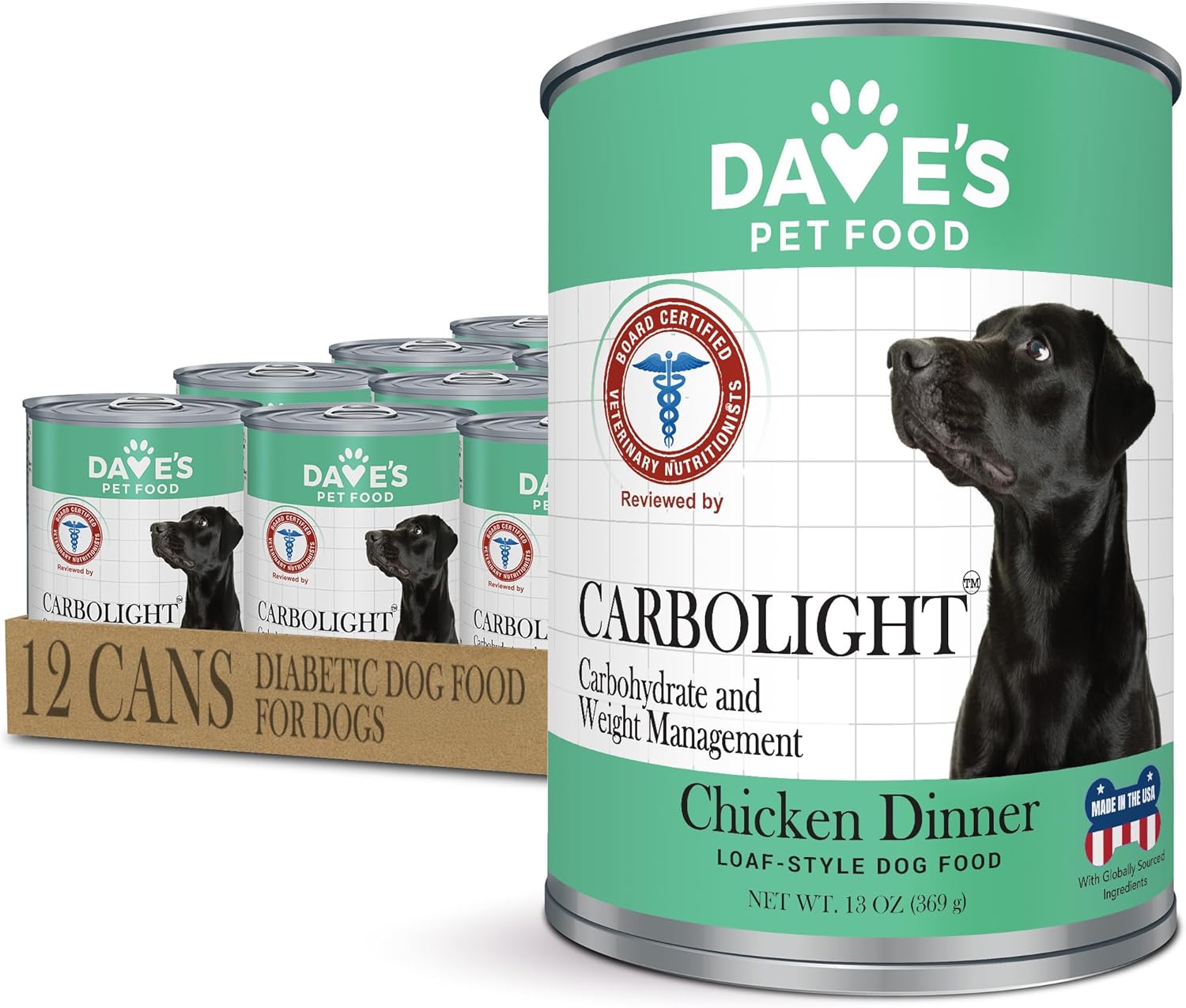
Best For: Owners wanting a diet formulated specifically for diabetic dogs, without the vet-authorization step.
Cost Per Day: Roughly $12.44, based on 900 kcal/kg and 335 kcal per can.
Why It Made the List?
- One of the only foods on the market marketed explicitly for diabetic dogs, reviewed by board-certified veterinary nutritionists
- No prescription required at checkout
- Contains L-carnitine to support fat metabolism alongside its reduced-carbohydrate recipe
Key Specs
- 3% max crude fiber, 3.5% min crude fat, 900 kcal/kg
- Complete and balanced for adult maintenance
- First 5 ingredients: chicken broth, chicken, chicken liver, dried yeast, miscanthus grass
Honest Take
- Amazon’s review count is thin (11 ratings, 3.4 stars), but Chewy shows a fuller picture: 4.8 stars across 18 ratings
- One verified Chewy review from a diabetic dog’s owner: “My little Cricket has diabetes and she LOVES this food”
- Most common owner report: strong palatability and good digestive tolerance across multiple dogs.
- Most common complaint: price is a stretch for households feeding several dogs

Best For: Owners looking for the lowest-carbohydrate non-prescription option available.
Why It Made the List?
- Under 6% digestible carbohydrate and 46% protein — the lowest carb content of any product on this list
- No prescription needed, with a 4.4-star average across 1,062 ratings
- Grain-free formula made in the USA with non-GMO, antibiotic-free chicken
Key Specs
- 11% max crude fiber, 16% min crude fat, under 6% starch
- Complete and balanced for adult maintenance
- First 5 ingredients: chicken, chicken meal, peas, chicken fat (preserved with mixed tocopherols), pea protein
Honest Take
- Multiple reviewers describe blood sugar readings dropping from the 300–400 range down into the 200s within days of switching
- These are owner-reported results, not clinical data, but the pattern shows up consistently across independent reviews
- Most common owner report: noticeable blood sugar improvement and better energy after switching.
- Most common complaint: higher price point than standard grain-free kibble
What to Look for in Diabetic Dog Food?
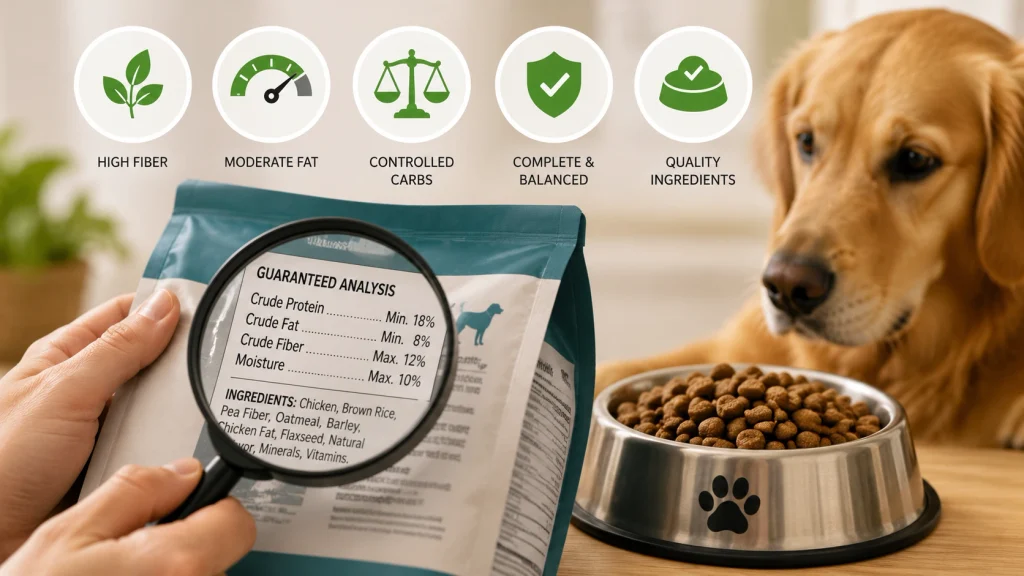
Fiber Content
- Overweight dogs typically benefit from higher fiber (10 to 20% on a dry matter basis)
- Lean or slightly underweight dogs usually need less (5 to 15%)
- More fiber isn’t automatically better — the goal is the right amount for your dog
Fat Levels
- Lower-to-moderate fat is common in diabetic formulas
- Fat needs vary by dog, especially if other conditions like pancreatitis are involved
Ingredients to Avoid
- Corn syrup, cane sugar, and molasses
- Foods that list simple sugars high on the ingredient list
Recall Check
As of publication, FDA.gov shows no active recalls for any of the seven products featured in this article. Recall status can change, so check FDA.gov directly if you want the most current information before buying.
Frequently Asked Questions
Do all diabetic dogs need prescription food?
No. Some diabetic dogs do well on vet-approved over-the-counter formulas with the right fiber and fat balance. Others need a prescription diet formulated specifically for glucose management. Consult your vet to determine which category fits your dog.
What’s the difference between Hill’s w/d and Royal Canin Glycobalance?
Hill’s w/d Multi-Benefit addresses glucose, weight, digestion, and urinary health together, with higher fiber content (up to 20%). Royal Canin Glycobalance focuses more narrowly on reduced starch and higher protein, with lower fiber (up to 10%). Both require veterinary authorization.
Can I switch my diabetic dog’s food without a vet?
It’s not recommended. Diet changes can affect insulin needs and blood sugar stability, so any switch should happen with your veterinarian’s guidance, even for non-prescription foods. Always consult your vet before changing a diabetic dog’s diet.
Is homemade food safe for diabetic dogs?
Only if a veterinarian or veterinary nutritionist formulates the recipe specifically for your dog’s needs. Getting the right balance of fiber, fat, and carbohydrates is difficult to do accurately without professional guidance. Consult your vet before attempting a homemade diet.
What ingredients should I avoid in diabetic dog food?
Corn syrup, cane sugar, molasses, and foods where simple sugars appear high on the ingredient list. These can cause blood sugar spikes that are harder to manage.
Final Recommendation
If your dog has a prescription from your vet and needs comprehensive support, Hill’s Prescription Diet w/d Multi-Benefit (Dry) has the strongest track record on this list, backed by thousands of reviews and a proven glucose-and-weight-management formula.
If you want a non-prescription option with real diabetic-specific results, Ketona Chicken Recipe stands out for its ultra-low carbohydrate content and consistent owner-reported blood sugar improvements.
And if budget matters most while staying vet-approved, Hill’s Science Diet Adult Perfect Weight offers the lowest cost per day of any food on this list, without requiring a prescription.
Whatever you choose, loop your veterinarian in before making the switch. Diabetes management works best as a partnership between your dog’s diet, their insulin routine, and your vet’s ongoing guidance — not any single food alone.