 Marco Williams
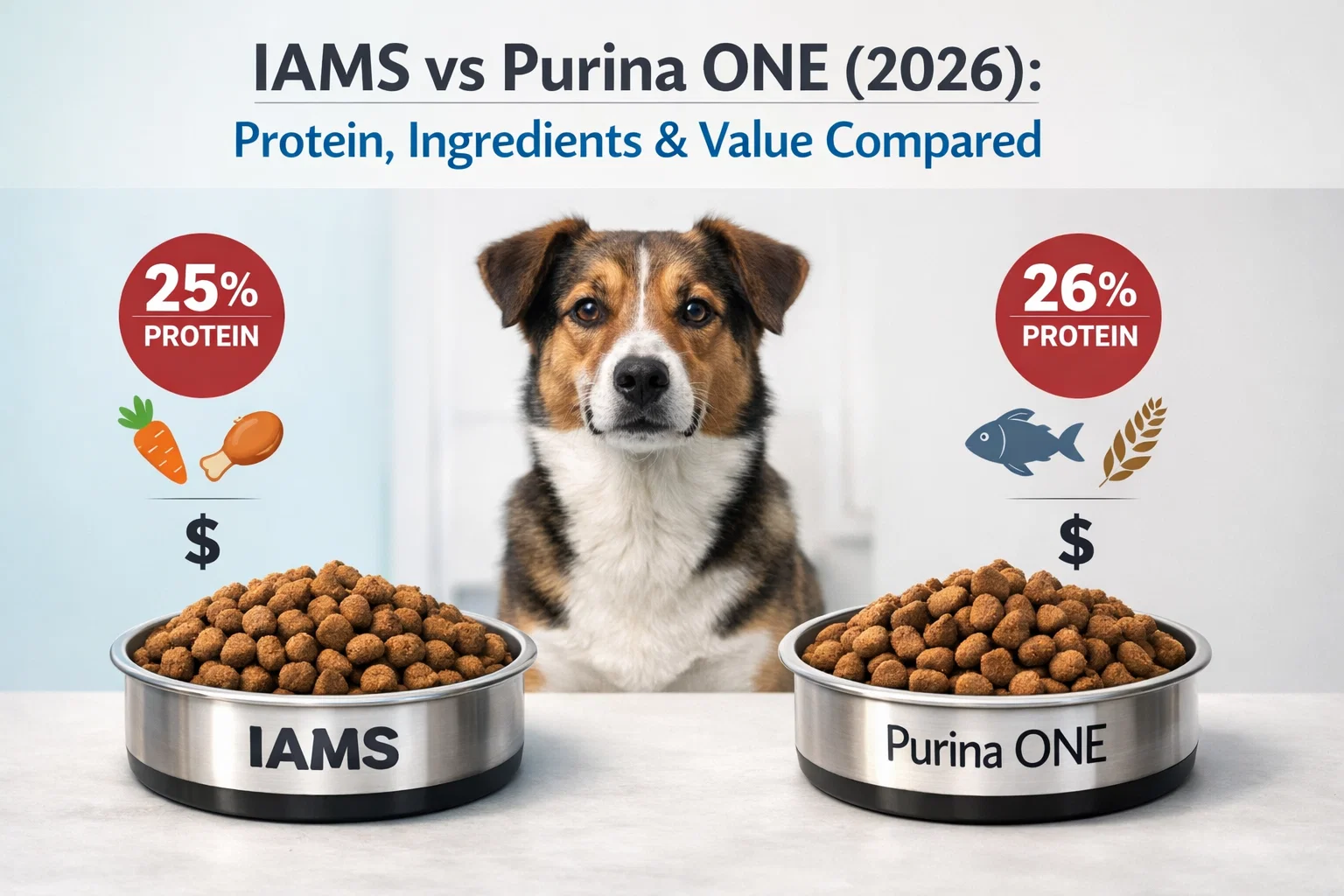
Finding the right nutrition for your dog often leads owners to the grocery store aisle, where two giants dominate the shelf: IAMS and Purina ONE. Both brands offer science-backed formulas widely available in the United States, yet they employ distinct nutritional strategies.
This analysis compares IAMS vs Purina ONE to help you determine which formula aligns with your dog’s specific metabolic needs and your budget. We examine the guaranteed analysis, caloric density, ingredient sourcing, and daily feeding costs of their most popular SKUs. Our goal is to move beyond marketing claims and look strictly at the nutritional data on the label to see how these diets function for the average U.S. pet owner.
- Best Overall Value → IAMS ProActive Health Adult Minichunks — Lower price per pound with solid macros for the average adult dog
- Best for Active Dogs → Purina ONE True Instinct Beef & Salmon — 32% protein and 17% fat for higher energy demands
- Best for Sensitive Stomachs (Fiber) → IAMS Advanced Health Healthy Digestion — Beet pulp and barley for stool firmness plus Bacillus subtilis probiotic
- Best for Sensitive Stomachs (Probiotic) → Purina ONE +Plus Digestive Health — Rice-based with Bacillus coagulans probiotic for microbiome support
Pricing varies by retailer and bag size.
What Is the Difference Between IAMS and Purina ONE?
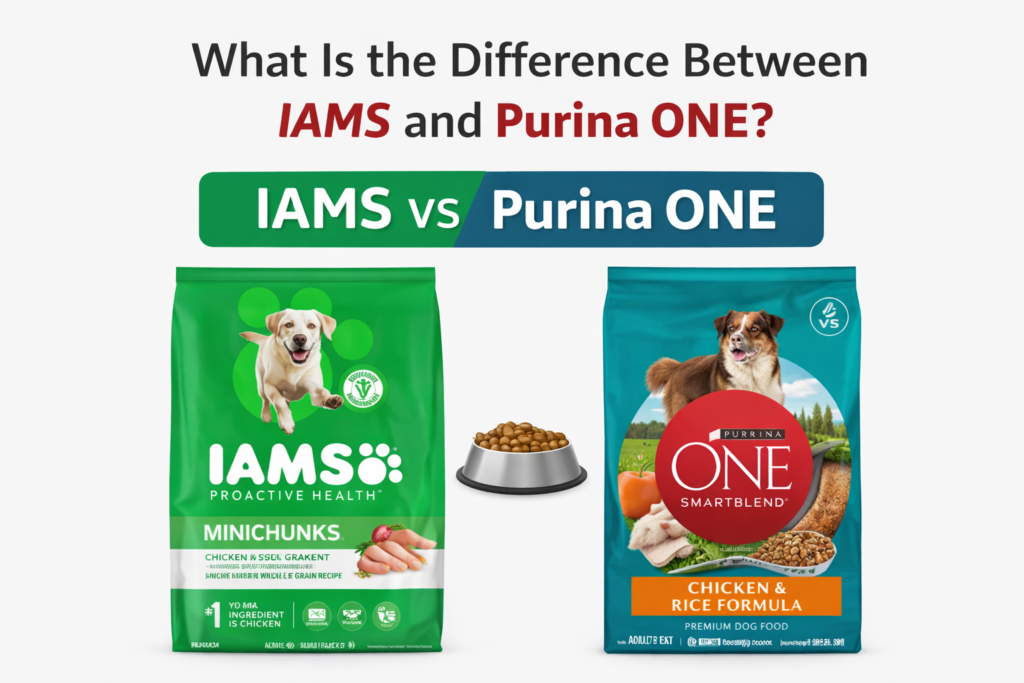
While both IAMS and Purina ONE are mass-market, grain-inclusive dog foods found in major retailers, their formulation philosophies differ in measurable ways regarding macronutrient balance and digestive support.
Protein and Macronutrients
The most immediate difference lies in protein content. IAMS standard adult formulas generally provide a crude protein range of 23–26%. In contrast, Purina ONE positions itself slightly higher on the nutritional spectrum, with adult formulas typically ranging from 26–32% crude protein. For a sedentary dog, this difference may be negligible, but for a dog requiring muscle maintenance, the higher minimums in Purina ONE are a distinct factor.
Caloric Density
Energy density is another dividing line. On a per-kilogram basis, Purina ONE formulas are more energy-dense (approximately 4,004 kcal/kg) compared to IAMS (approximately 3,688 kcal/kg). However, cup sizes differ between the brands — IAMS cups weigh approximately 106g while Purina ONE cups weigh approximately 95g — so kcal-per-cup comparisons can be misleading. When calculated by weight, Purina ONE delivers more energy per unit of food consumed.
Digestive Strategy
Both brands prioritize digestion but use different mechanisms. IAMS relies heavily on beet pulp and barley for prebiotic fiber to aid stool firmness and colon health. Notably, IAMS Advanced Health formulas also include a probiotic (Bacillus subtilis). Purina ONE distinguishes its digestive strategy by including probiotics (specifically Bacillus coagulans) in select formulas to support gut microbiome balance.
Similarities
Despite these differences, the brands share core characteristics. Both are grain-inclusive, utilizing corn, wheat, or sorghum as carbohydrate sources. Both utilize chicken by-product meal or similar meat meals to achieve their protein levels efficiently. Finally, there is a clear price positioning difference, with IAMS consistently pricing lower per pound than Purina ONE, reflecting its position as a value-oriented premium option versus Purina ONE’s “mass premium” status.
Is IAMS Better Than Purina ONE?
Purina ONE offers a higher protein range (approximately 26–32%) and greater caloric density per kilogram (~4,004 kcal/kg) compared to IAMS (approximately 23–26% protein, ~3,688 kcal/kg). However, IAMS is generally priced lower per pound. The most appropriate choice depends on your protein, calorie, and budget priorities.
How Do Protein, Fat & Calories Compare?
To understand how these brands function metabolically, we compare their standard chicken-based adult formulas head-to-head. Below is the verified data for IAMS ProActive Health Adult Minichunks and Purina ONE SmartBlend Chicken & Rice Formula.
| Metric | IAMS ProActive Health Adult Minichunks | Purina ONE SmartBlend Chicken & Rice |
|---|---|---|
| Crude Protein (min) | 25.0% | 26.0% |
| Crude Fat (min) | 14.5% | 16.0% |
| Crude Fiber (max) | 4.0% | 3.0% |
| Moisture (max) | 10.0% | 12.0% |
| Calcium (min) | ~1.2% | ~1.0% |
| Omega-6 Fatty Acids | ~3.25% | ~1.6% |
| Calories (kcal/kg) | 3,688 | 4,004 |
| Calories (kcal/cup) | ~393 (cup = 106g) | ~383 (cup = 95g) |
| First Ingredient | Chicken | Chicken |
Interpretation of the Data
Portion Differences and Daily Intake
While the kcal-per-cup numbers appear close (393 vs 383), the cup weights differ significantly. For a standard 50 lb adult dog requiring approximately 1,100 calories per day, the key comparison is food weight consumed daily.
- IAMS: Approximately 298g per day (about 2.8 cups at 106g each).
- Purina ONE: Approximately 275g per day (about 2.9 cups at 95g each).
On a weight basis, a dog fed Purina ONE consumes roughly 23g less food per day to reach the same calorie target, reflecting its higher energy density per kilogram.
Protein and Muscle Maintenance
Purina ONE provides a slightly higher fat content (16% vs 14.5%) and a higher protein floor (26% vs 25%). This nutrient density is generally more efficient for dogs with moderate activity levels. The higher fat content in Purina ONE contributes to the higher kcal/kg, providing more accessible energy for daily walks and play. IAMS, with 25% protein and lower fat, is adequate for maintenance but offers less caloric fuel per gram for highly active animals.
Stool Volume Implications
The fiber difference is noteworthy. IAMS contains roughly 33% more fiber (4% vs 3%) than the standard Purina ONE formula. This higher fiber content, largely derived from beet pulp and whole grains like sorghum, often results in larger stool volume. Owners transitioning from Purina ONE to IAMS may notice an increase in waste output. However, for dogs that struggle with loose stools, the extra fiber in IAMS can be a stabilizing factor, whereas the lower fiber, higher fat profile of Purina ONE might be too rich for some sensitive systems.
Which Brand Is Better for Sensitive Stomachs?
Digestive health formulas are among the best-selling SKUs for both brands. Here, the difference in formulation strategy becomes most apparent. We compare IAMS Advanced Health Adult Healthy Digestion against Purina ONE +Plus Digestive Health Formula. If your dog has persistent digestive issues such as chronic vomiting, diarrhea, or blood in stool, consult your veterinarian before changing diets — these symptoms may indicate a condition that requires medical intervention rather than a food switch.
Nutritional Snapshot
- IAMS Advanced Health Healthy Digestion:
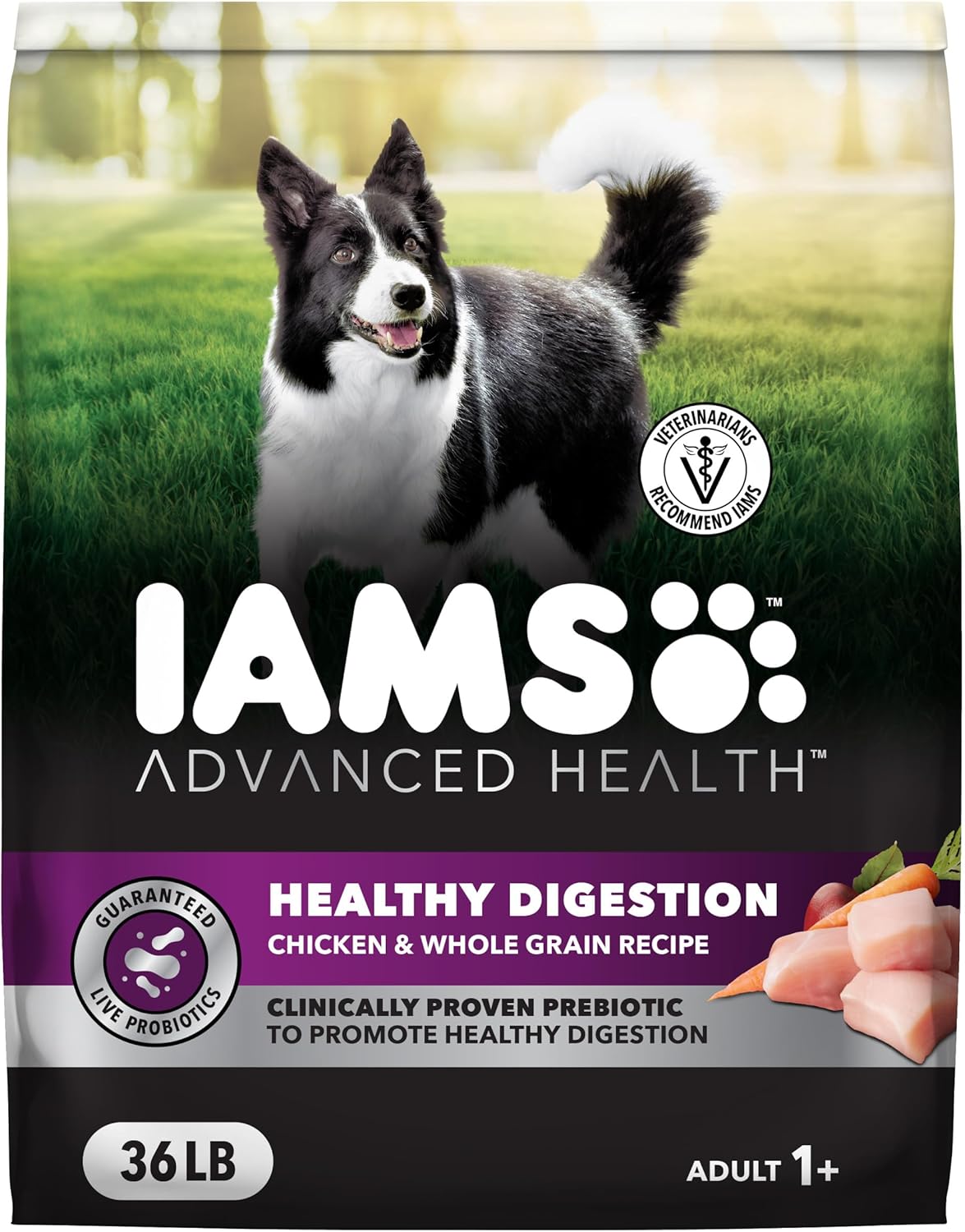
- Protein: 26.0%
- Fat: 14.0%
- Fiber: 4.0%
- Calories: ~360 kcal/cup
- Key Ingredients: Chicken, Chicken By-Product Meal, Ground Whole Grain Corn, Ground Whole Grain Sorghum, Ground Barley.
- Notable: Contains Dried Bacillus subtilis Fermentation Product (probiotic) and Dried Plain Beet Pulp (6th ingredient).
- Purina ONE +Plus Digestive Health:

- Protein: 25.0%
- Fat: 16.0%
- Fiber: 3.0%
- Calories: ~383 kcal/cup
- Key Ingredients: Chicken, Rice, Whole Grain Corn, Corn Protein Meal, Whole Grain Wheat.
- Notable: Contains Dried Bacillus coagulans Fermentation Product (probiotic).
Fiber vs. Probiotic Strategy
IAMS relies on a prebiotic fiber and probiotic combination approach. The inclusion of dried plain beet pulp, ground barley, and sorghum provides a substrate for healthy bacteria to thrive, while the added Bacillus subtilis probiotic directly introduces beneficial organisms. The fiber content helps regulate transit time through the intestines, making it a strong choice for dogs with irregular stool quality.
Purina ONE employs a rice-based probiotic supplementation strategy. The label lists Bacillus coagulans fermentation product. This introduces active beneficial bacteria directly into the digestive tract. Furthermore, Purina ONE utilizes rice as a primary carbohydrate source in this specific formula. Rice is generally considered highly digestible and low-residue, which often results in smaller, firmer stools compared to corn-heavy blends.
Grain Inclusion and Sensitivity
Neither formula is hypoallergenic. Both rely on corn and chicken by-products. However, the carbohydrate profiles differ. IAMS uses sorghum and barley, complex grains that digest slowly, providing steady blood sugar levels. Purina ONE uses rice and whole grain wheat, which are more rapidly digestible.
For a dog with a sensitivity to specific grain proteins, the choice depends on the trigger. If a dog tolerates rice better than corn/sorghum blends, Purina ONE is the logical choice. If the dog requires fibrous bulk to maintain regularity, the IAMS formula’s beet pulp and barley inclusion is a different approach. There is no clear winner, only a difference in how they manage gut motility: IAMS via fiber bulk plus probiotics, Purina ONE via bacterial support and highly digestible rice.
Which Is Better for Active or Working Dogs?
For owners of active dogs — those hiking, running, or training regularly — standard maintenance formulas may not provide sufficient energy density. While neither brand offers a true 30/20 professional performance formula designed for elite working dogs, both provide higher-protein options suitable for moderately active pets.
The Comparison
We examine:
- IAMS ProActive Health Adult Large Breed (Chicken & Whole Grain Recipe)
vs. - Purina ONE +Plus True Instinct With Real Beef & Salmon
IAMS ProActive Health Adult Large Breed
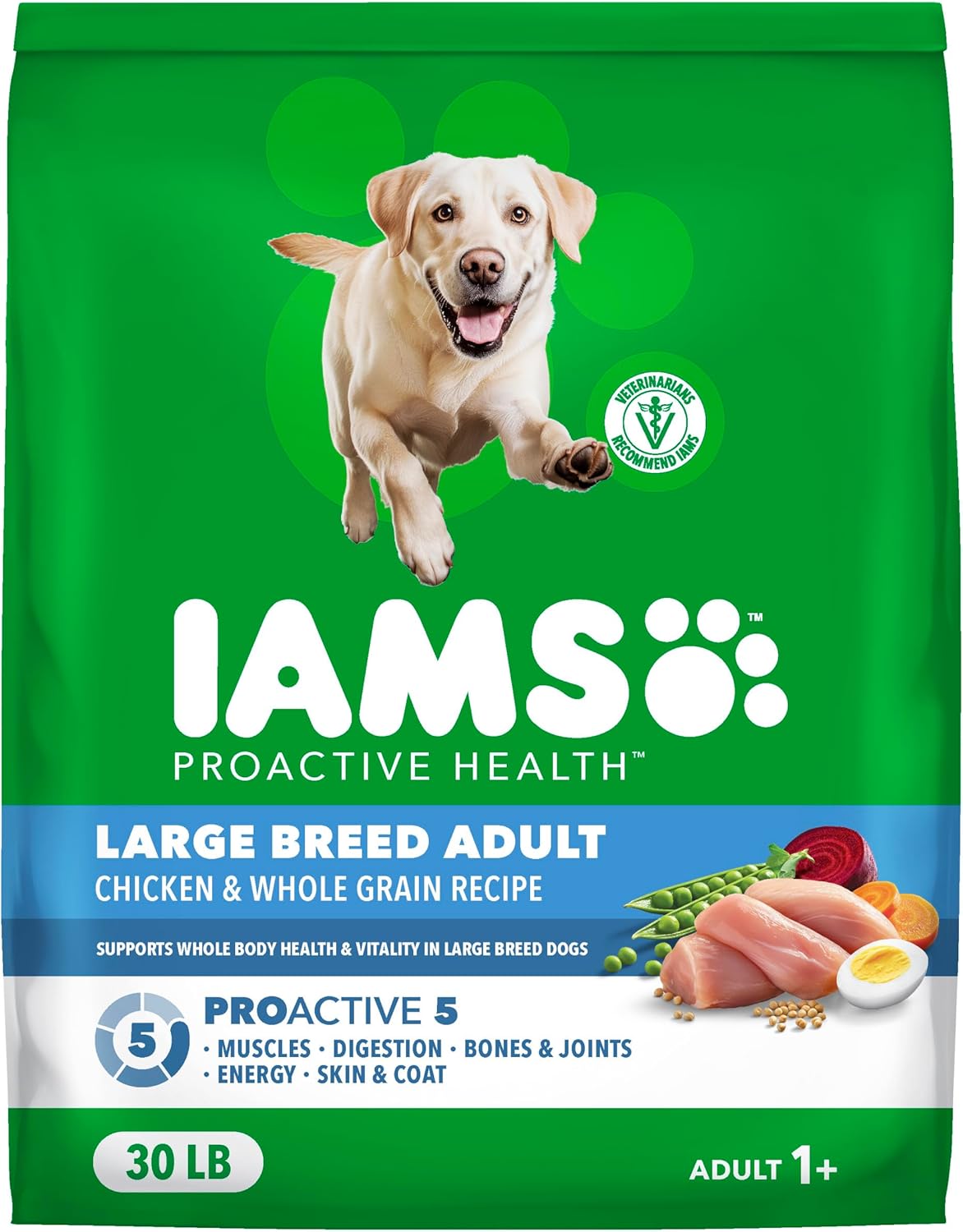
Protein: 23–25%
Fat: 12–14%
Calories: ~340–370 kcal/cup (varies by size)
Primary Protein Sources: Chicken & Chicken By-Product Meal
This formula provides moderate protein and controlled fat levels. It is better suited for large breed adults with moderate activity levels rather than high-output performance dogs.
Purina ONE +Plus True Instinct With Real Beef & Salmon

Protein: 32%
Fat: 17%
Calories: ~370–380 kcal/cup
Primary Protein Sources: Beef, Chicken Meal & Soybean Meal
This recipe offers significantly higher protein and fat density compared to standard IAMS adult formulas. The increased caloric concentration makes it more appropriate for active or athletic dogs requiring sustained energy.
Practical Interpretation
For moderately active large breed dogs, IAMS provides a balanced, calorie-controlled option that supports muscle maintenance without excess energy.
For more active dogs that train, hike, or burn higher daily calories, Purina ONE True Instinct delivers greater protein and fat density, making it more suitable within the grocery-tier category.
Neither formula replaces a true 30/20 sport or performance diet intended for elite working dogs or endurance athletes that need to maintain weight under heavy exertion. For the moderate-active category, they are functional equivalents, with Purina ONE offering notably more protein diversity at 32% versus IAMS’s 23–25%.
What Are the Full Ingredient Differences?
To evaluate the quality of the inputs, we must look at the top 5 ingredients and guaranteed analysis across the main product lines. The ingredient deck reveals the “recipe” used to achieve the nutritional numbers.
IAMS Product Analysis
1. IAMS ProActive Health Adult Minichunks

- Guaranteed Analysis: 25% Protein / 14.5% Fat / 4% Fiber
- Top 5 Ingredients: Chicken, Ground Whole Grain Corn, Ground Whole Grain Sorghum, Chicken By-Product Meal, Dried Plain Beet Pulp.
- Analysis: The reliance on Sorghum is a signature IAMS trait. Sorghum is a gluten-free ancient grain that is nutrient-rich but inexpensive. The inclusion of Beet Pulp in the top 5 reinforces the fiber-first digestive strategy.
2. IAMS Proactive Health Large Breed Adult Dry Dog Food (Chicken & Whole Grain Recipe)
Guaranteed Analysis: 23–25% Protein / 12–14% Fat / 4% Fiber (varies slightly by size and batch)
Top 5 Ingredients: Chicken, Ground Whole Grain Corn, Ground Whole Grain Sorghum, Chicken By-Product Meal, Dried Plain Beet Pulp.
Analysis: This formula maintains IAMS’ core structure of whole chicken supported by poultry by-product meal for protein concentration. Corn and sorghum serve as primary carbohydrate sources, while dried beet pulp provides fermentable fiber for digestive support. Compared to higher-protein specialty formulas, this recipe moderates calorie density to better support large breed body weight management and joint health.
3. IAMS Advanced Health Adult Healthy Digestion
- Guaranteed Analysis: 26% Protein / 14% Fat / 4% Fiber
- Top 5 Ingredients: Chicken, Chicken By-Product Meal, Ground Whole Grain Corn, Ground Whole Grain Sorghum, Ground Barley.
- Analysis: This formula adds Ground Barley as the 5th ingredient (Dried Plain Beet Pulp appears 6th), plus a Bacillus subtilis probiotic. The barley adds another layer of slowly digestible fiber beyond what the standard Minichunks provides, while the probiotic offers direct microbial support — making this formula a dual-strategy digestive option.
Purina ONE Product Analysis
1. Purina ONE SmartBlend Chicken & Rice Formula

- Guaranteed Analysis: 26% Protein / 16% Fat / 3% Fiber
- Top 5 Ingredients: Chicken, Rice Flour, Corn Protein Meal, Whole Grain Corn, Chicken By-Product Meal.
- Analysis: Purina replaces sorghum with Rice Flour, a faster-digesting carb. A key difference is Corn Protein Meal in the #3 spot. This is a plant-based protein concentrate used to boost the overall protein percentage, whereas IAMS relies more on the whole grain matrix and beet pulp fiber.
2. Purina ONE +Plus True Instinct With Real Beef & Salmon
- Guaranteed Analysis: 32% Protein / 17% Fat / 3% Fiber
- Top 5 Ingredients: Beef, Chicken Meal, Soybean Meal, Whole Grain Wheat, Beef Fat preserved with mixed-tocopherols.
- Analysis: This formula shifts significantly. It introduces Soybean Meal and Whole Grain Wheat as protein and carbohydrate contributors in the top 5. Soy Flour and Canola Meal appear further down the ingredient list. The primary protein source is Beef, with Chicken Meal providing concentrated protein density.
3. Purina ONE +Plus Digestive Health Formula
- Guaranteed Analysis: 25% Protein / 16% Fat / 3% Fiber
- Top 5 Ingredients: Chicken, Rice, Whole Grain Corn, Corn Protein Meal, Whole Grain Wheat.
- Analysis: This formula uses Rice as the second ingredient (not Rice Flour like the standard formula), paired with Whole Grain Wheat. The Bacillus coagulans probiotic appears further down the ingredient list, providing the digestive health differentiation.
Summary of Ingredient Strategy Differences
- Carbohydrates: IAMS favors Sorghum and Barley (slower digest). Purina ONE favors Rice and Wheat (faster digest).
- Plant Protein: Purina ONE utilizes Corn Protein Meal, Soybean Meal, and Soy Flour more prominently to hit high protein targets. IAMS relies more on the whole grain matrix.
- Fiber: IAMS consistently utilizes Beet Pulp across almost all SKUs, appearing in the top 5 or 6 ingredients.
How Much Does Each Brand Cost Per Day?
Cost is often the deciding factor for many owners. IAMS is positioned as the budget-friendly option, while Purina ONE commands a slightly higher price point. Below is a breakdown of the estimated costs for a 50 lb dog.
Price Per Pound (Average Retail Estimates)
- IAMS: $1.30 – $1.60 per lb
- Purina ONE: $1.60 – $1.90 per lb
Daily Feeding Calculation
We assume a 50 lb dog requiring 1,100 kcal/day. Because cup sizes differ between brands (IAMS ~106g/cup vs Purina ONE ~95g/cup), we calculate daily food weight for an accurate cost comparison.
- IAMS Feeding: At 3,688 kcal/kg, a 50 lb dog needs approximately 298g (0.66 lbs) per day.
- Purina ONE Feeding: At 4,004 kcal/kg, a 50 lb dog needs approximately 275g (0.61 lbs) per day.
Cost Breakdown
| Brand | Daily Food Wt. | Avg Price/lb | Cost Per Day | Cost Per Year |
|---|---|---|---|---|
| IAMS | 0.66 lbs | $1.45 | ~$0.96 | ~$350 |
| Purina ONE | 0.61 lbs | $1.75 | ~$1.07 | ~$390 |
The Bottom Line: While Purina ONE requires slightly less food by weight due to higher caloric density per kilogram, the lower price per pound of IAMS still results in overall savings. Depending on retailer pricing and bag size, the annual difference may range from approximately $40 to $100 for a 50 lb dog. For owners of giant breeds (100 lb+), the annual difference will be proportionally larger. Note: prices fluctuate by retailer and bag size — always verify current pricing before committing.
Who Should Choose IAMS?

IAMS is appropriate for owners who prioritize value without sacrificing basic nutritional adequacy. It is specifically recommended for:
- Budget-Conscious Owners: The lower price per pound translates to measurable annual savings, especially for owners of large breeds or multiple dogs.
- Multi-Dog Households: When feeding several dogs of varying ages, the general affordability and broad AAFCO compliance of IAMS make it a practical staple.
- Dogs Needing Fiber: If your dog struggles with loose stools or requires help with anal gland expression, the higher fiber content (beet pulp and barley) in IAMS can help bulk up stool volume.
- Moderate Activity Levels: For the average house dog with low-to-moderate exercise (daily neighborhood walks), the 23–26% protein range is sufficient and reduces the risk of excess calorie consumption.
Who Should Choose Purina ONE?

Purina ONE may be more suitable for owners willing to pay a marginal increase for higher nutrient density and specific functional ingredients. It is recommended for:
- Active Adult Dogs: The higher protein floor (26–32%) and fat content provide better fuel for dogs that hike, run, or engage in vigorous play regularly.
- Owners Seeking Probiotics: If you want to support your dog’s gut health without buying separate supplements, the inclusion of Bacillus coagulans in Purina ONE Digestive Health and other formulas is a value-add.
- Volume-Sensitive Dogs: For dogs that get bloated easily or are picky eaters, the higher caloric density per kilogram means they need to eat less food by weight to get their daily nutrients.
- Coat Health Priority: The higher fat content in formulas like True Instinct (17% fat) can contribute to a shinier coat when combined with adequate omega fatty acid intake.
Who Should Avoid Both Brands?
While both brands are safe and effective for millions of dogs, they are not universally appropriate. You should avoid both IAMS and Purina ONE if your dog falls into these categories:
- Confirmed Grain Allergies: Both brands rely heavily on corn, wheat, sorghum, and protein meals derived from grains. If your dog has a diagnosed allergy to these grains, neither line is suitable.
- Severe Protein Hypersensitivity: Both brands utilize chicken by-product meals extensively, even in beef or lamb formulas. Dogs with strict poultry intolerance will struggle to find a safe SKU in either standard line.
- Prescription Diet Requirements: Neither brand is formulated to treat medical conditions like kidney disease, urinary crystals, or pancreatitis. These conditions require veterinary-prescribed diets. If your dog has been diagnosed with any of these conditions, consult your veterinarian for specific dietary guidance.
- Limited Ingredient Seekers: If you are looking for a “short list” diet with only 5–10 total ingredients to isolate a trigger, both brands are too complex, containing various meals, grains, and additives.
Frequently Asked Questions
Which dog food has more protein, IAMS or Purina ONE?
Purina ONE generally contains more protein. Most standard Purina ONE adult formulas range from 26% to 32% crude protein. IAMS standard adult formulas typically range from 23% to 26%. While both meet AAFCO standards for adult maintenance (minimum 18%), Purina ONE provides a higher density of amino acids beneficial for muscle retention in active dogs.
Which brand is cheaper to feed?
IAMS is almost consistently cheaper to feed. Although Purina ONE is more energy-dense per kilogram of food (meaning your dog consumes slightly less food by weight per day), the price per pound of IAMS is significantly lower ($1.30–$1.60 vs. $1.60–$1.90). For a 50 lb dog, feeding IAMS saves approximately $40 to $100 annually compared to Purina ONE.
Which brand is better for digestion?
It depends on the dog’s specific issue. IAMS Advanced Health Healthy Digestion is better for dogs needing fiber to firm up stools, as it relies on beet pulp, barley, and sorghum (4% fiber) plus a Bacillus subtilis probiotic. Purina ONE Digestive Health is better for microbiome balance and dogs sensitive to bulk, as it uses rice and added Bacillus coagulans probiotics to aid digestion. If your dog has persistent digestive issues, consult your veterinarian to rule out underlying conditions.
Are both brands AAFCO compliant?
Yes. Both IAMS and Purina ONE formulate their diets to meet or exceed the nutritional levels established by the AAFCO Dog Food Nutrient Profiles for their respective life stages (Growth, Maintenance, or All Life Stages). Both brands validate their formulas through feeding trials and laboratory analysis to ensure nutritional adequacy.
Which is better for active dogs?
Purina ONE is generally better for active dogs due to its higher fat and protein content. The True Instinct line offers 32% protein and 17% fat, which provides accessible energy for exercise. Standard IAMS recipes (14–14.5% fat, 23–25% protein) may not provide enough caloric density for dogs engaging in sustained physical activity. Neither replaces a true 30/20 performance diet for elite working dogs.
Can I switch between IAMS and Purina ONE?
Yes, you can switch between them, but it requires a 7–10 day transition period. Because IAMS is higher in fiber and Purina ONE is richer in fat and protein, a sudden switch can cause digestive upset. Mix the foods gradually — starting with 25% new food and increasing every 2–3 days — to allow your dog’s digestive system to adjust to the different fiber and protein levels.
Final Recommendation: IAMS vs Purina ONE
Both IAMS and Purina ONE are reliable, AAFCO-compliant grocery-tier dog foods that serve different priorities well. The right choice depends on your dog’s specific needs and your budget constraints.
Choose IAMS if your dog is a moderate-activity adult, you manage a multi-dog household, or budget is the primary consideration. The higher fiber content and lower price per pound make it a practical daily driver for the average U.S. pet.
Choose Purina ONE if your dog is more active, you want built-in probiotic support, or your dog benefits from higher caloric density in a smaller food volume. The premium over IAMS is modest and may be justified by the nutrient profile upgrade.
For dogs with persistent digestive issues, confirmed allergies, or medical conditions, neither grocery-tier brand replaces a veterinary-recommended therapeutic diet. Consult your veterinarian for guidance specific to your dog’s health history.