
 Marco Williams

My neighbor’s Mini Bernedoodle, Biscuit, had chronic soft stools for eight months. Three food switches, two vet visits, and one elimination trial later — the culprit was chicken, which appeared in every “sensitive stomach” formula she’d tried.
That’s the problem with generic dog food advice: it ignores the breed-specific biology that actually drives problems in Mini Bernedoodles. This guide doesn’t.
Every pick below was selected based on ingredient quality, AAFCO feeding trial compliance, five-year recall history, and documented owner feedback patterns across verified buyer reviews. The six formulas here are the ones that consistently hold up under scrutiny.
Who this is for: Adult Mini Bernedoodles (12 months to 7 years) at a healthy or slightly overweight body condition. Puppies and seniors have different nutritional needs and are not covered in this guide.
Why Mini Bernedoodles Need a Different Approach

Most dog food guides treat breed differences as marketing copy. For Mini Bernedoodles, they’re clinically relevant.
The Poodle half contributes a digestive tract that’s more reactive to dietary fat, protein source changes, and ingredient variety than most breeds. The Bernese Mountain Dog half brings a genetic predisposition to joint issues — hip and elbow dysplasia risk that diet can slow but not eliminate.
The result: Mini Bernedoodles are more likely than average to show food-triggered skin flares, loose stools, and early-onset weight gain if diet isn’t managed carefully. The wrong food shows up fast. The right food makes a measurable difference within weeks.
🏆 Best Overall: Purina Pro Plan Sensitive Skin & Stomach Salmon & Rice Best starting point for doodles with digestive or skin sensitivity.
💰 Best Budget: Blue Buffalo Life Protection Chicken & Brown Rice Solid nutrition with glucosamine at an accessible price.
🥩 Best Limited Ingredient: The Farmer’s Dog Fresh Food Best for confirmed food sensitivities or extreme picky eaters.
💪 Best Grain-Free: Wellness CORE Grain-Free Turkey & Chicken High-protein pick for active Mini Bernedoodles.
🔬 Best Premium Formula: Royal Canin Medium Adult Science-backed, precise calorie control, highly consistent.
⚖️ Best for Weight Control: Hill’s Science Diet Adult Perfect Weight Clinically proven for overweight or low-activity dogs.
Quick Comparison
| Product | Protein | Fat | Grain | Limited Ingredient | Best For | Price |
|---|---|---|---|---|---|---|
| Purina Pro Plan Sensitive Skin & Stomach | ~26% | ~16% | Grain-Inclusive | No | Sensitive stomach & skin | $$ |
| Royal Canin Medium Adult | ~23% | ~14% | Grain-Inclusive | No | Precise, consistent nutrition | $$$ |
| Hill’s Science Diet Perfect Weight | ~26%* | ~11%* | Grain-Inclusive | No | Weight management | $$ |
| Blue Buffalo Life Protection Chicken | ~24% | ~14% | Grain-Inclusive | No | Budget-friendly, balanced | $ |
| Wellness CORE Grain-Free Original | ~34% | ~16% | Grain-Free | No | Active dogs, higher protein | $$$ |
| The Farmer’s Dog Fresh Food | Varies | Varies | Both options | Yes | Severe sensitivities, picky eaters | $$$$ |
*Dry matter basis
How to use this table: Start with protein and fat on a dry matter basis — not the guaranteed analysis on the bag, which includes moisture and distorts comparisons. If your dog has a known sensitivity, check the Limited Ingredient column first. If weight is the concern, sort by Fat.
Top 6 Dog Foods for Mini Bernedoodles: Full Reviews

Protein: ~26% | Fat: ~16% | Grain: Grain-Inclusive (rice, oatmeal)
Primary Protein: Salmon
Key Additions: Live probiotics, omega-3 & omega-6 fatty acids
AAFCO: Complete & balanced, adult maintenance — feeding trial verified
Salmon as the #1 ingredient delivers anti-inflammatory omega-3s that directly address the coat and skin issues common in this breed. Rice and oatmeal are highly digestible carbohydrates that don’t stress a reactive gut. The live probiotic inclusion (guaranteed CFUs) supports microbiome stability — most owners see stool improvement within 10–14 days.
This formula runs AAFCO feeding trials, not just nutrient analysis. That means the numbers have been validated on actual dogs, not just on paper.
✅ Best for: Adult Mini Bernedoodles with digestive sensitivity, frequent soft stools, or a dull/flaky coat.
⚠️ Limitation: Not a true limited ingredient diet — multiple protein and carb sources are present. Won’t work for dogs with a confirmed single-protein allergy.
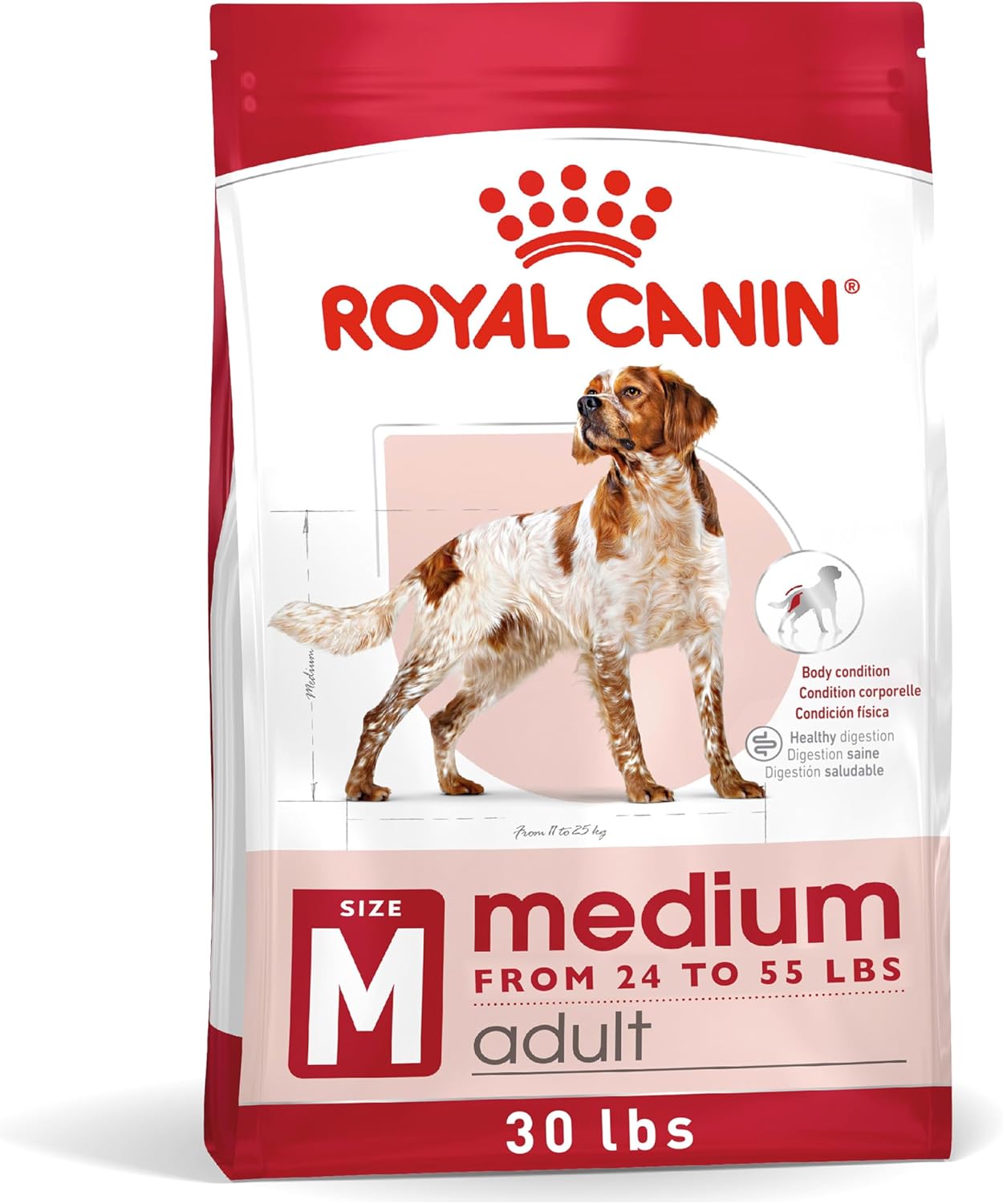
Protein: ~23% | Fat: ~14% | Grain: Grain-Inclusive (brewers rice, wheat)
Primary Protein: Chicken by-product meal
Key Additions: EPA & DHA, antioxidants
AAFCO: Complete & balanced, adult maintenance — feeding trial verified
Calorie density is calibrated specifically for medium-breed adults, which prevents the gradual weight creep common in Mini Bernedoodles past the puppy stage. The kibble geometry encourages chewing and slows eating, which improves digestion. EPA and DHA from fish oil maintain skin and coat year-round. Stool consistency is notably stable on this formula — a pattern that shows up consistently across owner reports.
✅ Best for: Healthy adult Mini Bernedoodles where consistent body condition and predictable nutrition are the priority.
⚠️ Limitation: Premium price point. First named protein is chicken by-product meal, not a whole-meat ingredient.

Protein: ~26%* | Fat: ~11%* | Grain: Grain-Inclusive (barley, brown rice)
Primary Protein: Chicken
Key Additions: L-carnitine, coconut oil, fiber blend
AAFCO: Complete & balanced, adult maintenance — feeding trial verified | *Dry matter basis
Lower fat reduces caloric density. A high-fiber blend maintains satiety so the dog doesn’t appear food-deprived. L-carnitine supports fat metabolism while preserving lean muscle mass. Most owners report measurable body condition improvement within 8–12 weeks. Worth noting: excess weight accelerates joint degradation in a breed already predisposed to hip and elbow dysplasia, so this formula does double duty.
✅ Best for: Overweight or low-activity adult Mini Bernedoodles needing safe, steady weight reduction.
⚠️ Limitation: Too calorie-restricted for active or working dogs. Not appropriate as a general adult formula.

Protein: ~24% | Fat: ~14% | Grain: Grain-Inclusive (brown rice, barley, oatmeal)
Primary Protein: Deboned Chicken
Key Additions: Glucosamine, “LifeSource Bits” antioxidant blend
AAFCO: Complete & balanced, adult maintenance
Deboned chicken leads the ingredient list. Glucosamine is included at a functional level — relevant for a breed with Bernese Mountain Dog joint risk. The LifeSource Bits deliver a cold-formed antioxidant and vitamin blend; cold-forming preserves heat-sensitive nutrients that standard kibble processing would degrade. Strong nutritional profile at a price point where most competitors cut corners.
✅ Best for: Budget-conscious owners of healthy adult Mini Bernedoodles without grain or chicken sensitivities.
⚠️ Limitation: Contains legumes (peas). Picky eaters sometimes sort out and leave the LifeSource Bits uneaten.

Protein: ~34% | Fat: ~16% | Grain: Grain-Free
Primary Protein: Deboned Turkey, Turkey Meal, Chicken Meal
Key Additions: Probiotics, omega fatty acids, glucosamine, chondroitin
AAFCO: Complete & balanced, adult maintenance
Three meat sources lead the panel, providing a broader amino acid profile than single-protein formulas. At 34% protein dry matter, this is the highest-protein option on this list — appropriate for active dogs with higher metabolic demand. Glucosamine and chondroitin together provide comprehensive joint support. Owners of active dogs report firm, small stools and good muscle tone, both indicators of high digestibility.
Transition slowly over 10 days minimum. The protein density is a significant dietary shift for most dogs.
✅ Best for: Active adult Mini Bernedoodles, or dogs confirmed through elimination trial to do better without grains.
⚠️ Limitation: Too calorie-dense for sedentary or senior dogs. Grain-free is only appropriate after a confirmed grain sensitivity diagnosis — not as a default upgrade.

Protein: Varies (~32–45% dry matter) | Fat: Varies (~19–32% dry matter)
Primary Protein: Single source per recipe (Turkey, Beef, Pork, or Chicken)
Key Additions: TFD Nutrient Blend, fish oil
AAFCO: Complete & balanced, all life stages | Limited ingredient by design
One protein source, a short list of whole vegetables, and a nutrient blend — that’s the full ingredient picture per recipe. No shared manufacturing lines with other proteins, which eliminates cross-contamination as a variable during an elimination trial. Palatability is near-universal; dogs that reject all kibble formats almost always accept this. Most effective option for diagnosing and resolving chronic food-triggered skin or digestive issues that haven’t responded to kibble adjustments.
✅ Best for: Mini Bernedoodles with confirmed allergies, chronic unresolved sensitivities, or complete food refusal.
⚠️ Limitation: Significant cost premium over kibble. Requires freezer space and a subscription. Not warranted for dogs without confirmed sensitivities.
How to Choose the Right Food for a Mini Bernedoodle
Focus on four factors specific to this breed:
- Protein (24–30% dry matter): Named meat as the first ingredient matters more than the percentage alone. Avoid formulas where the first named protein is more than three ingredients down the list.
- Fat (14–18%): Moderate fat supports energy without driving weight gain. Drop to 10–13% for sedentary dogs or those already overweight.
- Grain vs. grain-free: Only switch to grain-free if your dog has a confirmed grain sensitivity diagnosed through a proper elimination trial. Most Mini Bernedoodles do well on rice or oatmeal-based formulas and don’t need the switch.
- Joint and weight monitoring: Check body condition every 2–3 months. You should be able to feel the ribs with light pressure but not see them. Visible ribs = underweight. No rib definition with firm pressure = overweight. Both states warrant a formula or portion adjustment.
Watch stool quality closely in the first 2–3 weeks on any new food. Soft stools or persistent itchy skin are the clearest early signals that a formula isn’t working. Give any new food a full 6–8 weeks before drawing conclusions — skin and coat changes in particular take longer than most owners expect.
5 Mistakes Mini Bernedoodle Owners Make with Food

1. Switching too fast
Transition over 7–10 days minimum: 25% new food for days 1–3, 50% for days 4–6, 75% for days 7–9, 100% from day 10. Abrupt switches cause GI upset that gets blamed on the new food — often unfairly.
2. Overfeeding treats
Keep treats under 10% of daily caloric intake. A medium-sized dog treat can be 50–80 calories. Three or four a day on top of a full meal adds meaningful caloric surplus over weeks and months.
3. Confusing intolerance with allergy
Food intolerance causes digestive symptoms: loose stool, gas, vomiting. Food allergy causes immune response: chronic ear infections, itchy paws, facial rubbing, skin rashes. They look different, they require different interventions, and conflating them leads to ineffective food switches.
4. Chasing high-protein trends
Companion Mini Bernedoodles — dogs with moderate to low daily activity — don’t need 35%+ protein formulas. High protein in sedentary dogs often creates more digestive instability than it resolves and adds unnecessary caloric load. 24–28% is the appropriate range for most.
5. Buying based on social media hype
Boutique brands with compelling marketing rarely have the feeding trial infrastructure, manufacturing quality controls, or longitudinal safety data of established manufacturers. “Small batch” and “human-grade” are not regulated claims.
Frequently Asked Questions
Is salmon good for Mini Bernedoodles?
Yes, and it’s particularly well-suited for this breed. Salmon delivers omega-3 fatty acids (EPA and DHA) that reduce systemic inflammation, support skin barrier function, and improve coat quality. It’s also a novel protein for many dogs, making it a lower-risk choice for animals with a history of chicken or beef reactions.
Is grain-free better for a Mini Bernedoodle?
Not by default. Grain-free is appropriate only for dogs with a confirmed grain sensitivity — which is less common than marketing would suggest. Formula quality, protein source, and fat level matter more than grain status for the average Mini Bernedoodle. The FDA has also conducted ongoing research into a potential link between grain-free diets high in legumes and dilated cardiomyopathy, though causation hasn’t been established.
How long does a new food take to work?
Budget 6–8 weeks for a complete evaluation. Stool quality typically stabilizes within 1–2 weeks. Skin and coat improvements take 6–10 weeks because the skin cell turnover cycle is slow. Judging a food at 2 weeks is almost always premature.
Can Mini Bernedoodles be allergic to chicken?
Yes. Chicken is statistically one of the most common food allergens in dogs, largely because it’s in so many formulas — meaning dogs accumulate exposure over time. Chronic ear infections, itchy paws, facial rubbing, and recurring skin rashes are the classic signs. Confirm with an 8–12 week single-protein elimination trial, not a blood or saliva allergy test (those have poor diagnostic accuracy for food allergens).
What protein is best for a Mini Bernedoodle?
There’s no universal answer. The best protein is the one your individual dog tolerates well. Salmon, turkey, and lamb are useful alternatives for dogs reacting to chicken or beef. If your dog has no known sensitivities, chicken or turkey-based formulas from reputable manufacturers are a reliable starting point.
How much should I feed my Mini Bernedoodle?
Start with the feeding guide on the bag, calibrated to your dog’s ideal body weight — not current weight if they’re overweight. Adjust based on body condition assessment every 4–6 weeks. Activity level, age, and spay/neuter status all affect caloric need. Most adult Mini Bernedoodles do well on 1.5–2.5 cups per day split across two meals, but individual variation is significant.
Is a high-protein diet better for doodles?
No, not for most. A moderate range of 24–28% protein on a dry matter basis is sufficient for companion dogs with normal activity levels. High-protein formulas (34%+) are appropriate for working dogs or those with documented high metabolic demand — not as a general wellness upgrade. They also carry a higher caloric density that can accelerate weight gain in less active dogs.
What if my dog has soft stool?
First, rule out parasites (fecal test at the vet), dietary indiscretion, and transition speed. If none apply, move to a sensitive stomach formula with a single novel protein and a digestible carbohydrate base. If soft stool persists beyond 6–8 weeks on an appropriate formula, consult your vet — there may be an underlying GI condition.
Final Recommendation
For most Mini Bernedoodles, Purina Pro Plan Sensitive Skin & Stomach is the right starting point. It addresses the two most common issues in this breed — digestive sensitivity and coat/skin dullness — without overcomplicating the diet or requiring a premium budget.
Use this decision tree:
- Confirmed sensitivities or allergies → The Farmer’s Dog (single protein, short ingredient list, proper elimination trial tool)
- Weight management needed → Hill’s Science Diet Perfect Weight (clinical data, three-mechanism approach)
- Budget-conscious, healthy dog → Blue Buffalo Life Protection (glucosamine included, strong value)
- Active dog, confirmed grain sensitivity → Wellness CORE Grain-Free (highest protein, joint support)
- Want precision without ongoing adjustment → Royal Canin Medium Adult (calorie-controlled, vet-grade consistency)
Whichever you choose: transition over 7–10 days, evaluate body condition every 6–8 weeks, and give a new formula a full two months before drawing conclusions.