 Marco Williams
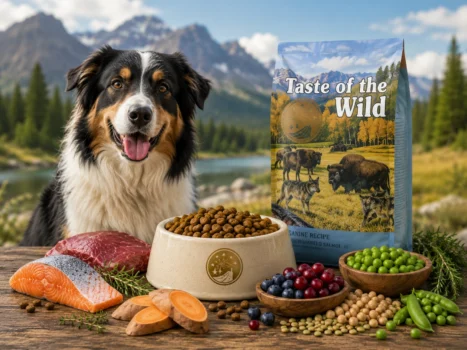
Is Taste of the Wild actually a good dog food, or just good marketing? It’s a solid, protein-forward grain-free brand, but it comes with real trade-offs most reviews skip over: legume-heavy ingredient panels, one historical recall, and AAFCO substantiation that differs from formula to formula.
This review covers Taste of the Wild’s dry kibble lineup. The brand also makes wet and canned food, which isn’t covered here. We evaluated seven formulas on ingredients, guaranteed analysis, AAFCO ratings, recall history, and real owner feedback, so you can match the right one to your dog instead of guessing from the bag art.
- Best Overall → High Prairie Canine (Bison & Venison) — 32% protein, ~$1.25/day
- Best for Sensitive Stomachs → Pacific Stream Canine (Smoked Salmon) — single-protein fish, ~$1.29/day
- Best for Puppies → High Prairie Puppy (Bison & Venison) — AAFCO All Life Stages, ~$1.72/day
- Best Novel Protein → Southwest Canyon Canine (Wild Boar) — 29% protein, ~$1.29/day
- Best Grain-Inclusive Option → Ancient Prairie (Roasted Bison & Ancient Grains) — 32% protein, ~$1.18/day
- Best for Allergies → PREY Angus Beef (Limited Ingredient) — 4 ingredients, ~$1.60/day
- Best for Small Breeds → Appalachian Valley Small Breed (Venison) — 32% protein, ~$1.27/day
Is Taste of the Wild a Good Dog Food?
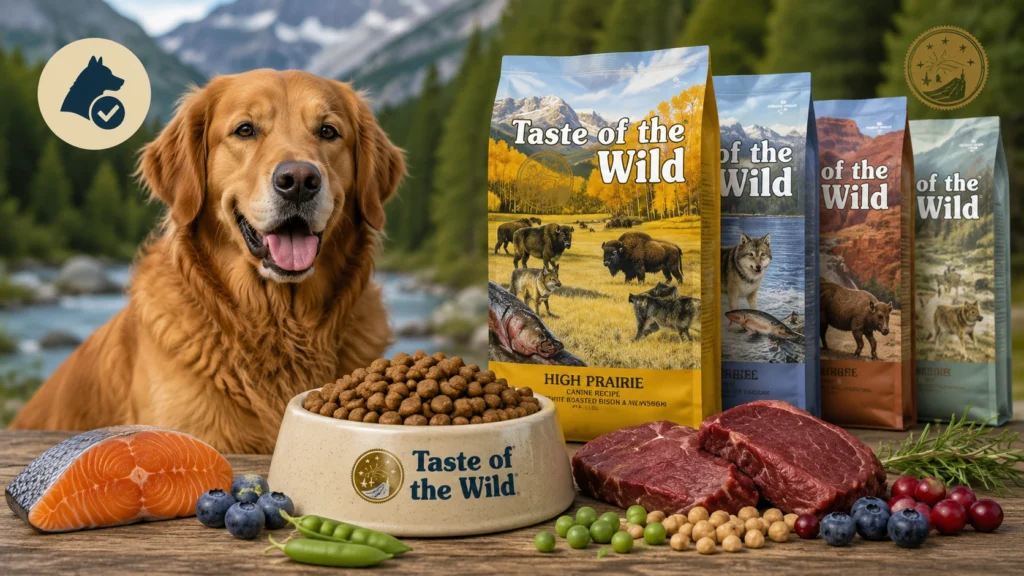
Taste of the Wild is made by Diamond Pet Foods, a family-owned company founded in 1970 and headquartered in Meta, Missouri. The brand built its identity around grain-free, “ancestral diet” formulas that lean on novel proteins like bison, venison, wild boar, and salmon, rather than the chicken-and-rice standbys most mainstream brands default to.
The full lineup is bigger than most reviews mention. Taste of the Wild currently offers 21 dog-specific recipes across dry and wet formats: 18 under the main Taste of the Wild name and 3 under its limited-ingredient PREY sub-brand. That range spans grain-free, grain-inclusive (Ancient Grains), and limited-ingredient formulas, which is part of why picking the right one isn’t always obvious.
Every formula in the lineup also includes the brand’s proprietary K9 Strain Probiotics, added after cooking to preserve viability. More on what that means below.
Taste of the Wild Formulas Compared
| Formula | Best For | Protein | AAFCO Life Stage | Calories | Rating | Est. Cost/Day* |
|---|---|---|---|---|---|---|
| High Prairie Canine | Best Overall | 32% | Maintenance (Adult) | 422 kcal/cup | 4.6★ (12,900) | ~$1.25 |
| Pacific Stream Canine | Sensitive Stomachs | 25% | Maintenance (Adult) | 408 kcal/cup | 4.7★ (10,169) | ~$1.29 |
| High Prairie Puppy | Puppies | 28% | All Life Stages (incl. large-breed growth) | 415 kcal/cup | 4.7★ (5,083) | ~$1.72 |
| Southwest Canyon Canine | Novel Protein | 29% | All Life Stages (incl. large-breed growth) | 408 kcal/cup | 4.6★ (2,440) | ~$1.29 |
| Ancient Prairie | Grain-Inclusive | 32% | All Life Stages (incl. large-breed growth) | 445 kcal/cup | 4.6★ (3,779) | ~$1.18 |
| PREY Angus Beef | Allergies | 27% | All Life Stages (incl. large-breed growth) | 412 kcal/cup | 4.5★ (563) | ~$1.60 |
| Appalachian Valley Small Breed | Small Breeds | 32% | Maintenance (Adult) | 422 kcal/cup | 4.6★ (3,702) | ~$1.27 |
The 7 Best Taste of the Wild Formulas
Here’s the breakdown of the seven formulas worth knowing, from best overall to most situational.

Best for: most adult dogs, especially if you want a proven, best-selling formula.
Cost per day: ~$1.25, based on a 1,000 kcal/day reference for a moderately active 50 lb dog.
Why It Made the List?
- Taste of the Wild’s most reviewed and best-selling SKU, by a wide margin
- 32% protein with a roasted bison and venison flavor profile dogs consistently respond well to
- Backed by the brand’s full K9 Strain Probiotic guarantee at 80 million CFU/lb
Key Specs
- 32% protein / 18% fat / 4% fiber, 422 kcal/cup
- Formulated to meet AAFCO Dog Food Nutrient Profiles for maintenance (adult)
- First 5 ingredients: water buffalo, lamb meal, chicken meal, sweet potatoes, peas
Honest Take
- Strong, consistent owner reports of coat improvement and firmer stools
- Per the label’s ingredient breakdown, bison and venison actually make up a smaller share of the recipe (around 12% and 4% respectively) than the name implies. Still real meat, just not the headline percentage
- Most common owner report: shinier coats and better stool quality within a few weeks.
- Most common complaint: a subset of dogs, especially puppies, report soft stool or gas when starting this specific formula

Best for: dogs with food sensitivities or a history of GI upset on red-meat formulas.
Cost per day: ~$1.29, based on a 1,000 kcal/day reference for a moderately active 50 lb dog.
Why It Made the List?
- Single animal-protein source (salmon), which makes it easier to pinpoint a trigger if your dog has one
- Egg-free recipe, a genuine plus for dogs with an egg sensitivity specifically
- Rich in omega-3s from real salmon and salmon meal for skin and coat support
Key Specs
- 25% protein / 15% fat / 4% fiber, 408 kcal/cup
- Formulated to meet AAFCO Dog Food Nutrient Profiles for maintenance (adult)
- First 5 ingredients: salmon, fish meal, sweet potatoes, peas, pea flour
Honest Take
- Frequently the formula owners switch to after a rough start on High Prairie, with good results
- Protein comes in lower than most of the other formulas here (25% vs. 28–32% elsewhere). Still a complete diet, but worth factoring in if you’re comparing macros across formulas
- Most common owner report: resolved digestive issues after switching from a red-meat formula.
- Most common complaint: occasional comments about the fish smell being stronger than other formulas

Best for: growing puppies, including large breeds.
Cost per day: ~$1.72, based on the same 1,000 kcal/day adult-dog reference used across this article. Puppies have different caloric needs, so follow the formula’s actual feeding guide for real portions.
Why It Made the List?
- Formulated to meet AAFCO Dog Food Nutrient Profiles for All Life Stages, including growth of large-size dogs (70 lb+ as an adult), a broader, stricter standard than the adult formula’s maintenance rating
- Small kibble size designed for smaller mouths
- Guaranteed DHA levels for brain and vision development
Key Specs
- 28% protein / 17% fat / 5% fiber, DHA 0.05% minimum, 415 kcal/cup
- AAFCO All Life Stages, including large-breed growth
- First 5 ingredients: water buffalo, lamb meal, sweet potatoes, egg product, garbanzo beans
Honest Take
- Good option if you want a puppy formula that also works for pregnant or nursing adult dogs
- There are documented reports of GI upset on this specific formula, especially in large-breed or sensitive puppies. Talk to your vet before starting a puppy on it, particularly a large-breed puppy
- Most common owner report: healthy weight gain and good energy in growing puppies.
- Most common complaint: digestive upset in a subset of puppies, particularly when switched too quickly
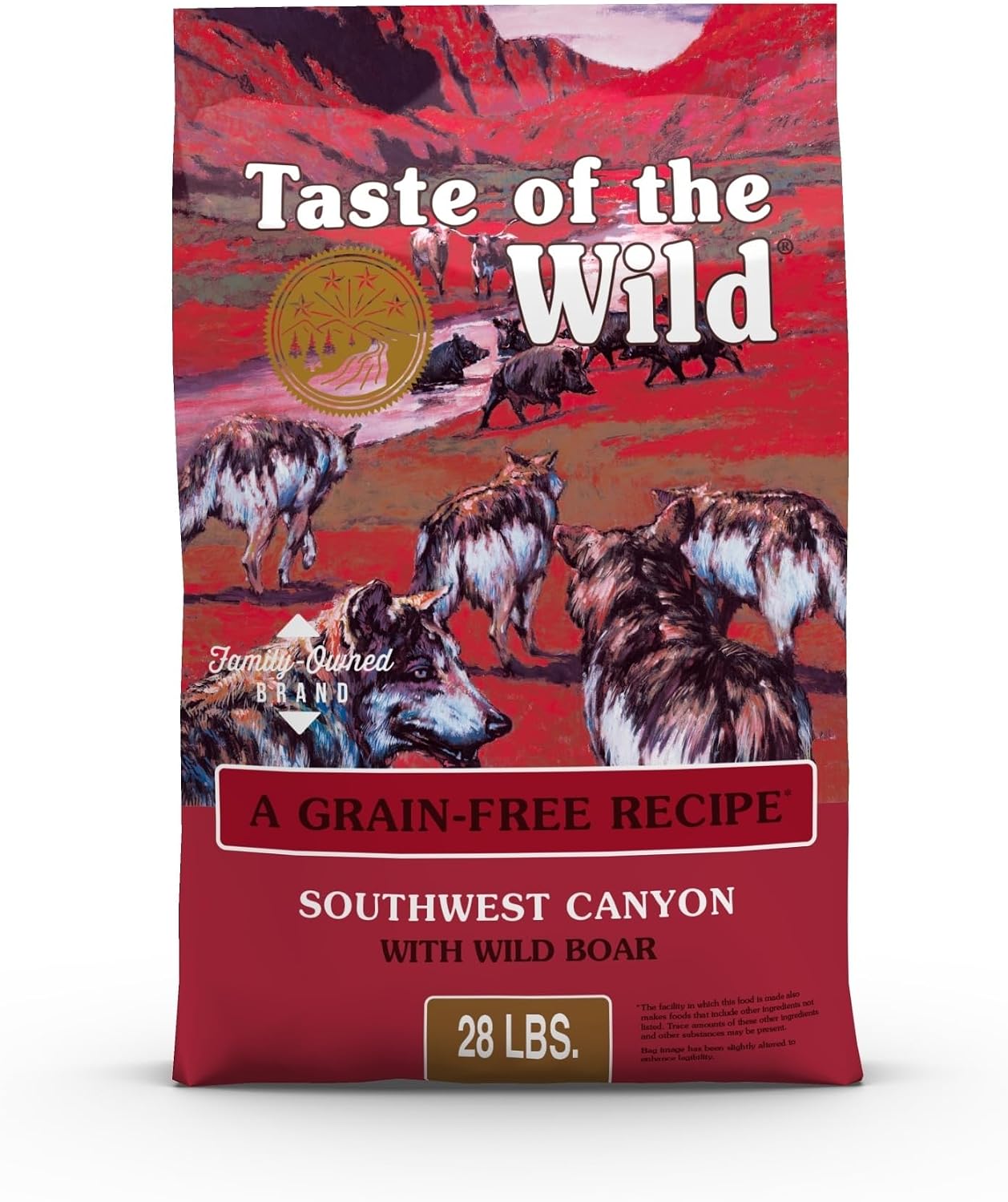
Best for: dogs bored of poultry or common red meats who need something different.
Cost per day: ~$1.29, based on a 1,000 kcal/day reference for a moderately active 50 lb dog.
Why It Made the List?
- Wild boar is an uncommon protein source in mainstream dog food, useful for rotation feeding
- All Life Stages AAFCO rating, so it works across your dog’s whole life
- Blend of beef, lamb, and boar gives it a distinct, meaty flavor profile
Key Specs
- 29% protein / 15% fat / 5% fiber, DHA 0.05% minimum, 408 kcal/cup
- AAFCO All Life Stages, including large-breed growth
- First 5 ingredients: beef, peas, garbanzo beans, lamb meal, canola oil
Honest Take
- A solid pick for protein rotation, less so as a first-time “safe” choice
- Like most of the grain-free lineup, this formula carries two legumes (peas and garbanzo beans) in its top ingredients. See the DCM discussion below if that’s a concern for your dog
- Most common owner report: dogs that were picky about poultry-based foods took to this one well.
- Most common complaint: limited availability compared to the brand’s more mainstream formulas

Best for: owners who want to avoid grain-free food specifically.
Cost per day: ~$1.18, the lowest of the seven, thanks to its high calorie density.
Why It Made the List?
- Uses ancient grains (sorghum, millet, quinoa, chia seed) instead of a grain-free carb base
- Highest calorie density in this lineup at 445 kcal/cup, meaning smaller daily portions
- Still carries the brand’s full probiotic and omega fatty acid guarantees
Key Specs
- 32% protein / 18% fat / 3% fiber, DHA 0.05% minimum, 445 kcal/cup
- AAFCO All Life Stages, including large-breed growth
- First 5 ingredients: water buffalo, pork, chicken meal, grain sorghum, millet
Honest Take
- If your vet has recommended avoiding grain-free formulas, this is the most direct in-brand alternative
- Sold as a pellet rather than a traditional kibble shape, a minor texture difference some dogs adjust to faster than others
- Most common owner report: good results for dogs previously on grain-free diets who needed a switch.
- Most common complaint: less widely stocked than the core grain-free formulas
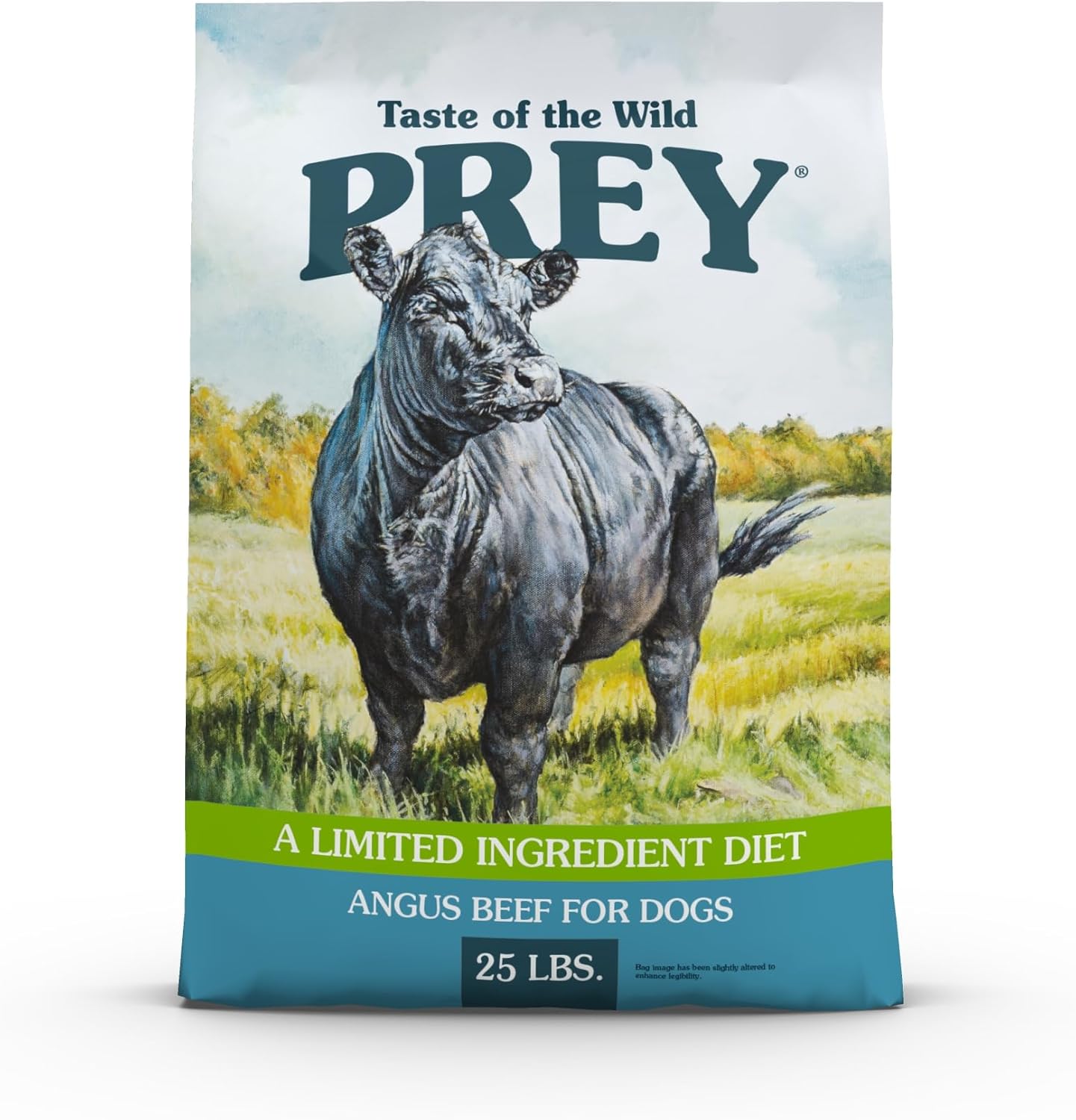
Best for: dogs with known food allergies or sensitivities.
Cost per day: ~$1.60, based on a 1,000 kcal/day reference for a moderately active 50 lb dog.
Why It Made the List?
- Just four key ingredients: pasture-raised Angus beef, lentils, tomato pomace, and chicken fat
- Single named animal protein, which makes it easier to isolate a trigger if your dog has allergies
- Still carries the full K9 Strain Probiotic guarantee despite the stripped-down ingredient list
Key Specs
- 27% protein / 15% fat / 5% fiber, DHA 0.05% minimum, 412 kcal/cup
- AAFCO All Life Stages, including large-breed growth
- Ingredients: beef, lentils, dried tomato pomace, chicken fat, natural flavor
Honest Take
- Best-suited to allergy-prone dogs specifically. For a healthy dog with no sensitivities, one of the other formulas is likely a better value
- To be transparent, this is the smallest and slowest-moving product in the lineup we reviewed, with the lowest review count, no Amazon’s Choice badge, and the highest per-pound price of the seven. That’s not a knock on the food itself, just useful context
- Most common owner report: noticeable improvement in dogs with prior allergy symptoms.
- Most common complaint: higher price point relative to the rest of the lineup

Best for: small-breed adult dogs.
Cost per day: ~$1.27, based on a 1,000 kcal/day reference for a moderately active 50 lb dog.
Why It Made the List?
- Only formula in the lineup built specifically for small breeds, with a small kibble size for smaller mouths
- Venison as the #1 ingredient, a good option for dogs sensitive to more common proteins
- Rich protein and fat content for the higher energy needs of small, active dogs
Key Specs
- 32% protein / 18% fat / 4% fiber, 422 kcal/cup
- Formulated to meet AAFCO Dog Food Nutrient Profiles for maintenance (Adult only, not All Life Stages like most of the other formulas here)
- First 5 ingredients: venison, lamb meal, garbanzo beans, peas, lentils
Honest Take
- A solid, purpose-built small-breed option within the brand
- The Amazon’s Choice badge on this listing sits on the 28 lb bag rather than a smaller size, so double-check the bag size before you order for a small dog
- Most common owner report: good acceptance from picky small-breed eaters.
- Most common complaint: some owners note the kibble could be even smaller for toy breeds
Ingredients and Nutrition Breakdown
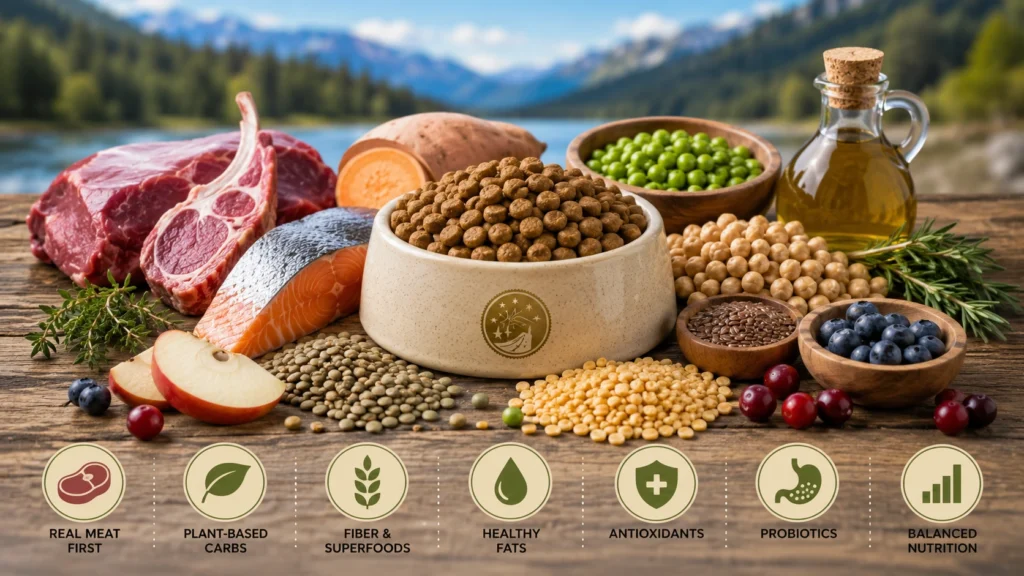
A few things worth understanding beyond the per-formula specs above.
What “AAFCO formulated” actually means: most of the formulas in this lineup carry one of two different AAFCO statements. “Formulated to meet the nutritional levels established by the AAFCO Dog Food Nutrient Profiles for maintenance” (used on High Prairie adult, Pacific Stream adult, and Appalachian Valley Small Breed) means the recipe was calculated to hit nutrient targets, not verified through a feeding trial. The broader “All Life Stages, including growth of large-size dogs” statement (used on High Prairie Puppy, Southwest Canyon, Ancient Prairie, and PREY Angus Beef) is a stricter standard that also covers puppy growth. Knowing which statement applies to the formula you’re considering matters, since the two aren’t interchangeable.
K9 Strain Probiotics: every formula in this review carries the same guaranteed probiotic blend: five named strains (Lactobacillus plantarum, Bacillus subtilis, Lactobacillus acidophilus, Enterococcus faecium, and Bifidobacterium animalis) added after cooking to preserve viability, guaranteed at a minimum of 80 million CFU per pound.
The Legume/DCM Question
You’ll notice legumes (peas, pea flour, garbanzo beans, lentils) showing up in the top five to ten ingredients of most of the grain-free formulas above. This isn’t unique to Taste of the Wild; it’s common across the grain-free category. The FDA has an ongoing inquiry into a possible link between grain-free, legume-heavy diets and canine dilated cardiomyopathy (DCM). As of this writing, that link hasn’t been proven, and no causal relationship has been established.
Of the seven formulas featured here, Ancient Prairie (grain-inclusive) and PREY Angus Beef (a four-ingredient recipe with lentils as its only legume) carry the lightest legume load. If your dog has any personal or breed-related cardiac risk factors, talk to your vet before choosing a legume-heavy grain-free formula. This is a case where professional input matters more than a general review can offer.
Has Taste of the Wild Been Recalled?
Checking FDA.gov’s current recall database as of August 2026, there are no active or recent entries for Taste of the Wild or its parent company, Diamond Pet Foods.
Historically, there was one recall: in May 2012, Diamond Pet Foods voluntarily recalled multiple brands, including Taste of the Wild, manufactured at its Gaston, South Carolina facility, due to potential Salmonella contamination. That recall followed a multistate human Salmonella outbreak linked to dry pet food, as documented by the CDC. Taste of the Wild’s own FAQ page confirms this was the brand’s only recall to date and states there have been no recent recalls on any of its recipes.
Switching Your Dog to Taste of the Wild
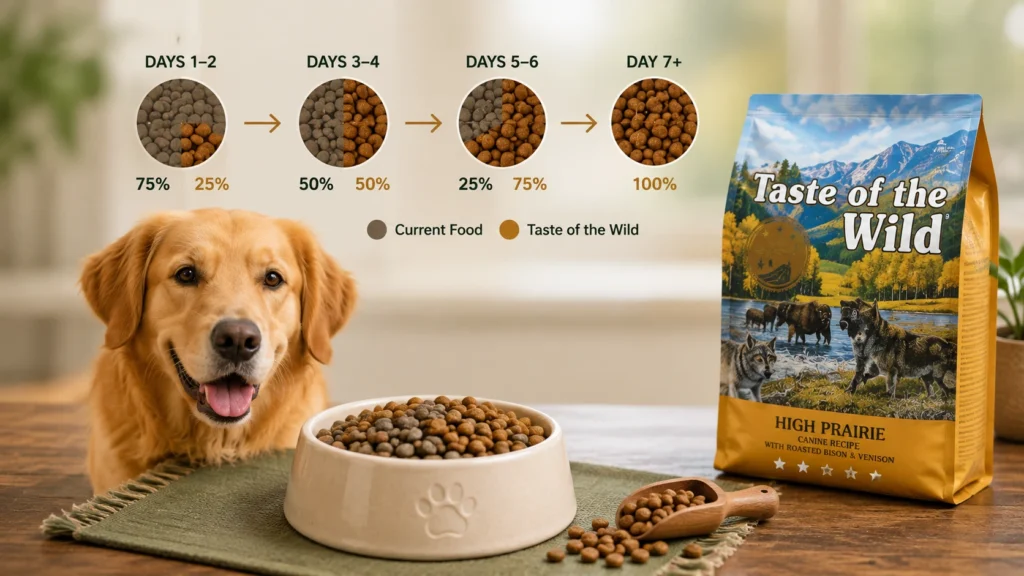
If you’re moving your dog onto any Taste of the Wild formula, the manufacturer’s official guidance is a gradual transition over 7 to 10 days. Start with a small amount of the new food mixed into your dog’s current diet, then gradually increase the new food while decreasing the old one until the switch is complete.
This matters more than it might seem, especially given the GI-sensitivity reports noted above on High Prairie and High Prairie Puppy. A slow transition is one of the simplest ways to reduce the odds of digestive upset when starting a new formula, regardless of which one you choose.
Which Taste of the Wild Formula Fits Your Dog?
- Large-breed puppy → High Prairie Puppy
- Dog with soft stool or GI sensitivity → Pacific Stream
- Dog with food allergies → PREY Angus Beef
- Small-breed adult → Appalachian Valley Small Breed
- Owner avoiding grain-free specifically → Ancient Prairie
Pros and Cons of Taste of the Wild
Pros
- Genuine novel-protein variety across the lineup: bison, venison, wild boar, salmon
- Guaranteed probiotic CFU count on every single formula, not just flagship products
- Competitive pricing for the grain-free category
- Wide enough formula selection to rotate proteins within one brand
- Made in the USA with in-house microbiological and mycotoxin testing
Cons
- Legume-heavy ingredient panels on most of the grain-free formulas
- Documented GI-sensitivity reports on High Prairie specifically, especially in puppies
- “Formulated to meet” AAFCO substantiation, not feeding-trial-verified, on the Maintenance-labeled formulas
- One historical FDA-linked recall from 2012
- Named-protein inclusion (bison, venison) often lower by weight than the product name suggests
Who Should (and Shouldn’t) Feed Taste of the Wild?
Taste of the Wild is a strong fit for adult dogs without a known legume sensitivity, owners who want to rotate novel proteins to manage allergies, and dogs that do well on red-meat or game-based proteins.
It’s a food to pause on for puppies with sensitive stomachs. Pacific Stream or PREY Angus Beef within the same brand may be gentler starting points than High Prairie Puppy. And for dogs with any personal or breed-related cardiac risk factors, the grain-inclusive Ancient Prairie formula may be a more conservative choice than the brand’s grain-free core lineup.
Frequently Asked Questions
Is Taste of the Wild a good dog food?
Yes. Taste of the Wild is a well-established, protein-forward grain-free brand with strong owner reviews across its lineup (4.5–4.7 stars on its most popular formulas). It isn’t without trade-offs: several formulas carry legume-heavy ingredient panels, and one formula (High Prairie) has more frequent reports of GI sensitivity, especially in puppies.
Has Taste of the Wild ever been recalled?
Yes, once. In May 2012, Diamond Pet Foods recalled several brands, including Taste of the Wild, due to potential Salmonella contamination at its Gaston, South Carolina facility. There have been no FDA-recorded recalls since.
Which Taste of the Wild formula is best for puppies?
High Prairie Puppy is the brand’s dedicated puppy formula, formulated to meet AAFCO’s All Life Stages standard including large-breed growth. Because of documented GI-sensitivity reports on this specific recipe, talk to your vet before starting a puppy on it, especially a large-breed puppy.
Is Taste of the Wild grain-free?
Most of its formulas are, yes. The exception in this review is Ancient Prairie, which uses ancient grains (sorghum, millet, quinoa, chia seed) instead of a grain-free carbohydrate base.
Is Taste of the Wild good for dogs with allergies?
PREY Angus Beef is the brand’s best option for allergy-prone dogs, built on just four key ingredients with a single named animal protein. Since allergies can have multiple underlying causes, discuss persistent symptoms with your vet rather than relying on diet changes alone.
How long does it take to switch a dog to Taste of the Wild?
The manufacturer recommends a gradual transition over 7 to 10 days, increasing the new food while decreasing the old food to reduce the chance of digestive upset.
Our Final Recommendation
For most dogs, High Prairie Canine is the strongest starting point in the Taste of the Wild lineup. It’s the brand’s most reviewed formula, backed by solid owner feedback on coat and stool quality, at a reasonable cost per day. If your dog has a history of sensitive digestion, Pacific Stream‘s single-protein fish recipe is a smart alternative worth trying first.
For anything more specific, a growing puppy, a dog with diagnosed allergies, or a small breed, the formula-by-formula breakdown above should point you to the right pick rather than a one-size-fits-all answer. Whichever formula you choose, transition gradually over 7 to 10 days, and loop in your vet if your dog has any cardiac risk factors or a history of digestive sensitivity.