
Acana vs Orijen (2026): Protein, Ingredients & Value Compared
Introduction
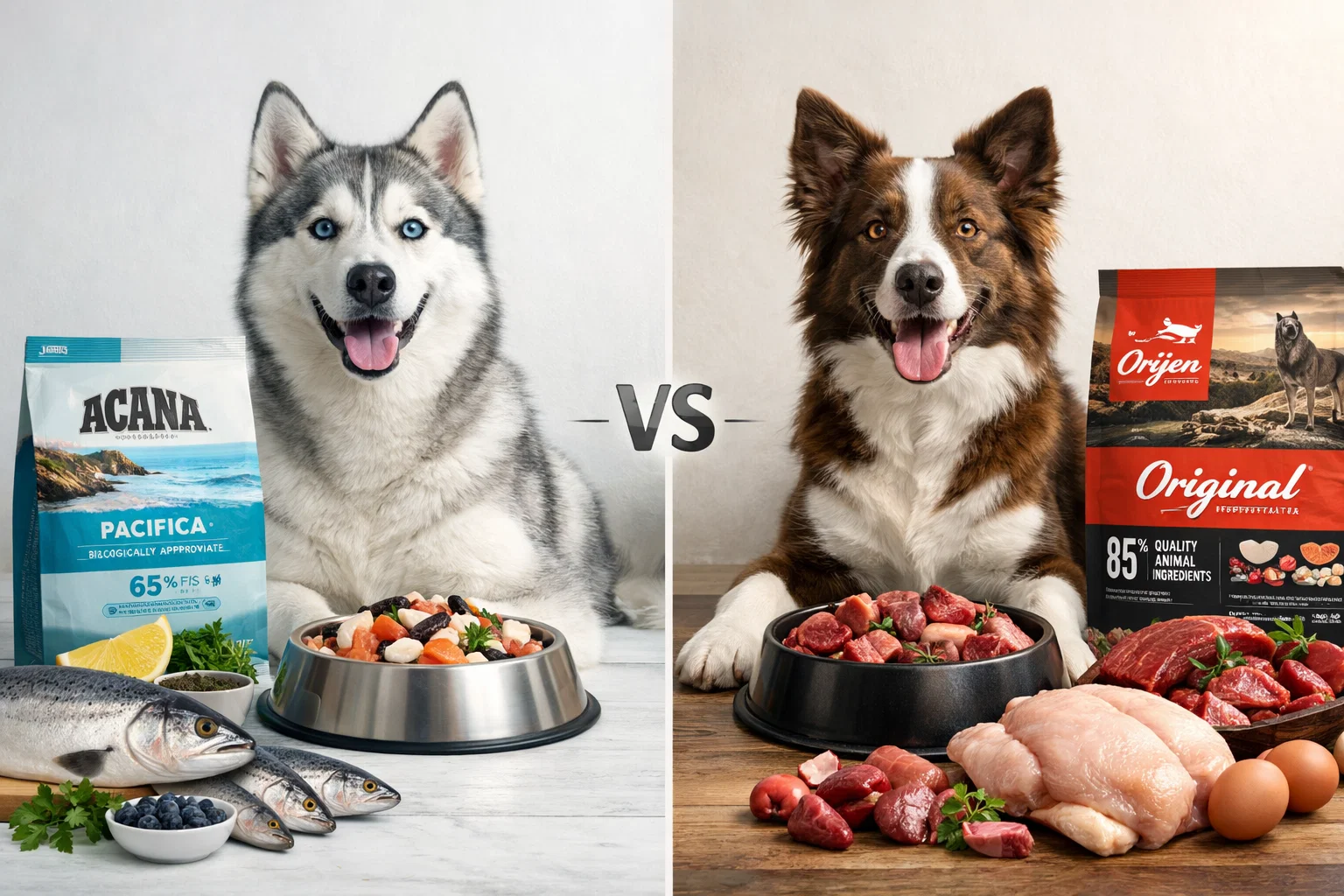
Both Acana and Orijen are premium dog food brands made by Champion Petfoods, sharing a similar philosophy around high-protein, meat-forward nutrition. Despite coming from the same manufacturer, they occupy different positions in the market, with clear distinctions in ingredient density, protein concentration, and price point that matter for dog owners choosing between them.
This article compares Acana or Orijen across six key dimensions: protein and fat content, ingredient quality, digestibility for sensitive stomachs, puppy formulas, daily feeding cost, and suitability for active dogs. Each section uses structured data blocks so you can make a confident, informed decision without sifting through marketing language.
Acana vs Orijen: Quick Verdict for Dog Owners
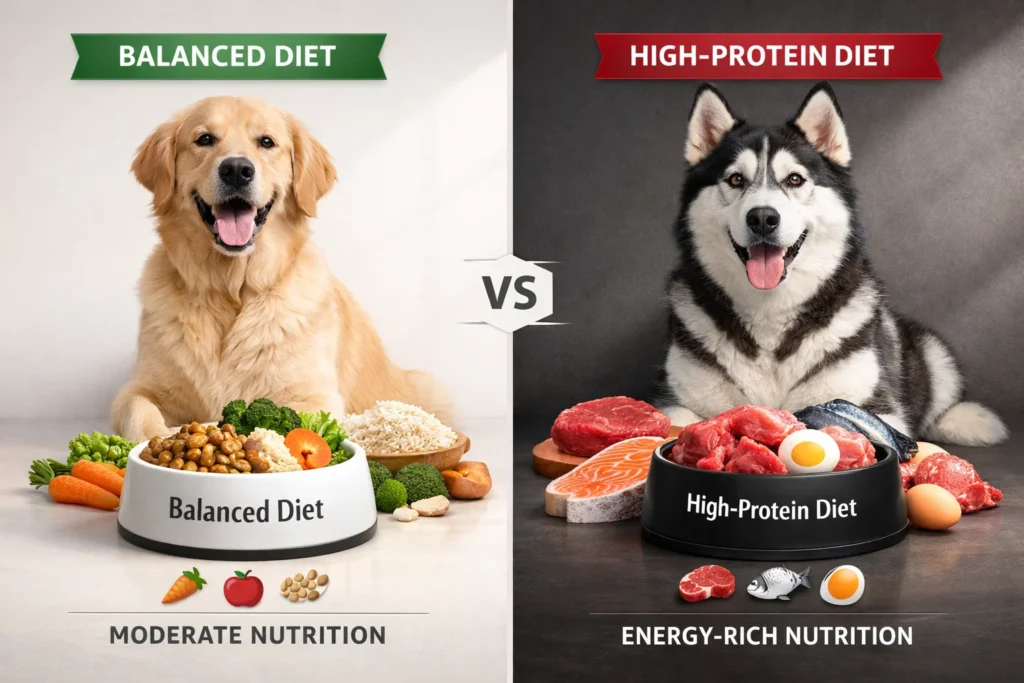
Who Should Choose Acana
- Budget-conscious owners who still want premium ingredients
- Dogs prone to weight gain or lower activity levels
- Owners transitioning from mid-tier to high-protein diets
Who Should Choose Orijen
- Owners prioritizing maximum protein density above all else
- Highly active, working, or athletic dogs
- Dogs that thrive on a diet closely mimicking whole-prey nutrition
One decision sentence: Choose Acana for balanced high-protein nutrition at a more accessible price; choose Orijen when maximum meat inclusion and the highest protein concentration are the primary goals.
Acana vs Orijen: Key Brand Differences Explained
Acana is positioned as a premium high-protein dog food that emphasizes regional ingredients and balanced macronutrients. It targets a broad range of adult dogs, including those with moderate activity levels, and is generally priced in the upper-mid tier of the premium segment.
Orijen sits at the top of the premium market, built around a whole-prey or biologically appropriate diet philosophy. It uses a higher ratio of meat, organs, and cartilage with minimal plant-based fillers, which drives both its protein percentage and its retail price higher than Acana.
Both brands use fresh and raw animal ingredients, avoid artificial preservatives, and are manufactured in Champion Petfoods facilities. The core difference is one of degree — Orijen pushes every nutritional metric further, while Acana offers a slightly more moderate and cost-accessible profile.
Acana vs Orijen Comparison: Protein, Price & Ingredients at a Glance
| Factor | Acana | Orijen |
|---|---|---|
| Protein Range | Around 29–35% | Around 38–44% |
| Calories | Moderate per cup | Higher per cup |
| Ingredient Style | High-protein, regional | Whole-prey, maximum meat |
| Price Level | Premium | Ultra-premium |
Acana vs Orijen Protein and Calorie Comparison
Product Comparison
Acana: ACANA Highest Protein Grain Free Dry Dog Food Wild Atlantic Recipe

- Protein: 35%
- Fat: 17%
- Fiber: 5%
- kcal per cup: Approximately 370
- Top 5 ingredients: Herring, Mackerel, Herring Meal, Acadian Redfish, Herring Oil
Orijen: ORIJEN Grain Free High Protein Dry Dog Food Original Recipe

- Protein: 38%
- Fat: 18%
- Fiber: 4%
- kcal per cup: Approximately 449
- Top 5 ingredients: Chicken, Turkey, Whole Eggs, Chicken Liver, Turkey Liver
Quick Insight: Orijen delivers about 3–4% more protein per serving and roughly 80 more kcal per cup, making portion control more important to prevent weight gain in less active dogs.
Orijen’s higher caloric density means smaller serving sizes are needed to meet daily energy requirements. For active dogs, this translates to efficient fueling without large meal volumes.
Acana’s slightly lower calorie profile gives owners more flexibility in portioning, which is useful for dogs prone to weight gain or those on a weight management plan.
For muscle maintenance, both formulas provide adequate protein, but Orijen’s higher meat inclusion may offer a marginal advantage for dogs recovering from illness or building lean muscle mass.
Acana vs Orijen for Sensitive Stomach: Which Is Easier to Digest?
Product Comparison
Acana: ACANA Singles Limited Ingredient Duck & Pear Recipe

- Protein: 29%
- Fat: 15%
- Fiber: 6%
- kcal per cup: Approximately 370
- Top 5 ingredients: Duck, Duck Meal, Whole Pears, Whole Lentils, Whole Chickpeas
Orijen: ORIJEN Six Fish Dry Dog Food

- Protein: 38%
- Fat: 18%
- Fiber: 4%
- kcal per cup: Approximately 421
- Top 5 ingredients: Whole Mackerel, Whole Herring, Whole Flounder, Mackerel Meal, Herring Meal
Quick Insight: Acana Singles uses a single animal protein source with limited ingredients, making it easier to isolate triggers, while Orijen Six Fish uses multiple novel proteins that may suit fish-tolerant sensitive dogs.
Acana’s Singles line is purpose-built for elimination diets. With duck as the sole protein and pear as a gentle carb source, it simplifies the identification of food sensitivities.
Orijen Six Fish is not a limited-ingredient diet but uses exclusively fish-based proteins, which are generally highly digestible. It may suit dogs with poultry intolerances but is not ideal for strict elimination protocols.
For dogs with confirmed sensitivities, Acana Singles offers greater ingredient simplicity. For dogs that simply have a digestive preference for fish-based diets, Orijen Six Fish is a strong option.
Acana vs Orijen Ingredients: What’s Actually Inside Each Bag?
Product Comparison (Adult Pair)
Acana: ACANA Highest Protein Grain Free Dry Dog Food Wild Atlantic Recipe
- Protein: 35%
- Fat: 17%
- Fiber: 5%
- kcal per cup: Approximately 370
- Top 5 ingredients: Herring, Mackerel, Herring Meal, Acadian Redfish, Herring Oil
Orijen: ORIJEN Grain Free High Protein Dry Dog Food Original Recipe
- Protein: 38%
- Fat: 18%
- Fiber: 4%
- kcal per cup: Approximately 449
- Top 5 ingredients: Chicken, Turkey, Whole Eggs, Chicken Liver, Turkey Liver
Product Comparison (Puppy Pair)
Acana: ACANA Grain Free Dry Dog Food Puppy Recipe
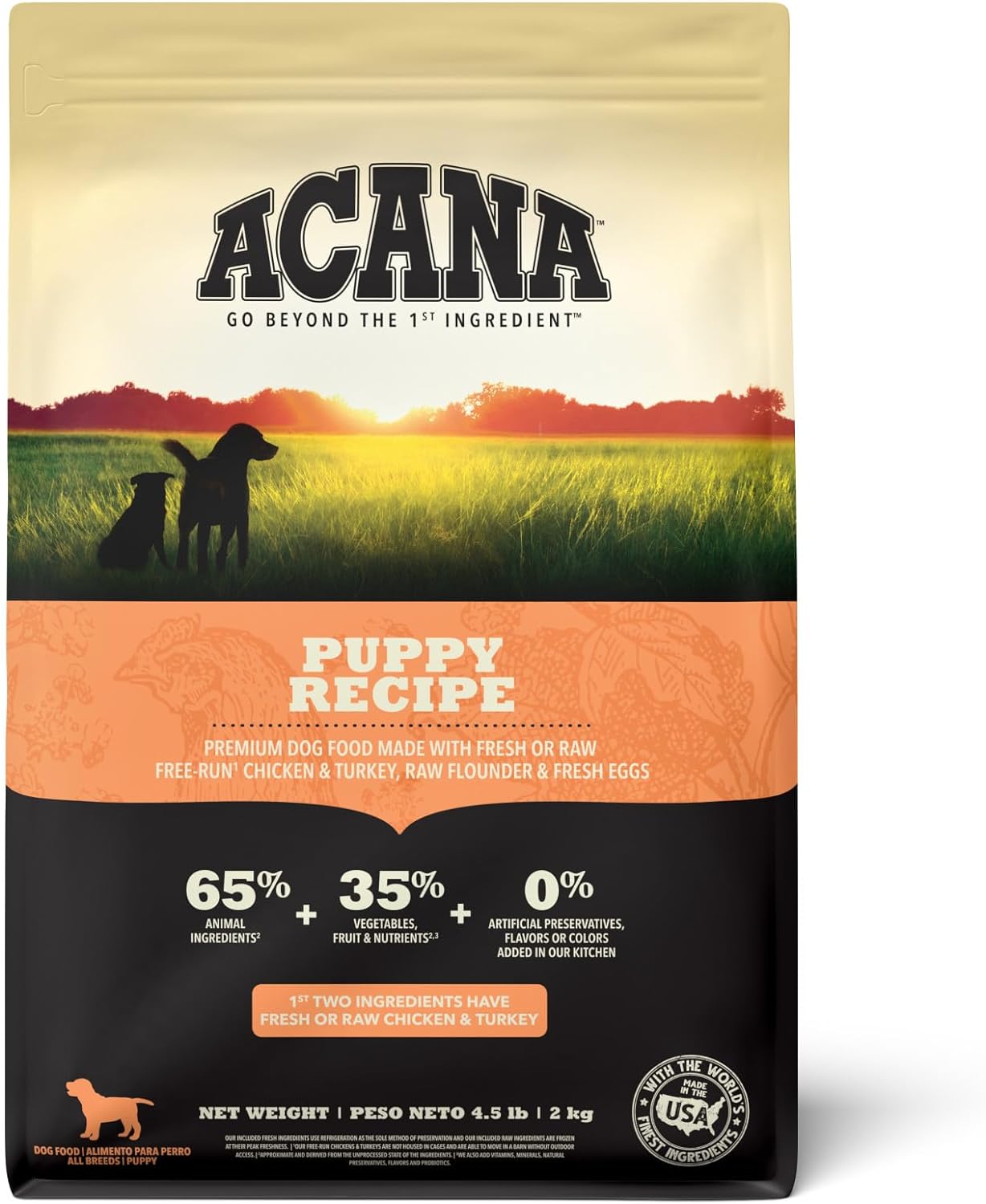
- Protein: 31%
- Fat: 16%
- Fiber: 5%
- kcal per cup: Approximately 370
- Top 5 ingredients: Chicken, Chicken Meal, Turkey Meal, Whole Herring, Chicken Liver
Orijen: ORIJEN Grain Free High Protein Dry Dog Food Puppy Recipe

- Protein: 42%
- Fat: 20%
- Fiber: 4%
- kcal per cup: Approximately 449
- Top 5 ingredients: Chicken, Turkey, Chicken Liver, Whole Eggs, Turkey Liver
Quick Insight: Orijen Puppy’s protein and fat levels are notably higher than Acana Puppy’s, which may be better suited for large-breed puppies on Acana due to more controlled calcium-to-phosphorus ratios.
Both brands use whole meat as the first ingredient and avoid artificial by-products. Orijen leans more heavily on organ meats like liver in the top five ingredients, increasing micronutrient density.
Carbohydrate sources differ between the two. Acana uses lentils, chickpeas, and pears, while Orijen minimizes plant-based ingredients overall, keeping the carbohydrate floor lower.
For large-breed puppies, calcium and phosphorus balance is critical. Acana Puppy’s more moderate protein and fat levels are generally considered safer for controlled skeletal development in larger breeds.
Acana vs Orijen Price Comparison: Daily and Annual Cost Breakdown
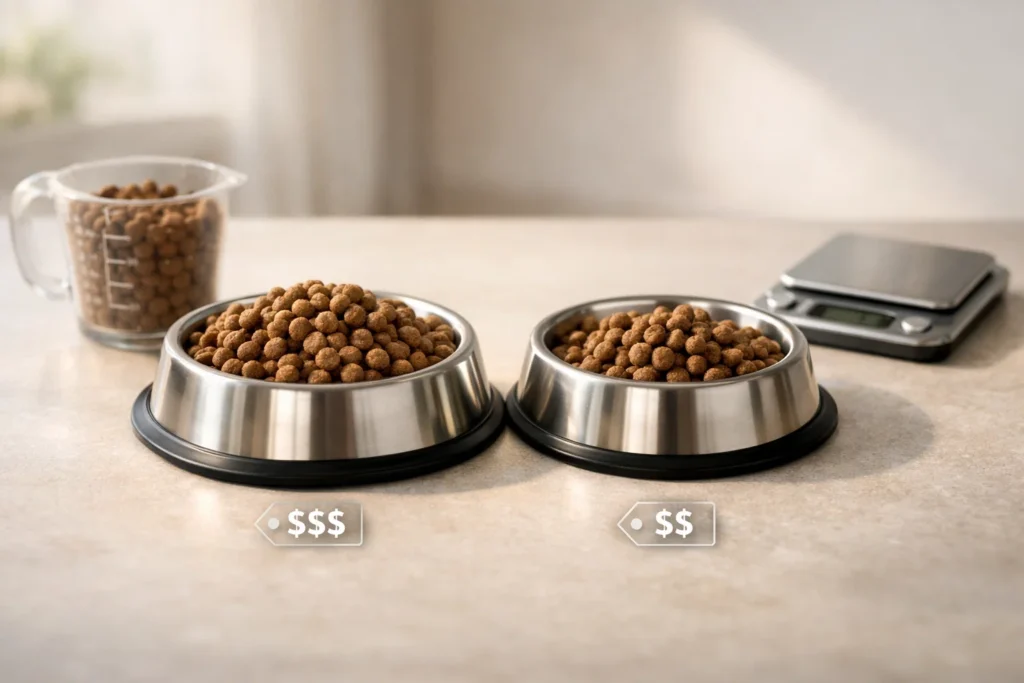
Acana typically retails at around $3.50–$4.50 per pound, while Orijen ranges from about $4.50–$6.00 per pound depending on the formula and retailer.
For a medium-sized dog consuming roughly 2 cups per day, Acana costs approximately $2.50–$3.50 daily, while Orijen runs closer to $3.50–$5.00 per day.
Annualized, that gap becomes significant. Orijen can cost around $400–$700 more per year than Acana for the same dog, making Acana the more accessible option for owners committed to premium nutrition on a defined budget.
Acana vs Orijen for Active Dogs: Energy Density and Feeding Guide
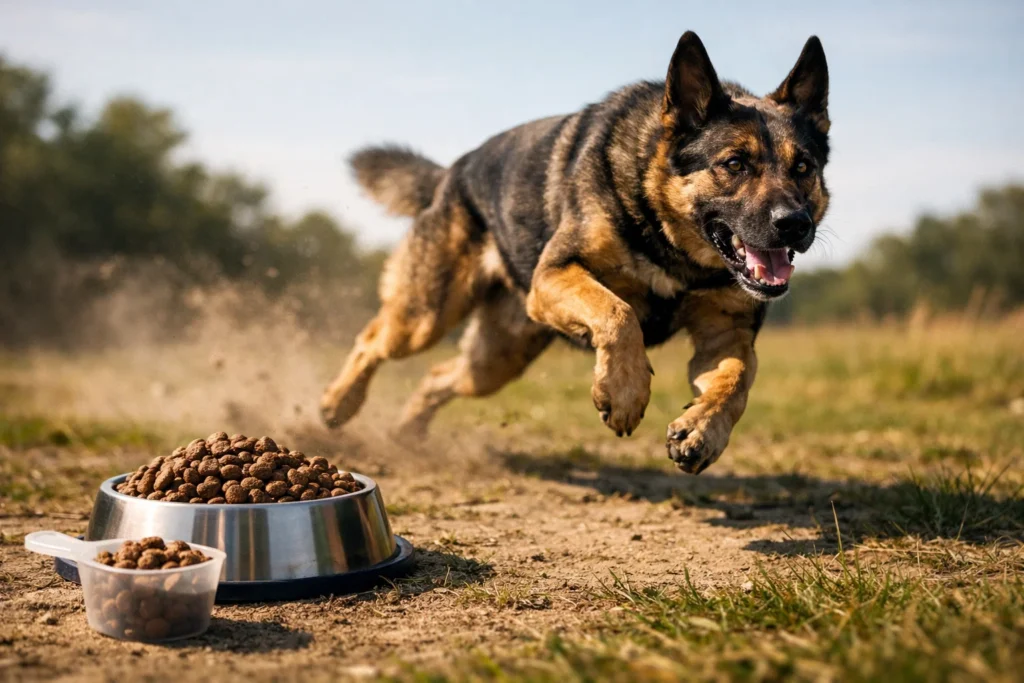
Using the adult data, Orijen Original’s approximately 449 kcal per cup makes it energy-dense enough to fuel working dogs, sporting breeds, and highly active large dogs without requiring excessive feeding volumes.
Acana Wild Atlantic’s roughly 370 kcal per cup still supports active dogs, but may require slightly larger portions to meet the same caloric needs, which increases daily food cost and reduces the per-pound cost advantage marginally.
For working dogs, sled dogs, or breeds with very high daily energy expenditure, Orijen’s combination of higher protein and higher caloric density provides a meaningful practical advantage.
Who Should Avoid Acana or Orijen? Conditions and Exceptions

- Severe, confirmed protein allergies requiring a single novel protein prescription diet not covered by either brand’s range
- Kidney disease or other conditions requiring phosphorus restriction, as both brands are high-protein and not formulated for renal support
- A need for prescription veterinary diets such as Hill’s Prescription or Royal Canin Veterinary for metabolic, urinary, or hepatic conditions
- Extreme obesity requiring a calorie-controlled therapeutic diet under veterinary supervision
- Pancreatitis history, where high-fat content in both brands may pose a risk without veterinary clearance
Always consult a veterinarian before switching to a high-protein diet for dogs with any diagnosed health condition.
Acana vs Orijen: Frequently Asked Questions
Is Acana better than Orijen?
Neither brand is objectively better — they serve different needs. Orijen delivers higher protein at around 38–42% and greater meat inclusion, making it suitable for highly active dogs or owners prioritizing whole-prey nutrition. Acana offers slightly lower but still high protein levels at around 29–35% at a more accessible price. For most average-activity adult dogs, Acana provides strong nutritional value. For working dogs or maximum protein density, Orijen has a measurable edge. The better choice depends on your dog’s activity level, health status, and your budget.
How does protein compare between Acana and Orijen?
Orijen consistently delivers higher protein than Acana across comparable formulas. Orijen Original sits at about 38% protein, while Acana Wild Atlantic is around 35%. The puppy range shows a larger gap — Orijen Puppy reaches approximately 42% compared to Acana Puppy’s 31%. Both brands exceed the baseline requirements for adult dogs, but Orijen’s higher protein concentration may benefit athletic or working dogs more than pets with moderate activity levels.
Which is better for a sensitive stomach — Acana or Orijen?
Acana Singles Limited Ingredient Duck & Pear Recipe is generally the stronger choice for dogs with confirmed food sensitivities. It uses a single animal protein source, making it easier to identify and eliminate allergens. Orijen Six Fish uses multiple fish proteins and is highly digestible, but it is not a true limited-ingredient diet. If your dog has a diagnosed allergy or intolerance, Acana Singles provides greater ingredient control. If your dog simply does better on fish-based diets, Orijen Six Fish is a viable alternative.
What is the cost difference between Acana and Orijen?
Acana typically costs around $3.50–$4.50 per pound, while Orijen ranges from approximately $4.50–$6.00 per pound. For a medium-sized dog, the annual difference can reach $400–$700 depending on feeding volume and the specific formula. Both are premium-tier products, but Orijen sits firmly in the ultra-premium category. If budget is a factor but you still want high-protein nutrition, Acana offers a more cost-accessible option without dropping to mid-tier ingredient quality.
Is it safe to switch between Acana and Orijen?
Switching between the two brands is generally safe but should be done gradually over about 7–10 days to avoid digestive upset. Start by mixing roughly 25% of the new food with 75% of the current food, and increase the proportion of the new food every few days. Because Orijen has higher protein and fat than Acana, switching upward to Orijen may cause loose stools initially if the transition is too rapid. Dogs with sensitive stomachs may need a longer transition period of up to 2 weeks.
Are Acana and Orijen AAFCO compliant?
Yes, both Acana and Orijen formulas are manufactured to meet AAFCO nutritional standards for the life stages indicated on the packaging. This means products labeled for adult maintenance or all life stages have been formulated or tested to meet minimum nutritional requirements. Always verify the specific product’s AAFCO statement on the bag, as not all formulas within each brand are approved for all life stages — for example, some adult formulas are not suitable for puppies or pregnant dogs.

Written by Jessica Morgan
Jessica Morgan is a pet nutrition researcher at Dog Food Insight, specializing in ingredient analysis, food safety, and digestibility in commercial dog foods. Her work focuses on evidence-based evaluations and owner-reported outcomes to help dog owners make informed, unbiased nutrition decisions.