
Best Dog Food for Golden Retriever Puppies (Vet-Reviewed Guide)
Choosing the best dog food for Golden Retriever puppies is one of the most important decisions you’ll make for your new companion. The right choice shapes lifelong health, steady growth, and helps prevent breed-related issues.
Golden Retrievers are large-breed puppies with high nutritional demands. Owners naturally want to get nutrition right but may feel overwhelmed by all the options and advice. The good news: you don’t have to navigate this alone—understanding the basics of golden retriever puppy nutrition and large-breed needs is the first step.
This guide breaks down vet-backed strategies for giving your puppy the healthiest start, covering food choice, feeding guidelines, and trade-offs. If you’re shopping for best large breed puppy food or wondering what to feed golden retriever puppy, you’re in the right place. For older dogs, consider transitioning to Golden Retriever adult food—see our related guide.
Quick Picks: Best Dog Food for Golden Retriever Puppies
Need a fast recommendation? Here’s how these leading choices stand out:
Breed-Specific Needs: Choose Royal Canin Golden Retriever Puppy for targeted nutrition and kibble designed for Golden puppies.
Sensitive Stomachs: Opt for Purina Pro Plan Large Breed Puppy with live probiotics that support easy digestion.
Value & Palatability: Purina Pro Plan also delivers strong results for picky eaters and owner budgets.
Vet-Trusted Safety: Hill’s Science Diet Large Breed Puppy offers precise mineral control and industry-leading testing.
Natural Ingredients: Blue Buffalo Life Protection Large Breed Puppy emphasizes real meat and antioxidant-rich nutrition.
Keep reading for a full comparison and advice based on your puppy’s unique needs.
Why Golden Retriever Puppies Need Specialized Nutrition
Golden Retriever puppies need specialized nutrition to support safe growth and lifelong joint health.
Large-breed puppies grow quickly, but their bones develop more slowly than their size suggests. If growth is not regulated, Golden Retrievers risk orthopedic issues such as hip and elbow dysplasia. The right nutrition—like large breed puppy food—directly lowers these risks.
Specialized puppy foods have controlled energy density, which prevents your puppy from gaining weight too fast and reduces pressure on developing joints.
Balanced calcium and phosphorus levels are also critical. Most standard puppy foods exceed the safe range for large breeds; excess intake can trigger skeletal malformations.
Goldens are genetically prone to skin sensitivity and a potentially serious heart condition, DCM (dilated cardiomyopathy). Optimal diets must include specific levels of EPA and DHA (omega-3s) for healthy coat, skin barrier function, and cognitive development. They should also contain nutrients like taurine and carnitine for heart support.
No generic puppy food can offer this precise balance. For more on age-based transitions, see our puppy feeding schedule and guidelines for when to switch Golden Retriever to adult food.
What to Look for in the Best Dog Food for Golden Retriever Puppies
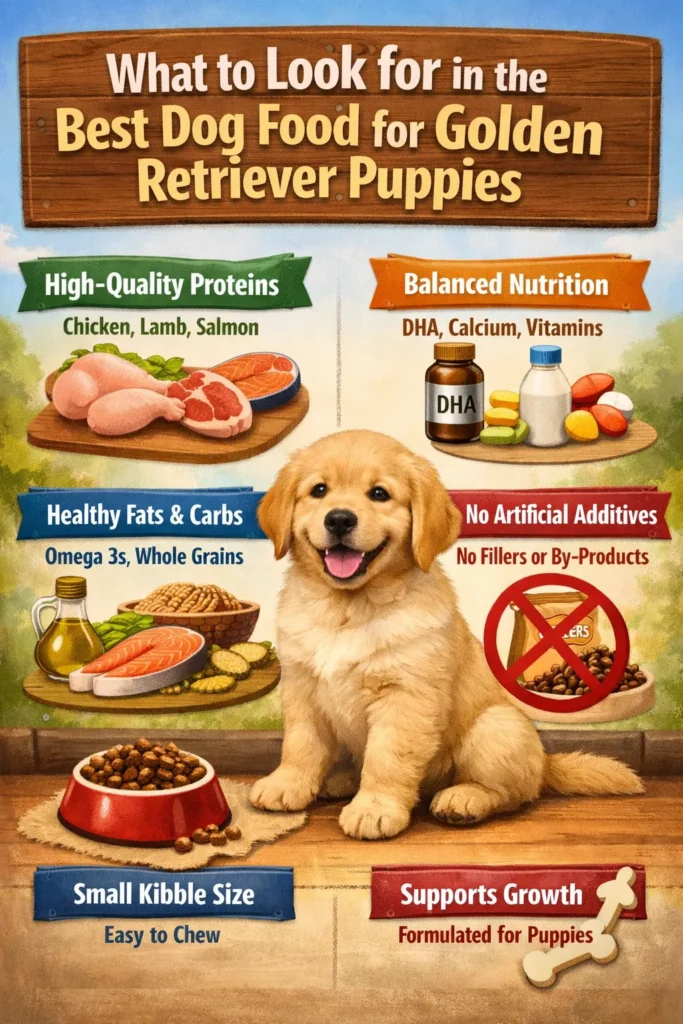
The best dog food for golden retriever puppies meets large-breed growth standards, supports joints, and limits rapid weight gain.
To identify the best large breed puppy food:
- AAFCO Statement: The packaging should say it meets AAFCO standards “including growth of large size dogs (70 lbs. or more as an adult).” Skip anything lacking this.
- Controlled Calcium/Phosphorus: Look for 0.8%–1.2% calcium and a 1.1:1–1.3:1 calcium to phosphorus ratio to protect skeletal development.
- Moderate Calories: Too many calories encourage risky rapid growth. Seek foods with 3,500–4,000 kcal/kg.
- High-Quality Protein: Ensure the first ingredient is a named animal protein source like chicken or lamb.
- DHA (Omega-3): DHA in the food supports brain and eye development for optimal trainability.
- Kibble Size: Larger kibbles help Goldens slow down and digest properly.
- Optional Perks: Probiotics, glucosamine, and natural ingredients are pluses for digestion, joint, and overall health.
For owners interested in brand specifics, see our top product reviews just below. If your puppy is nearing adulthood, check out recommendations for Golden Retriever adult food next.
How We Selected These Foods
We selected these foods based on veterinary standards, ingredient quality, and real owner feedback.
Selection was evidence-based, not brand-driven. Only foods formulated by veterinary nutritionists and tested for large-breed safety made our list. We verified all nutrition facts—including crucial calcium and phosphorus values, DHA content, and protein sources.
Beyond the label, we checked each brand’s track record for digestibility and stool quality, plus accessibility via Amazon and major US retailers. All picks are widely available, making it easy to follow your golden retriever puppy feeding guide without switching or settling.
Comparison Table: Top Golden Retriever Puppy Foods
| Brand & Formula | Best For | Key Strength | Consideration |
|---|---|---|---|
| Royal Canin Golden Retriever Puppy | Breed-specific needs | Tailored kibble/skin | Pricier, contains by-products |
| Hill’s Science Diet Large Breed Puppy | Vet-trusted safety | Precise minerals/DHA | Contains wheat/corn |
| Purina Pro Plan Large Breed Puppy | Sensitive stomach/value | Live probiotics/taste | Ingredient blend, high demand |
| Blue Buffalo Life Protection Large Breed | Natural focus | Antioxidants/real meat | Puppies may avoid select bits |
| Wellness Complete Health Large Breed | Holistic/digestion | Omegas/probiotics | Higher cost, contains legumes |
Product Reviews: The Best Dog Food for Golden Retriever Puppies
1. Royal Canin Golden Retriever Puppy

Royal Canin Golden Retriever Puppy is designed specifically for the breed’s nutritional and physical needs.
Breed-targeted kibble shape encourages chewing, reducing the risk of gulping—a common issue for Goldens.
The formula is rich in skin and coat nutrients, including EPA, DHA, and borage oil, and supports healthy digestion with highly digestible proteins and prebiotics. Its strictly controlled energy content helps maintain steady growth.
- Strengths: Tailored for Goldens, strong skin and coat support, excellent digestibility.
- Considerations: Premium pricing; contains nutritious by-products and grains, which some owners avoid.
Owner feedback: Owners note shinier coats and firmer stools. The specialized kibble shape also slows fast eaters.
For the full transition to adulthood, review our Golden Retriever adult food recommendations.
2. Hill’s Science Diet Large Breed Puppy

Hill’s Science Diet Large Breed Puppy is trusted for balanced bone health and clinical safety.
Balanced minerals prevent excessive bone growth and related issues. The recipe’s protein is from chicken meal and oats, supporting easy digestion. It also includes natural DHA from fish oil for cognitive growth and antioxidant-rich vitamins C and E.
- Strengths: Precise mineral control, DHA support, widely recommended by US vets.
- Considerations: Contains wheat and corn; scent is less appealing to some owners.
Owner feedback: Highly digestible, gentle on sensitive stomachs, and a reliable staple in many goldens’ diets. (A top choice for what to feed golden retriever puppy with sensitivities.)
3. Purina Pro Plan Large Breed Puppy

Purina Pro Plan offers digestive support and strong palatability at a good value.
Real chicken is the main protein source for muscle growth. Key highlights include added live probiotics (for improving digestive and immune health) and glucosamine for proactive joint care.
- Strengths: Live probiotics, high palatability, DHA for cognitive development.
- Considerations: Uses some by-product meal and corn; can be hard to find due to popularity.
Owner feedback: Especially valued in golden retriever puppy feeding guide communities. Picky eaters and puppies with mild tummy issues often do well on Purina Pro Plan.
4. Blue Buffalo Life Protection Large Breed Puppy

Blue Buffalo Life Protection is for owners seeking a natural-ingredient focus and antioxidant boost.
With deboned chicken as the main protein and unique LifeSource Bits for added vitamins/antioxidants, it delivers a nutrient-dense meal.
Formulated for controlled calorie and calcium intake, the inclusion of DHA and ARA mirrors nutrients found in mother’s milk. L-carnitine aids healthy muscle development.
- Strengths: Real meat first, antioxidant-rich, no by-product meals or corn/wheat/soy.
- Considerations: Some puppies avoid LifeSource Bits; fiber content can increase stool size.
Owner feedback: Great for those wanting to avoid grains and by-products, but keep an eye on how consistently your puppy eats all parts.
5. Wellness Complete Health Large Breed Puppy

Wellness Complete Health shines for holistic nutrition and digestive wellness.
Made with deboned chicken, salmon meal, and oatmeal, it offers a robust omega fatty acid profile to enhance skin and coat health. Added probiotics and digestive enzymes help with nutrient absorption, and the exclusion of fillers and artificial additives is a plus.
- Strengths: Omega-rich, includes digestive aids, clean ingredients.
- Considerations: Higher price point; contains peas (legumes), but remains grain-inclusive.
Owner feedback: Helps relieve dry skin and supports steady, healthy growth. Many US owners appreciate the limited, quality ingredient list.
Comparison & Decision Guide
Selecting the best food should match your puppy’s unique preferences, sensitivities, and your priorities as an owner.
- Choose Royal Canin Golden Retriever Puppy for breed-specific kibble and skin support, especially if gulping or itching is an issue.
- Pick Hill’s Science Diet Large Breed Puppy for trusted mineral balance, vet backing, and sensitive tummies.
- Select Purina Pro Plan Large Breed Puppy if you value probiotics, better taste, or need a cost-effective solution.
- Go with Blue Buffalo Life Protection for a natural, antioxidant-rich option that avoids by-products or certain grains.
- Opt for Wellness Complete Health if coat health, digestive enzymes, and holistic ingredients are your top concerns.
Each choice involves trade-offs—review our guide on large-breed feeding mistakes for more detailed owner experiences.
Feeding Tips for Golden Retriever Puppies

Proper feeding technique, not just food choice, is essential for your puppy’s healthy growth.
- Portion Control: Never leave food out; Goldens are prone to overeating. Measure using standard cups and adjust as your vet or growth charts recommend.
- Transition Rule: When changing foods, transition gradually over 7–10 days: mix new and old foods in increasing proportions to prevent digestive upset.
- Prevent Rapid Growth: You should feel—but not see—your puppy’s ribs. Keep them lean to protect joints.
- Vet Weight Checks: Ask your vet at every visit how much to feed golden retriever puppy based on their current body and growth stage, not just label guidance.
For details on feeding schedules and amounts, see our comprehensive guide on how much and how often to feed a puppy.
FAQ Section
How much should I feed my Golden Retriever puppy?
Amounts vary by brand and age, but most 8-week-old puppies need 1.5–2 cups daily, increasing to 3–4 cups by 6 months. Feed to maintain an ideal body condition, checking both the bag and with your vet.
Do Golden Retriever puppies need large breed puppy food?
Yes, large breed puppy food is required for safe, steady growth. Standard puppy food can cause bone and joint problems.
Is grain-free food safe for Golden Retriever puppies?
Most veterinarians recommend grain-inclusive diets unless your puppy has a grain allergy. Some grain-free formulas may be linked to heart issues in the breed (see FDA guidance).
What nutrients support healthy joint development?
Proper calcium-to-phosphorus (near 1.2:1), approved calorie density, omega-3s (EPA/DHA), and glucosamine all support joints. Healthy weight management is also critical.
How often should a Golden Retriever puppy eat?
Feed three small meals daily until 4 months old, then two meals from 6 months and up. Regular schedules assist with digestion and house training.
Switch your puppy to adult food between 12–15 months. Early switching increases health risks; late switching may cause weight gain. For a smoother transition, see our dedicated article on Golden Retriever adult food.What if my puppy has loose stools?
Gradually change diets, avoid overfeeding, and ensure your puppy is parasite-free. Persistent or severe diarrhea warrants a vet visit.
Can I mix wet and dry puppy food?
Yes. Mix wet and dry foods to boost moisture and taste. Adjust portions so total daily calories don’t exceed your puppy’s needs.
If you’re uncertain about any aspect of golden retriever puppy nutrition or large breed feeding, consult your veterinarian for guidance.
Conclusion
There is no single best food for every Golden Retriever puppy, but following puppy-specific, science-backed nutrition is your strongest ally.
Monitor digestion, coat, and growth regularly, and adjust with your vet’s help as your puppy matures. For more on transitions, see our guides to large-breed feeding mistakes and Golden Retriever adult food. Your attention to early nutrition sets the stage for a healthy, happy companion for years to come.

Written by Jessica Morgan
Jessica Morgan is a pet nutrition researcher at Dog Food Insight, specializing in ingredient analysis, food safety, and digestibility in commercial dog foods. Her work focuses on evidence-based evaluations and owner-reported outcomes to help dog owners make informed, unbiased nutrition decisions.