
Best Dog Food for Bernedoodles (Vet-Reviewed & Owner-Tested)

Finding the right food for your Bernedoodle often means working through some trial and error. As a mix of the sturdy Bernese Mountain Dog and the intelligent Poodle, Bernedoodles inherit unique traits, but also a predisposition to sensitive digestion, itchy skin, and joint stress. If you’ve managed loose stools or persistent itching, you understand the frustration of finding the right solution.
There isn’t one “perfect” food for every Bernedoodle. The goal is to find a balanced diet that your own dog tolerates, supporting steady digestion, a healthy coat, and long-term wellness. This guide will help you make an informed, practical choice for your dog’s needs.
What Bernedoodles Typically Need From Their Food
To choose the right food, it helps to understand the common challenges Bernedoodles face. Their needs are directly linked to their parent breeds’ genetics.
- Medium-to-Large Size and Joint Stress: Most Bernedoodles grow into medium or large dogs. This size puts extra stress on their joints, a trait inherited from the Bernese Mountain Dog side. Their diet should support skeletal health with balanced minerals.
- Sensitive Digestion and Food Intolerance: Many owners report that their Bernedoodles have sensitive stomachs, so choosing the best dog food for Bernedoodles with sensitive stomachs can make a real difference in their comfort and overall health. This can manifest as gas, bloating, or inconsistent stools. This sensitivity often comes from the Poodle side and can be triggered by overly rich formulas or specific proteins.
- Skin and Coat Needs: Poodle genetics contribute a beautiful, low-shedding coat, but also a tendency for skin issues like dryness, hot spots, and itching. A diet rich in omega fatty acids is crucial for maintaining a healthy skin barrier and lustrous coat.
- Protein Tolerance: While protein is essential, some sources are more likely to cause issues than others. Chicken is one of the most common proteins in dog food, but it is also a frequent trigger for food intolerances and allergies in Bernedoodles, leading to digestive upset or skin problems.
Ingredients That Tend to Work Best for Bernedoodles
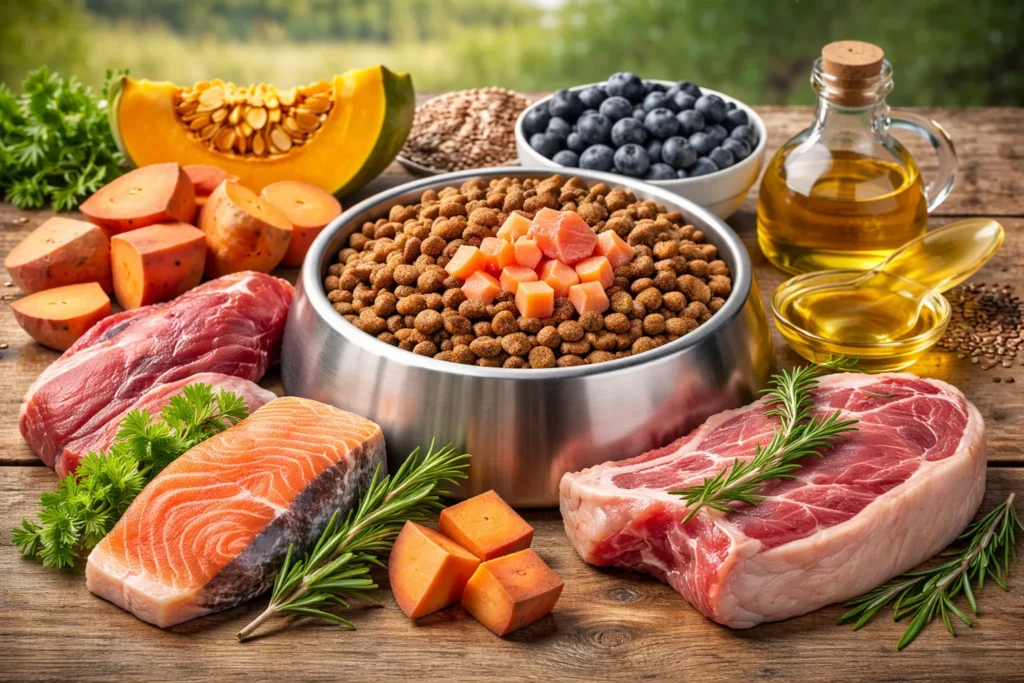
A handful of specific ingredients can make a real difference in your Bernedoodle’s comfort and health. Prioritize formulas built around tolerance—aiming for steady digestion and coat health.
- Named Animal Proteins: Look for foods listing clear protein sources like “deboned lamb” or “salmon meal”—not vague terms like “meat meal.” This transparency helps you avoid unexpected ingredients.
- Alternative Proteins: Since chicken is a common trigger, options like salmon, lamb, turkey, and duck are usually better tolerated and less likely to cause food allergies or stomach upset in sensitive Bernedoodles.
- Omega-3s for Coat and Skin: Salmon oil, flaxseed, and fish meal supply omega-3 fatty acids (EPA and DHA). These support healthy skin and a shiny coat, and may ease itching.
- Balanced Calcium and Phosphorus: For medium and large breeds, the ratio of these minerals matters. Large-breed formulas help protect developing bones and joints with carefully controlled amounts.
Ingredients Some Bernedoodles Don’t Tolerate Well
Just as important as what to include is what to avoid. Some popular ingredients can cause problems for sensitive Bernedoodles.
- Chicken: While many dogs thrive on chicken, it is a common dietary trigger for allergies and intolerance in Bernedoodles. If your dog has chronic skin or digestive issues, a chicken-free diet is a logical first step.
- Grain-Free vs. Grain-Inclusive: The grain-free trend has caused some confusion. Neither approach is inherently “better.” Some dogs do well on grain-free diets, while others digest wholesome grains like rice and oatmeal perfectly fine. For most Bernedoodles without a specific grain allergy, a high-quality, grain-inclusive formula is a safe and balanced choice. The key is digestibility.
- High-Fat or Rich Formulas: Extremely rich, high-fat foods can overwhelm a sensitive digestive system, leading to loose stools or pancreatitis. A moderate fat level is often a better choice, especially for dogs that are not highly active.
How We Evaluate Dog Foods for Bernedoodles

To provide reliable recommendations, we look beyond marketing claims and focus on real-world performance and nutritional soundness.
- Ingredient Quality and Formulation Balance: We analyze the ingredient list for high-quality, named protein sources and functional ingredients. The overall formula must be balanced to meet the complete nutritional needs of an adult dog.
- Digestibility and Stool Consistency: A food is only as good as a dog can digest it. We prioritize foods that consistently result in firm, regular stools, as this is a primary indicator of good digestive tolerance.
- Veterinary Nutrition Standards: All recommended foods meet or exceed the nutritional standards set by the Association of American Feed Control Officials (AAFCO), ensuring they provide complete and balanced nutrition.
- Long-Term Owner Reviews: We analyze long-term patterns in owner reviews from verified purchasers. We look for consistent reports of improvement in skin, coat, and digestion over months or years, not just initial excitement.
Best Dog Foods for Bernedoodles (Based on Real-World Results)
Based on our evaluation criteria, these five foods have shown consistent positive results for Bernedoodles with various needs.
Purina Pro Plan Sensitive Skin & Stomach (Salmon & Rice)

This formula is often our top recommendation and the safest starting point for most Bernedoodles. It directly addresses the most common sensitivities with a simple, effective formulation. The use of salmon as the primary protein source and easily digestible rice and oatmeal makes it highly tolerable. Owners consistently report significant improvements in stool quality and a reduction in itching and skin irritation.
- Best for: Bernedoodles with sensitive digestion or suspected food allergies.
- Avoid if: Your dog has a known intolerance to fish or grains.
Hill’s Science Diet Adult Large Breed (Lamb Meal & Brown Rice)

Developed with the structural needs of large dogs in mind, this food is an excellent choice for supporting joint health. It features lamb as a primary protein and contains controlled levels of calcium and phosphorus for bone maintenance. It also includes natural sources of glucosamine and chondroitin. Its long-standing reputation for reliability and tolerance makes it a trusted option for adult Bernedoodles.
- Best for: Adult Bernedoodles, especially those needing extra joint support.
- Avoid if: Your dog requires a high-protein diet for athletic performance.
Taste of the Wild High Prairie (Bison & Venison)

For active Bernedoodles that need higher protein without relying on common allergens, this formula offers a strong balance of energy and digestibility. It uses novel proteins like bison and venison instead of chicken, which can help reduce the risk of food sensitivities while still supporting muscle maintenance and stamina.
The recipe is protein-rich but not excessively fatty, making it suitable for Bernedoodles that are physically active without being overwhelming for most healthy digestive systems. Added probiotics and fiber sources support gut health, which is especially important for dogs transitioning to a higher-protein diet.
Best for: Active or athletic Bernedoodles that need higher protein and do better on chicken-free formulas.
Avoid if: Your dog has struggled with grain-free diets in the past or needs a lower-protein, lower-calorie food.
Blue Buffalo Life Protection Large Breed (Fish & Brown Rice)
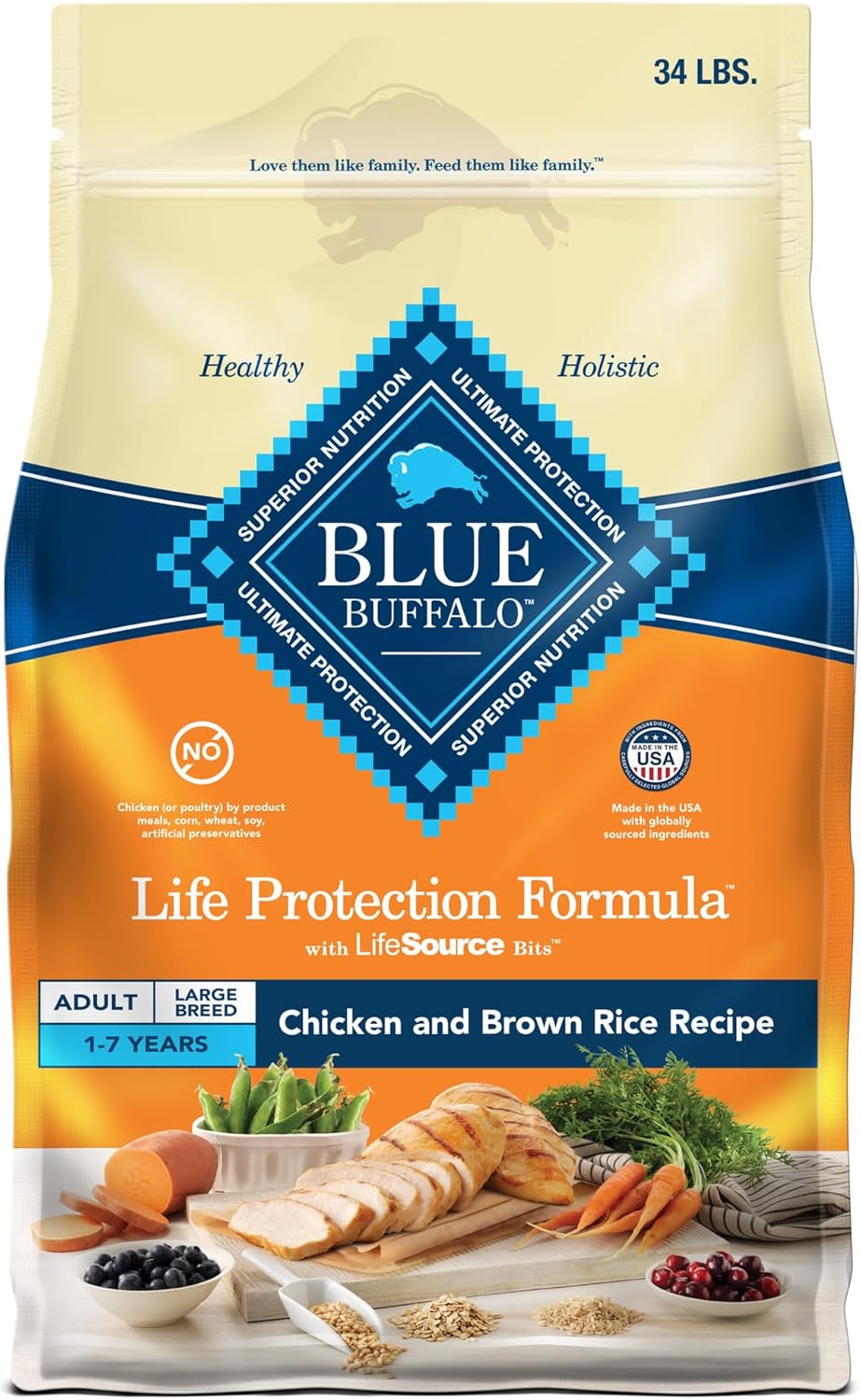
This fish-first recipe is another strong contender for Bernedoodles with skin and coat issues. It uses whitefish and menhaden fish meal as its primary protein sources, providing ample omega fatty acids to nourish the skin. The formula is also fortified with glucosamine and chondroitin for joint health, making it a well-rounded option for large breeds. Many owners notice a visible improvement in coat shine and reduced dryness.
- Best for: Bernedoodles with a dull coat or dry, flaky skin.
- Avoid if: Your dog has a known intolerance to fish or grains.
Orijen Original Dry Dog Food

Orijen is known for its biologically appropriate, meat-rich formulas. This nutrient-dense food contains a variety of animal proteins, including chicken, turkey, and fish. Because it is so digestible and packed with protein, dogs often produce smaller, firmer stools. However, its richness can be too much for some Bernedoodles. Because of its richness, portion control is especially important with this food. It is best reserved for healthy, active dogs with no known sensitivities.
- Best for: Healthy, adult Bernedoodles with robust digestive systems.
- Avoid if: Your dog has a history of digestive upset or a chicken sensitivity.
Quick Comparison Table
| Food | Protein Source(s) | Best For | Digestive Tolerance | Ideal Bernedoodle Type |
|---|---|---|---|---|
| Purina Pro Plan Sensitive Skin & Stomach | Salmon, Rice | Sensitive skin & digestion | Very High | All Bernedoodles, especially sensitive ones |
| Hill’s Science Diet Large Breed | Lamb, Brown Rice | Joint and bone health | High | Adult Bernedoodles needing joint support |
| Taste of the Wild High Prairie | Bison, Venison | Active dogs needing higher protein | Moderate | Active, athletic Bernedoodles |
| Blue Buffalo Life Protection Large Breed | Fish, Brown Rice | Skin and coat health | High | Bernedoodles with coat or skin issues |
| Orijen Original | Chicken, Turkey, Fish | Overall nutrition and vitality | Moderate | Healthy, active Bernedoodles without sensitivities |
How to Choose the Right Food for Your Bernedoodle
Consider your individual dog’s life stage, activity, and health history.
- Puppy vs. Adult: Bernedoodle puppies need a formula specifically for large-breed puppies to ensure controlled growth. Adult foods are not appropriate for them.
- Activity Level: A calm, lower-energy Bernedoodle needs fewer calories than one that hikes and plays for hours every day. Match the food’s protein and fat content to their energy output.
- Allergy-Prone Dogs: If you suspect a food allergy, choose a limited-ingredient diet with a single, novel protein source (like salmon or lamb) to minimize potential triggers.
- Safe Food Transition: When switching foods, do it gradually over 7–10 days. Start by mixing 25% of the new food with 75% of the old, slowly increasing the new food’s ratio every few days. This prevents digestive upset.
Common Bernedoodle Feeding Questions
How much should a Bernedoodle eat?
This depends on the food’s calorie content, your dog’s age, weight, and activity level. Follow the feeding guide on the bag as a starting point, but adjust the amount to maintain a healthy body condition. You should be able to feel their ribs but not see them.
Is chicken bad for Bernedoodles?
No, chicken is not inherently bad. It is a high-quality protein source that many dogs eat without issue. However, it is one of the most common allergens, and since Bernedoodles are prone to sensitivities, a chicken-free diet is often a successful strategy for resolving chronic itching or digestive problems.
Should Bernedoodles eat grain-free?
Not necessarily. Unless your dog has a diagnosed grain allergy, there is no medical reason to avoid grains. Wholesome, digestible grains like rice, barley, and oatmeal are excellent sources of energy and nutrients. The quality of the overall formula is more important than whether it contains grains.
How long before you see improvement after switching food?
For digestive issues like loose stools, you may see an improvement within a week of transitioning to a new food. For skin and coat problems, it can take 6–8 weeks for the full benefits to become apparent as the new nutrients work to build healthy skin and hair.
Final Thoughts
Choosing a dog food is a significant health decision. For Bernedoodles, the best choice often comes down to digestive tolerance rather than just high protein numbers or trendy ingredients. Pay close attention to the most important indicators of health: their stool quality, skin condition, coat shine, and overall energy levels.
Every Bernedoodle is an individual. Be patient, observe your dog closely, and don’t be afraid to switch to a different formula if the first one you try doesn’t deliver the consistent, stable health you’re looking for. A calm stomach and healthy skin are worth the effort.Our goal is to provide unbiased, evidence-based information to help dog owners make informed decisions.