
 Marco Williams

Introduction
Selecting the right nutrition for sensitive stomachs requires a methodical approach. Digestive distress in dogs may show as loose stool, diarrhea, gas, vomiting, or food intolerance, and can point to conditions like IBD or pancreatitis sensitivity. These symptoms signal that the current food may lack digestibility, contain excessive fat, or use a problematic protein source.
Digestive sensitivity is a symptom, not a diagnosis. The underlying cause should determine which option — limited ingredient, low-fat, probiotic-rich, or prescription — is appropriate. Consulting your veterinarian helps target the actual problem with a fitting digestive-support diet.
Diet is the key tool for managing GI signs. Protein source, fiber ratio (soluble and insoluble), and fat level all affect stool quality and gut inflammation. A frequent mistake is switching food too fast or picking grain-free formulas without a medical reason, assuming a “sensitive” label means safety.
Set realistic expectations: acute diarrhea can resolve quickly, but chronic issues need 4–8 weeks of steady feeding for clear results. Our selection emphasizes formulation quality, digestibility, AAFCO compliance, recall history, and owner-reported symptom patterns.
Need a fast answer? Here are the top choices by category.
- Best Overall → Hill’s Science Diet Sensitive Stomach & Skin — balanced digestibility, moderate fat, research support.
- Best for Chicken Intolerance → Purina Pro Plan Sensitive Skin & Stomach (Salmon & Rice) — salmon protein plus live probiotics.
- Best Budget → IAMS Advanced Health Healthy Digestion — wheat-free, beet-pulp fiber, and live probiotics at a low price.
- Best Limited Ingredient → Blue Buffalo Basics LID (Turkey & Potato) — single protein for suspected intolerance.
- Best Grain-Free → Wellness Simple LID (Salmon & Potato) — for cases needing true grain avoidance.
- Best Premium → Royal Canin Digestive Care — fiber-focused for stool firmness.
- Best for Severe Cases → Hill’s Prescription Diet i/d Digestive Care — veterinary GI formula (vet authorization required).
How We Selected These Foods

Every diet here is widely available in the U.S. from trusted retailers. We reviewed ingredient-panel integrity, screened for protein digestibility, and excluded options with excessive fat — crucial for dogs with GI instability or pancreatitis risk. Only products certified complete and balanced by AAFCO for the correct life stage were considered.
Recall history was analyzed for manufacturing safety. We synthesized owner reviews for patterns around soft stool, diarrhea resolution, and transition success, then weighed price, ingredient complexity, and grain content to recommend the most effective GI-focused options.
Top 7 Product Reviews

- Primary Protein: Chicken | Grain: Grain-inclusive (barley, rice) | Limited Ingredient: No | Life Stage: Adult
- Guaranteed Analysis: 20% protein / 13% fat / 4% fiber | AAFCO: Adult maintenance
- Why it made the list: Highly digestible protein and moderate fat, with prebiotic fiber for a stable gut; clinical research supports its digestibility.
- Best for: Dogs with mild to moderate digestive issues or recurring soft stool, excluding confirmed chicken allergy.
- Ingredient snapshot: Chicken, chicken meal, yellow peas, cracked pearled barley, brown rice (beet pulp further down).
- Most common owner report: Firmer stool within 5–10 days, with gas and coat often improving. Watch-out: Not limited-ingredient; unsuitable for confirmed chicken allergy.

- Primary Protein: Salmon | Grain: Grain-inclusive (no corn/wheat/soy) | Limited Ingredient: No | Life Stage: Adult
- Guaranteed Analysis: 26% protein / 16% fat / 4% fiber, with guaranteed live probiotics (Bacillus coagulans) | AAFCO: Adult maintenance
- Why it made the list: Salmon as a single primary animal protein for dogs that react to chicken, plus live probiotics and an oat/rice base for digestibility.
- Best for: Dogs with chicken intolerance or chronic loose stool that also need higher protein.
- Ingredient snapshot: Salmon, rice, barley, canola meal, oat meal.
- Most common owner report: Improved stool consistency after full transition, especially in chicken-reactive dogs. Watch-out: Fat (16%) is higher than some low-fat GI diets, so not ideal for fat-sensitive dogs.
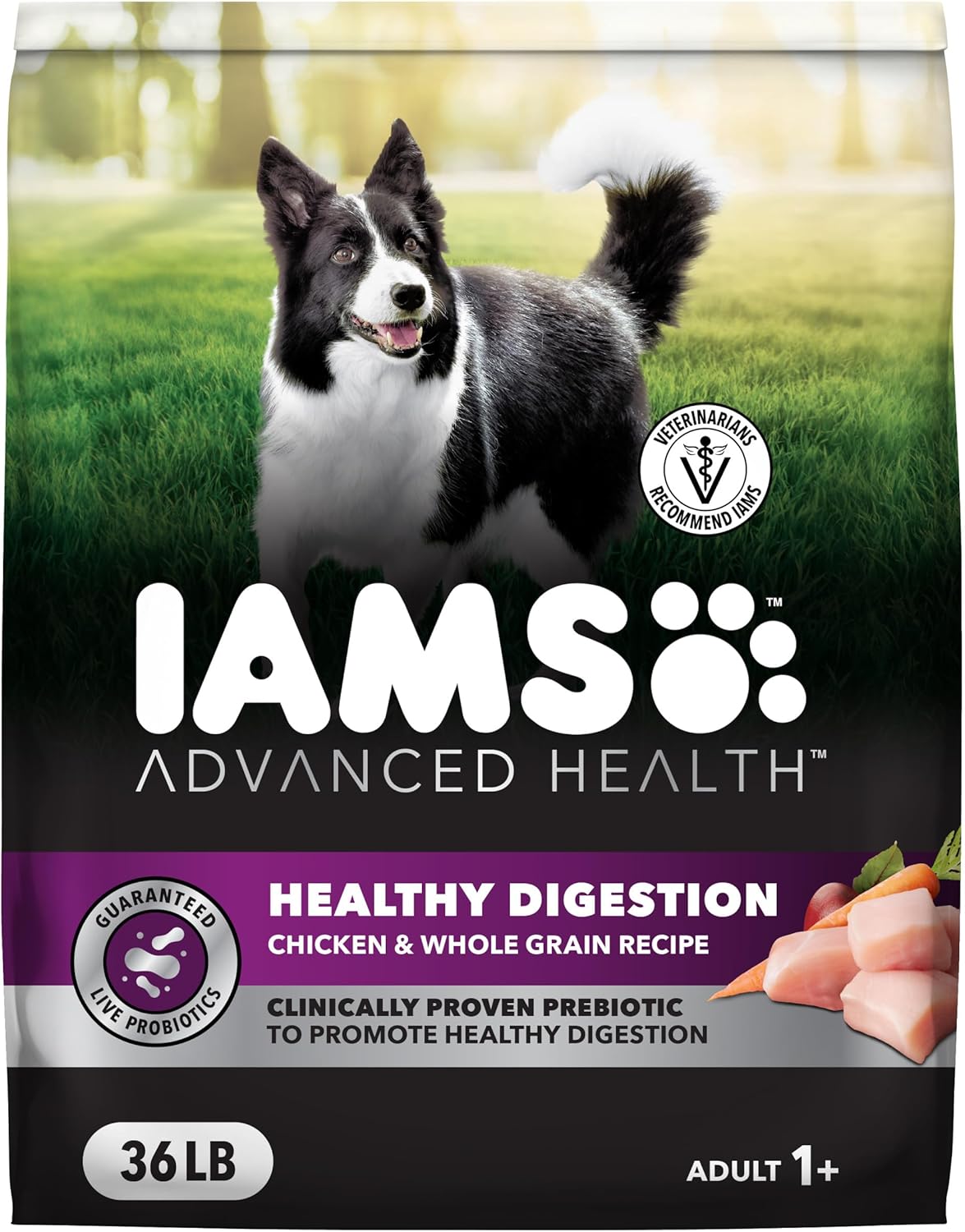
- Primary Protein: Chicken | Grain: Grain-inclusive, wheat-free | Limited Ingredient: No | Life Stage: Adult
- Guaranteed Analysis: ~26% protein / ~14% fat / ~4% fiber, ~380 kcal/cup, with guaranteed live probiotics [VERIFY exact protein/fat at SKU level] | AAFCO: Adult maintenance
- Why it made the list: The value pick — it pairs beet-pulp fiber with guaranteed live probiotics and skips wheat, giving real digestive support at a grocery price.
- Best for: Budget-conscious owners whose dogs need fiber to firm up stools, without paying a premium.
- Ingredient snapshot: Chicken, ground whole grain corn, ground whole grain sorghum, chicken by-product meal, dried beet pulp.
- Most common owner report: Firmer, more regular stools within a couple of weeks. Watch-out: Still grain-inclusive (corn, sorghum), so not for dogs needing a limited-ingredient diet.
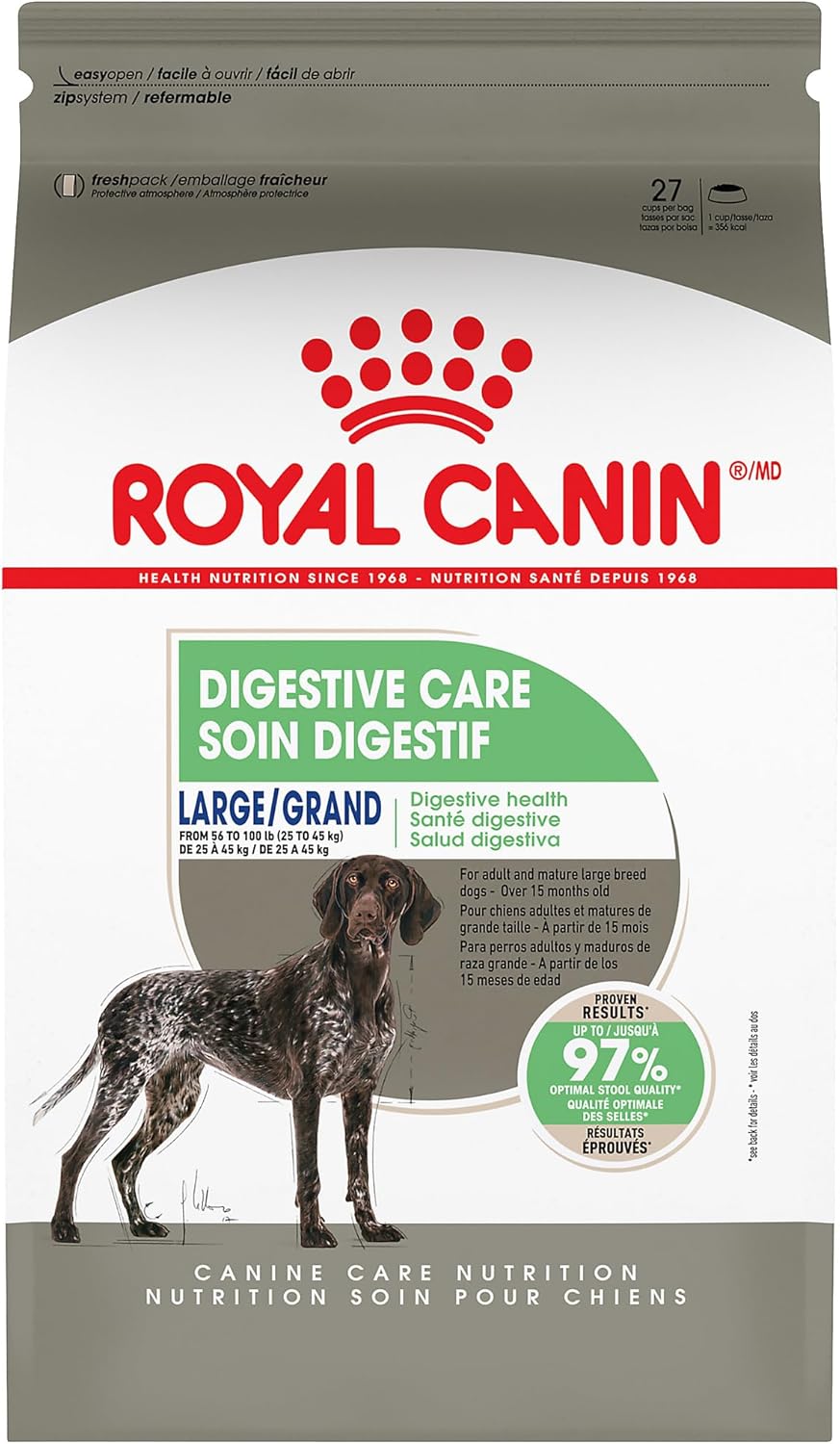
- Primary Protein: Chicken by-product meal | Grain: Grain-inclusive | Limited Ingredient: No | Life Stage: Adult
- Guaranteed Analysis: ~23–26% protein / 16% fat / ~4% fiber (varies by size), ~356 kcal/cup | AAFCO: Adult maintenance
- Why it made the list: Built around precise fiber science (beet pulp, psyllium, FOS) to regulate transit time and stool quality.
- Best for: Dogs with chronic irregular stool or large, loose stools.
- Ingredient snapshot: Chicken by-product meal, corn, brewers rice, chicken fat, brown rice, corn gluten meal, dried beet pulp.
- Most common owner report: Long-term stool stability, even when other “sensitive stomach” foods failed. Watch-out: Higher price; by-product-meal-first deck deters some owners.

- Primary Protein: Turkey | Grain: Grain-free | Limited Ingredient: Yes | Life Stage: Adult
- Guaranteed Analysis: ~20% protein / ~12% fat | AAFCO: Adult maintenance [VERIFY exact GA at SKU level]
- Why it made the list: A true single-protein, limited-ingredient diet that minimizes exposure to common triggers for elimination-style feeding.
- Best for: Dogs with suspected food intolerance or sensitivity to complex ingredient lists.
- Ingredient snapshot: Deboned turkey, potatoes, peas, pumpkin, flaxseed.
- Most common owner report: Improved stool when more complex foods failed. Watch-out: Contains legumes; owners concerned about DCM should consult their vet.

- Primary Protein: Salmon | Grain: Grain-free | Limited Ingredient: Yes | Life Stage: Adult
- Guaranteed Analysis: ~25% protein / ~14% fat | AAFCO: Adult maintenance [VERIFY exact GA at SKU level]
- Why it made the list: A limited-ingredient salmon diet that targets dual needs — GI stability and mild skin sensitivity.
- Best for: Dogs prone to pancreatitis flare-ups or with concurrent digestive and skin symptoms.
- Ingredient snapshot: Salmon, salmon meal, potatoes, peas, flaxseed.
- Most common owner report: Balanced stool and better coat; salmon oil noted for shine. Watch-out: Higher price tier; relies on potatoes and peas.
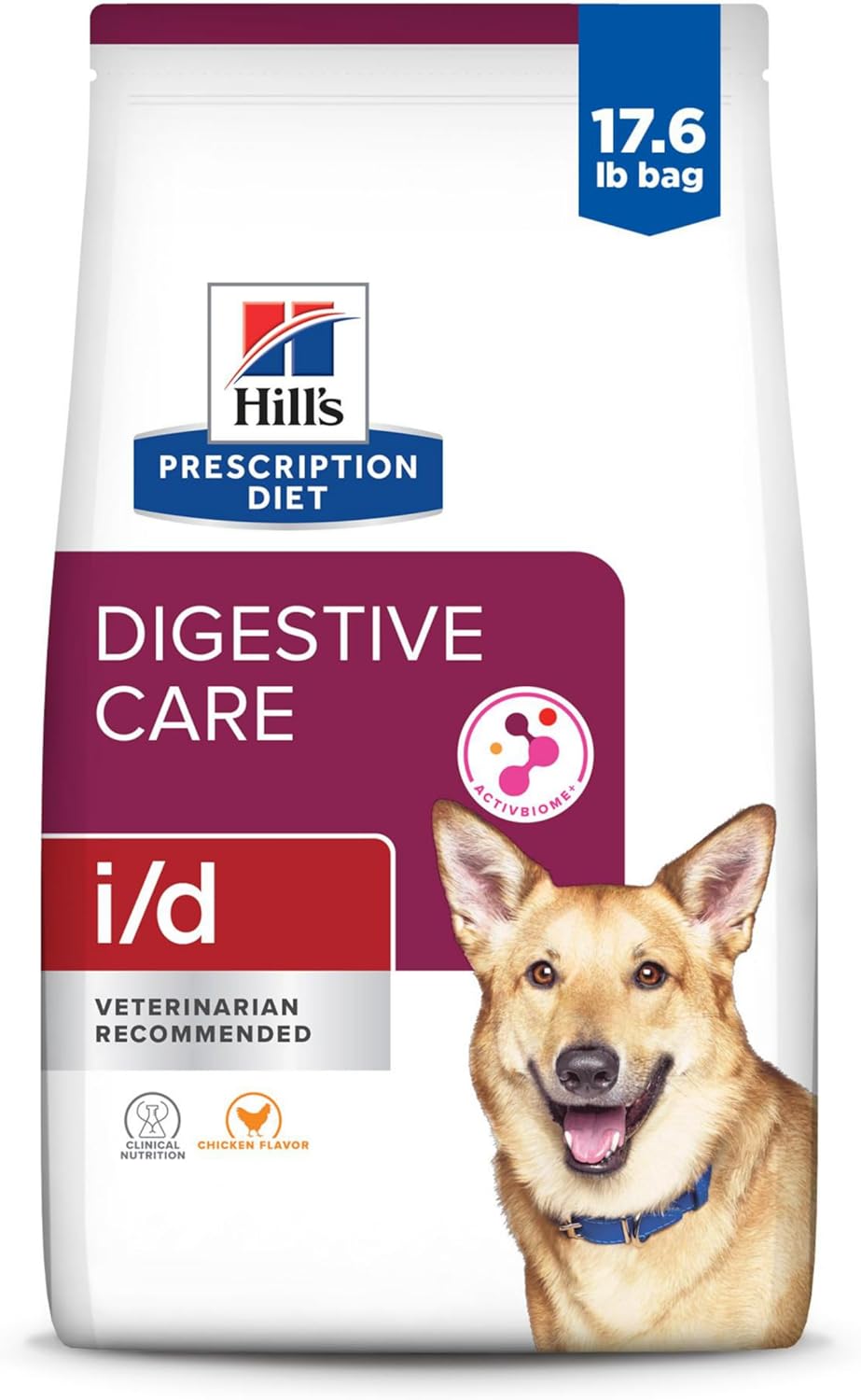
- Primary Protein: Chicken | Grain: Grain-inclusive | Limited Ingredient: No | Life Stage: Adult (therapeutic)
- Guaranteed Analysis: ~21% protein / moderate fat (a low-fat version is available) | AAFCO: Therapeutic diet — vet authorization required
- Why it made the list: A clinic “rescue food” with electrolytes and Hill’s ActivBiome+ prebiotic technology for rapid microbiome support.
- Best for: Dogs with acute GI flare-ups or post-surgical/medical digestive issues — under veterinary guidance.
- Ingredient snapshot: Highly digestible chicken, cracked pearled barley, corn gluten meal, proprietary fiber blend.
- Most common owner report: Rapid stool improvement, often within 24–48 hours. Watch-out: Prescription only — you’ll need your vet’s authorization to buy it.
Comparison Table
| Product | Protein | Fat | Grain | Limited Ingredient | Best For | Price Tier |
|---|---|---|---|---|---|---|
| Hill’s Science Diet Sensitive | ~20% | ~13% | Inclusive | No | Mild soft stool | Mid |
| Purina Pro Plan Sensitive (Salmon) | ~26% | ~16% | Inclusive | No | Chicken intolerance | Mid |
| IAMS Advanced Health Healthy Digestion | ~26% | ~14% | Inclusive (wheat-free) | No | Budget + fiber | Low |
| Royal Canin Digestive Care | ~23–26% | ~16% | Inclusive | No | Chronic irregular stool | High |
| Blue Buffalo Basics | ~20% | ~12% | Grain-Free | Yes | Suspected intolerance | Mid-High |
| Wellness Simple | ~25% | ~14% | Grain-Free | Yes | Pancreatitis-prone | High |
| Hill’s Prescription Diet i/d | ~21% | Moderate | Inclusive | No | Acute GI flare-up | High (Rx) |
How to Choose the Right Food for Dogs With Digestive Issues
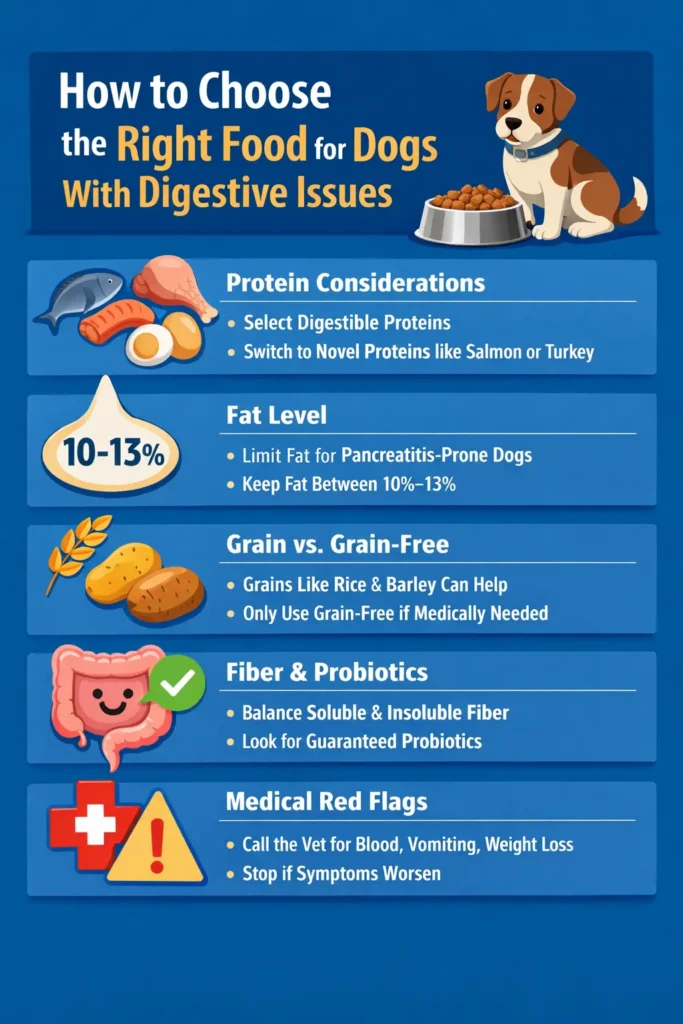
Choosing the proper GI-focused food depends on matching the nutrient profile to your dog’s symptoms.
Protein: Choose digestible proteins. If your dog reacts to chicken, try a novel source like salmon or turkey. Digestibility often matters more than the protein itself.
Fat level: Crucial for pancreatitis-prone dogs. Limit fat to roughly 10–13% for dogs that struggle to metabolize fat.
Grain vs. grain-free: Grain-free isn’t inherently better. Unless there’s a diagnosed grain allergy, digestible grains like rice or barley help firm up stool.
Fiber balance: A mix of soluble and insoluble fiber regulates stool and gut health; prebiotic fiber feeds good gut bacteria.
Probiotics: Only guaranteed live probiotics listed in the analysis are meaningful.
Medical red flags: If dietary changes don’t help, or weight drops, see your veterinarian. If symptoms worsen during a transition, stop and consult your vet.
Common Mistakes Owners Make
- Switching too quickly: Transition over 7–10 days, mixing new with old food.
- Confusing allergy with intolerance: True allergies are uncommon; many dogs have intolerances that a sensitive-stomach diet resolves.
- Ignoring fat levels: High-fat foods worsen diarrhea in some dogs.
- Choosing grain-free without a reason: Grain removal isn’t always helpful, and legume-heavy diets may cause gas.
- Relying on marketing: Terms like “holistic” are unregulated. Check the AAFCO statement instead.
When to Consider Veterinary Diets
For moderate to severe GI problems, consult your veterinarian. Hydrolyzed protein diets are used when an allergy is strongly suspected — proteins are broken down to stay below the immune threshold. Prescription GI diets (like Hill’s i/d) are required for chronic IBD or pancreatitis, where fat must be tightly controlled.
See a vet immediately if your dog shows blood in stool, severe lethargy, persistent vomiting, or fast weight loss. Over-the-counter food for loose stool cannot treat severe symptoms, and clinical oversight is needed.
Is salmon good for dogs with digestive issues?
Salmon is often recommended. It’s digestible and rich in Omega-3s that help soothe inflammation, especially for dogs that don’t tolerate chicken or beef.
Grain-free vs. grain-inclusive for sensitive stomach?
Grain-inclusive is usually better unless your dog is allergic to grains. Rice and oats add helpful fiber, while grain-free can cause extra gas for some dogs.
How long does dog food take to firm stool?
Minor changes may show in 3–5 days, but full gut stability takes 4–8 weeks. Allow time for the microbiome to adapt.
Can dogs be allergic to chicken?
Yes. Chronic itching and loose stools on chicken-based foods can signal allergy or intolerance. A limited-ingredient diet with a different protein helps test for it.
What protein is easiest to digest?
For most dogs, chicken and fish digest well. Hydrolyzed proteins, used in prescription diets, are the most digestible of all.
Is pumpkin enough for diarrhea?
Pumpkin can add fiber and ease mild diarrhea, but it’s a supplement, not a complete-nutrition solution.
How much should I feed?
Feed to your dog’s ideal weight using the package guidelines. Frequent, smaller meals may help reduce GI upset.
When should I see a vet?
If diarrhea lasts over 48 hours, or you see blood, lethargy, vomiting, or appetite loss, seek veterinary care.
Final Recommendation Summary
The best digestive-support diet depends on matching the ingredient profile to your dog’s symptoms.
- Best Overall: Hill’s Science Diet Sensitive Stomach & Skin
- Best for Chicken Intolerance: Purina Pro Plan Sensitive Skin & Stomach (Salmon & Rice)
- Best Budget: IAMS Advanced Health Healthy Digestion
- Best for Severe Cases: Hill’s Prescription Diet i/d (vet authorization required)
- Best Limited Ingredient: Blue Buffalo Basics
Stick with your chosen food for about 8 weeks before judging results, and consult your veterinarian before changing diets — especially if symptoms persist.